The Comeback Formula: How to Recover After a Bad Start in Horseshoes
Every horseshoe player runs into it sooner or later.
You step into a game feeling ready, maybe even confident, and within the first few throws things start going sideways. Your release feels off, your distance is inconsistent, and before you know it, your opponent has built an early lead. It happens fast, and it can feel like you’re already playing from behind before you’ve even settled in.
What separates experienced players from everyone else isn’t avoiding bad starts—it’s knowing how to recover from them.
A poor beginning doesn’t decide the outcome of a game. What matters is how quickly you stabilize, adjust, and regain control of your rhythm. The players who understand this don’t panic when they fall behind. They reset, simplify, and work their way back one controlled throw at a time.
Why Early Struggles Don’t Mean You’re Off Your Game
A rough start often feels bigger than it actually is. In most cases, it isn’t a sign that your overall game is broken. It’s usually the result of small timing issues, slight inconsistencies in release, or simply needing a few throws to lock into your natural rhythm.
Horseshoes is a game built on repetition and feel. Even skilled players need a few rounds to settle into consistent motion. When those first throws don’t connect, the tendency is to assume something is wrong and start making unnecessary changes.
That’s where problems begin.
Instead of recognizing a temporary lapse, players start overcorrecting. They adjust their stance, alter their grip, or rush their throw in an attempt to “fix” things quickly. In reality, those early misses are often just part of the natural warm-up process.
Understanding that keeps you from turning a small issue into a bigger one.
Simplify Before You Try to Fix
When players fall behind early, their instinct is to make multiple adjustments at once. They try to correct everything—foot placement, arm path, release angle, follow-through—all within the same few throws.
That approach almost always makes things worse.
The more variables you introduce, the harder it becomes to regain consistency. Instead of stabilizing your throw, you create more unpredictability.
The better approach is to simplify your focus.
Bring your attention back to one core element—your release. A clean, smooth release is the foundation of every consistent throw. If your release is steady, your accuracy will begin to recover naturally without forcing additional changes.
By narrowing your focus, you remove the noise and give your body a chance to reset.
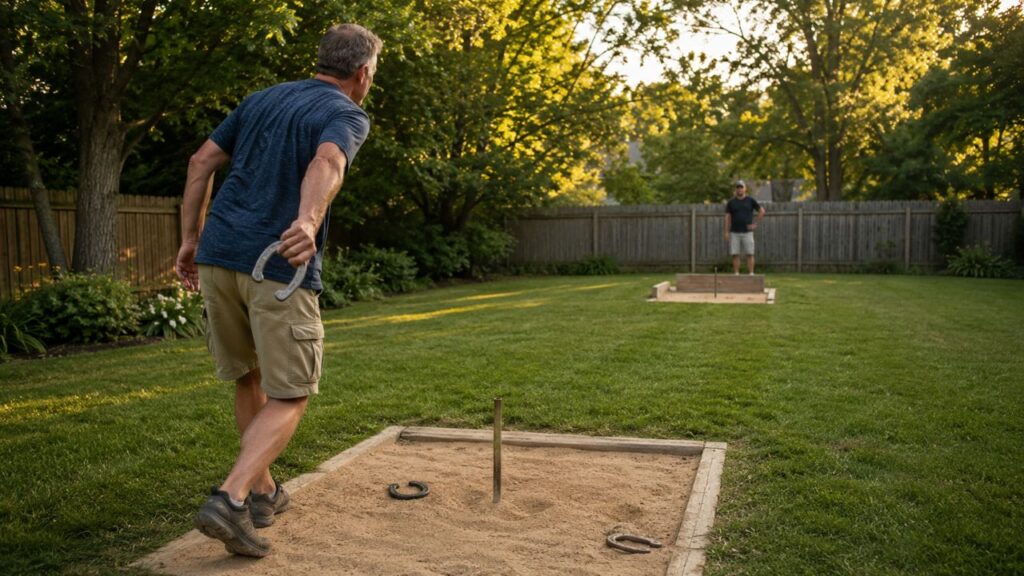
Regain Control by Slowing the Tempo
Falling behind creates pressure, and pressure often leads to speed.
Players start rushing their throws, trying to make up points quickly. They shorten their routine, skip their usual setup, and throw before they’re fully ready. This creates a cycle where rushed throws lead to more missed opportunities, which leads to even more urgency.
Breaking that cycle requires a deliberate slowdown.
Taking an extra moment before each throw allows you to reset your stance, steady your breathing, and reconnect with your normal rhythm. It doesn’t need to be dramatic, but it needs to be intentional.
When you control your pace, you regain control of your execution.
A slower, more deliberate approach not only improves accuracy but also disrupts the momentum of your opponent, who may have been benefiting from your rushed play.
Shift Your Focus From Scoring to Positioning
One of the biggest mistakes players make when trailing is chasing perfect shots too early. They start aiming only for ringers, believing that’s the fastest way to close the gap.
In reality, that mindset often leads to forced throws and missed opportunities.
A more effective approach is to focus on positioning. Landing a shoe close to the stake—even if it isn’t a ringer—can still apply pressure and limit your opponent’s scoring options. Strategic placement forces your opponent to respond rather than play comfortably.
Over time, this approach creates openings.
Instead of trying to erase the deficit in one throw, you gradually reduce it by making smarter, more controlled plays. Positioning keeps you competitive and allows momentum to shift naturally.
Build Momentum Through Small, Controlled Wins
Looking at the scoreboard when you’re behind can be discouraging, especially if the gap feels significant. That’s why focusing on the overall score too early can work against you.
A comeback doesn’t happen all at once.
It happens in small steps—one well-placed throw, one solid round, one moment where you regain control. Each of those moments builds momentum, and momentum is what turns games around.
By narrowing your focus to the next throw instead of the total score, you reduce pressure and improve execution. You’re no longer trying to “catch up” all at once. You’re simply trying to win the next opportunity in front of you.
That shift in mindset makes a noticeable difference.
Stay Ready for the Momentum Shift
Even when an opponent starts strong, they rarely play the entire game perfectly. Mistakes will happen. The key is being ready when they do.
If you’re frustrated or distracted, you’ll miss those opportunities.
Staying composed allows you to recognize when your opponent leaves a shoe short, misses a ringer, or opens the door for a scoring chance. Those are the moments where comebacks begin to take shape.
Patience plays a major role here.
Instead of forcing the game, you allow it to come back to you by staying consistent and capitalizing when the opportunity appears.

Control Your Emotions to Control Your Throw
Emotional reactions are one of the biggest obstacles to recovery.
It’s easy to show frustration after a missed shot, but those reactions often carry into the next throw. Tension builds, timing changes, and the quality of your execution drops.
The most effective players stay neutral.
They don’t get overly excited by good throws, and they don’t dwell on bad ones. Each throw is treated as a separate event, independent of what just happened.
This level of control keeps your mechanics steady and prevents emotional swings from affecting your performance.
Trust the Game That Got You There
When a game starts poorly, it can feel like your entire approach needs to change. Players sometimes abandon what works for them in favor of something new, hoping for a quick turnaround.
That rarely works.
If your technique and approach are solid, they don’t need to be rebuilt mid-game. Small adjustments may be necessary, but your foundation should remain the same.
Confidence comes from trusting your process.
By sticking to what you know works and making only minor corrections, you give yourself the best chance to recover without creating new problems.
Equipment That Helps You Settle Back In
When you’re trying to regain rhythm, the feel of your equipment matters more than you might think. Inconsistent weight or balance can make it harder to stabilize your throw, especially when you’re already adjusting.
A dependable option like the Mustang Pitching Horseshoes provides a consistent feel that helps you focus on your mechanics instead of compensating for the equipment.
For players who prefer a slightly different balance, the Baden Champions Horseshoe Set offers reliable control and durability, making it a solid choice for regular play.
And if you want something that holds up over time without changing performance, the Champion Sports Official Horseshoe Set delivers steady, predictable results.
The goal is simple—remove variables so your throw can settle naturally.
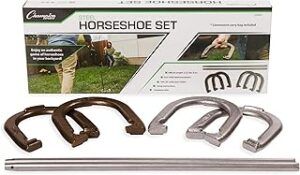
Horseshoe Game Sets
What a Comeback Actually Looks Like
Most comebacks don’t happen dramatically.
They’re gradual.
You stop giving away easy points. Your throws become more consistent. Your opponent starts to feel pressure. The gap begins to close without forcing it.
Before long, the game is competitive again.
That’s how it works.
Not through one big moment, but through steady, controlled improvement over multiple rounds.
Where Players Lose the Comeback
The biggest mistake is trying to force it too quickly.
When players rush to erase the deficit, they abandon patience and consistency. This leads to more errors and extends the gap instead of closing it.
Another issue is breaking routine. When your setup changes from throw to throw, your consistency disappears.
And finally, letting frustration take over can undo everything. Emotional reactions lead to rushed decisions, and rushed decisions lead to poor execution.
Avoiding these mistakes keeps the comeback within reach.
FAQ: Recovering After a Bad Start
1. Can you come back from a big deficit in horseshoes?
Yes, especially if you stay consistent and take advantage of opportunities as they come.
2. What’s the fastest way to recover?
Slow down, simplify your throw, and focus on clean release and positioning.
3. Should you play more aggressively when behind?
Not always. Controlled, strategic throws are often more effective than forced aggressive shots.
4. How do you stay calm during a bad game?
Focus on each throw instead of the score and avoid reacting emotionally to misses.
5. What matters most in a comeback?
Consistency. The player who stabilizes first usually regains control.
Turning a Rough Start Into a Strong Finish
Every player experiences games that don’t start the way they expect.
What defines your performance isn’t how quickly you fall behind—it’s how you respond when it happens. When you stay patient, simplify your approach, and focus on consistent execution, you give yourself a real chance to turn things around.
Because in horseshoes, the early score doesn’t decide the outcome.
The finish does.
Hi there, and thanks for stopping by! My name is Larry, and I’m the voice behind PlayingHorseshoes.com. I love the game and have been playing since I was a kid. I started this blog because I am passionate about the sport, and with all the technology, I hope the sport doesn’t die. I plan to do my part to keep it going for me and my brother’s sake. Thanks for stopping by. Thank You!