The Science Behind Horseshoe Design: How To Improve Your Game
Horseshoe pitching may look simple from the outside—just toss a horseshoe at a stake and try to get a ringer. But anyone who’s played the game seriously knows it’s much more than luck. Precision, consistency, and control all play a role—and one of the most underrated performance factors is the design of the horseshoe itself.
Behind every great horseshoe toss is a combination of physics, biomechanics, and engineering. The shape, weight distribution, material, and balance of a horseshoe directly affect how it flies, lands, and hooks around the stake. Understanding these design elements can help you make better gear choices and sharpen your competitive edge.
In this in-depth guide, we’ll explore the science of horseshoe design and explain how these technical details can help you play better, more consistent games—whether you’re practicing in your backyard or aiming for tournament-level precision.
Why Horseshoe Design Matters More Than You Think
The horseshoe is more than just a chunk of metal—it’s a precision tool. In competitive play, the difference between a miss and a ringer can be millimeters. The better your horseshoe’s design complements your throwing style, the more consistent and accurate your results will be.
Just as a golfer chooses the right club or a pitcher selects the right glove, horseshoe players benefit from understanding how design affects gameplay. Factors such as the horseshoe’s center of gravity, thickness, shape, and surface texture all influence performance.
Key Horseshoe Design Elements Explained
Let’s break down the major components of a horseshoe and how each one affects your throw.
1. Weight Distribution and Balance
The most important aspect of horseshoe design is its center of mass. This determines how the shoe spins and flies through the air. Ideally, the shoe should have a balanced weight so that it rotates smoothly and predictably with each throw.
- Center-Weighted Horseshoes are often used by beginners because they promote straight rotation.
- Heel-Weighted Horseshoes have more mass toward the back and are preferred by players using flip throws.
- Toe-Weighted Horseshoes give experienced players more control over rotational momentum during turn throws.
A poorly balanced horseshoe can wobble in mid-air, rotate inconsistently, or land off-center, leading to missed points and frustrated players.
2. Open vs Closed Heel Design
The “heel” of the horseshoe is the curved end that wraps around the stake. Horseshoes generally come in two design types:
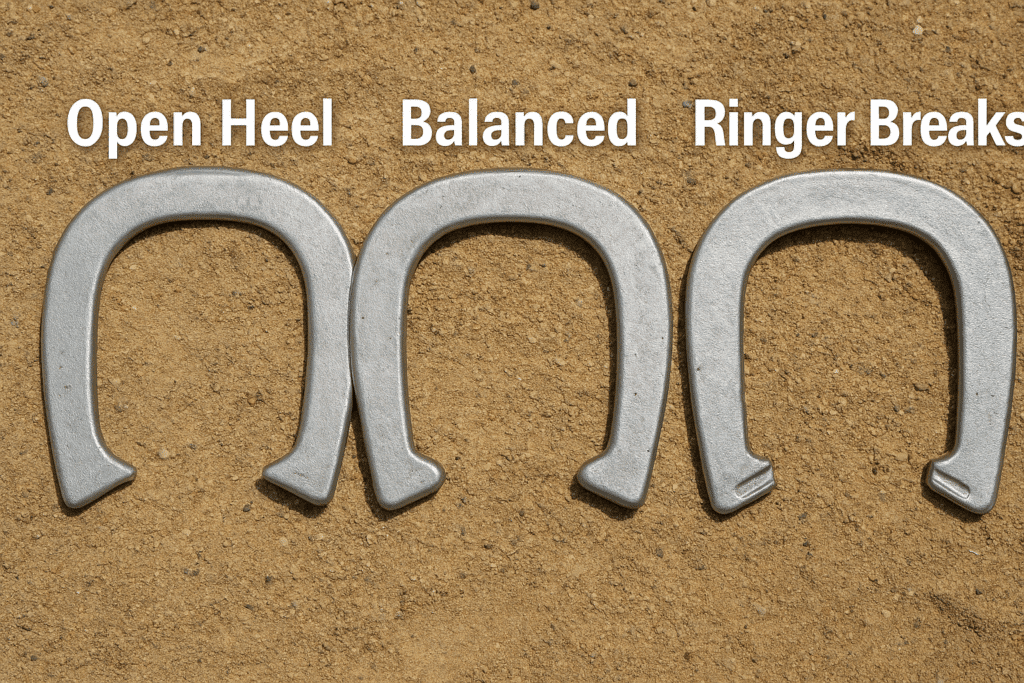
- Open-Heel Design: Leaves more room for the stake and increases the chances of scoring ringers. Common in most competitive play.
- Closed-Heel Design: Offers a more traditional look and tighter profile. Some players find it easier to control, but it can reduce hooking ability.
The wider the opening, the easier it is to land a ringer. However, wider openings can also make the shoe more susceptible to bouncing off if the aim is slightly off.
3. Ringer Breaks and Thumb Cleats
Higher-end horseshoes often feature design details that improve performance on contact:
- Ringer Breaks: Small ridges or indentations on the inner edge of the horseshoe. These help grip the stake during a ringer and reduce the chance of the shoe bouncing off.
- Thumb Cleats: Raised ridges or textured areas where players place their thumbs. These enhance grip and throwing control.
These details don’t just help with grip—they contribute to more predictable rebounds, stickier landings, and better rotation.
4. Tapered or Flat Blades
The “blade” of a horseshoe refers to the straight edge leading up to the heel. Some designs feature:
- Flat Blades: Better for balance and consistent landing on soft surfaces.
- Tapered Blades: Designed for aggressive play and may penetrate clay or sand more effectively.
Flat blades tend to be more forgiving for beginners, while tapered edges are used by experienced players who prioritize sharp landings and minimal bounce.
5. Material and Surface Texture
The science doesn’t stop with shape. The material and finish of a horseshoe directly impact its feel, durability, and behavior during play.
- Drop-Forged Steel: The most durable and balanced material. Preferred by professionals.
- Alloy Steel: Offers good strength-to-weight ratio but may not be NHPA-approved.
- Cast Iron or Rubber: Lightweight and good for casual play, but not suitable for serious competitive use.
Surface textures—like powder coating or matte finishes—can reduce slippage, enhance grip, and prevent rusting. However, they can wear off over time, especially in rough environments.
6. Dimensions and NHPA Compliance
According to the National Horseshoe Pitchers Association (NHPA), regulation horseshoes must meet strict size and weight guidelines:
- Weight: Between 2 pounds 8 ounces and 2 pounds 10 ounces
- Length: No more than 7 5/8 inches
- Width: Up to 7 1/16 inches
- Gap Opening: Up to 3 1/2 inches between the heels
Even a quarter-inch outside these specs can disqualify a shoe from competition. That’s why it’s essential to buy NHPA-approved models if you plan to play in official leagues.
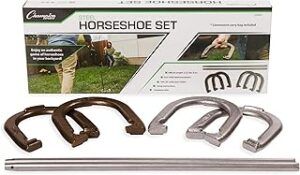
Horseshoe Game Set
Top Brands:
How Design Affects Performance: Real-World Scenarios
🎯 Scenario 1: Your Horseshoes Keep Bouncing Out
This is likely a problem with balance or material. Try switching to a center-weighted horseshoe with flat blades and a textured finish to reduce bounce and improve grip.
🔁 Scenario 2: Inconsistent Rotations During Throw
You may be using a horseshoe that doesn’t match your throwing style. Flip throwers may need heel-weighted shoes, while turn throwers benefit from balanced or toe-weighted designs.
🪙 Scenario 3: Frequent Misses Despite Good Technique
If your form is solid but your accuracy suffers, you might be using horseshoes with poor aerodynamics or imbalanced designs. Upgrade to forged steel, NHPA-approved shoes with open heels and ringer breaks.
Buying Smart: What to Look for in a Quality Horseshoe
- Feel in the Hand: A horseshoe should feel balanced and natural in your grip.
- Smooth Flight: The shoe should rotate consistently without wobbling.
- Clean Casting and Finish: No rough edges or uneven weight distribution.
- Brand Reputation: Stick to well-known brands like St. Pierre, Gordon, and Thoroughbred for regulation gear.
Pro Tips to Get the Most from Your Gear
- Match Design to Throw Style – Know whether you flip, half-turn, or full-turn and choose accordingly.
- Test Before You Commit – If possible, test various horseshoes at a club or event before buying.
- Keep Shoes Clean and Dry – Rust and dirt can alter the weight and texture of your shoe.
- Replace Worn-Out Shoes – Once your horseshoes show signs of deformation or pitting, it’s time for a new set.
- Practice with Consistency – Always use the same pair in practice and competition to build reliable muscle memory.
The Evolution of Horseshoe Design: A Glimpse Into Innovation
While traditional designs remain popular, modern manufacturers continue to push the envelope with innovations:
- Precision-Cut Designs: CNC-machined shoes offer tighter balance tolerances.
- Non-Slip Coatings: Engineered surface materials reduce release friction.
- Custom Molded Shoes: Built to a player’s throwing grip and form.
These advancements are bringing science and sport together, allowing players to elevate their game like never before.
Final Thoughts: Let Design Drive Your Performance
Understanding the science behind horseshoe design gives you an edge no matter your skill level. Rather than guessing or sticking with outdated gear, you can now choose equipment that’s tailored to your throwing style, environment, and performance goals.
With the right design in your hand, every throw becomes an opportunity to improve—not just a toss in the dark.
So, what does your current horseshoe say about your game—and is it helping or holding you back?
Hi there, and thanks for stopping by! My name is Larry, and I’m the voice behind PlayingHorseshoes.com I love the game and have been playing since I was a kid. I started this blog because I am passionate about the sport, and with all the technology, I hope the sport don’t die. I plan to do my part to keep it going for me and my brother’s sake. Thanks for stopping by, feel free to subscribe and comment. Thank You!