Top 5 Tips for Selecting the Best Horseshoes for Competitive Play
Horseshoe pitching has evolved from a casual backyard pastime into a highly competitive sport requiring skill, precision, and the right equipment. As you advance from casual games to competitive play, one of the most critical factors that will influence your performance is the horseshoe itself. While it might seem like a simple tool, a well-designed, competition-grade horseshoe can dramatically improve your accuracy, consistency, and overall success in tournaments.
In this comprehensive guide, you’ll learn the top five essential tips for selecting the best horseshoes for competitive play. Whether you’re just entering your first league competition or looking to refine your equipment for a championship run, this article will help you make informed purchasing decisions that support your competitive goals.

Why Your Horseshoe Choice Matters in Competitive Play
At the highest levels of play, precision and consistency are everything. Using the wrong horseshoes can throw off your aim, disrupt your throwing mechanics, and even cause fatigue or injury over time. Serious competitors know that the right horseshoe isn’t just a piece of equipment—it’s a critical part of their strategy and performance.
Unlike casual or recreational horseshoes, competitive horseshoes are carefully engineered to meet strict specifications and enhance a player’s throwing technique. They’re designed for optimal balance, weight distribution, and durability, ensuring you have every advantage when stepping into the pit.
Tip #1: Always Choose NHPA-Approved Horseshoes
The most important factor when selecting competitive horseshoes is making sure they are approved by the National Horseshoe Pitchers Association (NHPA). This governing body sets the official standards for horseshoe pitching equipment used in sanctioned tournaments.
NHPA Specifications for Competitive Horseshoes:
- Weight: Between 2 pounds 8 ounces and 2 pounds 10 ounces (approximately 2.5 to 2.6 pounds).
- Length: No longer than 7 5/8 inches.
- Width: A maximum of 7 1/16 inches.
- Opening: The gap between the heels should not exceed 3 1/2 inches.
Using NHPA-approved equipment ensures that your practice sessions accurately simulate tournament conditions. This is crucial for developing muscle memory and adapting your throwing style to the precise balance and weight regulations enforced at competitions.
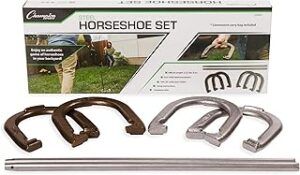
Horseshoe Game Set
Top NHPA-Approved Brands to Consider:
- St. Pierre: Known for their professional-grade forged steel horseshoes.
- Thoroughbred Horseshoes: A trusted name among serious competitors.
- Mustang Horseshoes: Preferred for their advanced engineering and balance.
- M&M Horseshoes: Popular for their high-quality craftsmanship.
Before purchasing, double-check that your chosen set is listed as NHPA-approved. Most reputable manufacturers will clearly state this on their packaging or website.
Tip #2: Select a Horseshoe Style That Matches Your Grip and Throwing Technique
Every pitcher develops their own unique grip and throwing style over time. Selecting a horseshoe design that complements your technique can significantly improve your accuracy and control.
Common Horseshoe Styles for Competitive Play:
- Turned Shoe (Open Heel Design):
- Best for pitchers who use a rotational throw.
- Easier to achieve ringers because of the larger opening.
- Popular among players who favor the one-and-a-quarter or one-and-three-quarter turn.
- Closed Heel Design:
- Preferred by traditionalists and those with precise accuracy.
- Provides a more balanced feel but requires excellent control to land ringers.
- Often used by players who favor a flip or half-turn throw.
- Toe Calks and Ringer Breaks:
- Some competitive horseshoes feature toe calks and ringer breaks to improve stability and enhance the chances of hooking the stake.
- These design elements can reduce unwanted wobbling during flight.
If you’re new to competitive play, try testing both open and closed heel designs to determine which feels more comfortable and improves your accuracy. Many experienced pitchers recommend practicing with both styles to develop versatility.

Tip #3: Focus on Proper Weight Distribution and Balance
One of the most overlooked factors in horseshoe selection is weight distribution. In competitive play, even minor differences in balance can impact your throw’s trajectory and consistency.
Types of Weight Distribution:
- Center-Weighted Horseshoes:
- Ideal for beginners and intermediate players.
- Provides a more balanced and consistent flip or turn.
- Easier to control and land accurately.
- Heel-Weighted Horseshoes:
- Favored by pitchers who specialize in flip throws.
- Helps keep the shoe level during flight and improves stability upon landing.
- Toe-Weighted Horseshoes:
- Designed for experienced players seeking maximum rotation and momentum.
- Often preferred for longer distances and higher stakes tournaments.
The best way to determine the right balance for you is through hands-on practice. Try throwing different styles to see which weight distribution feels most natural and produces consistent results.
Tip #4: Prioritize Material Quality and Durability
Competitive horseshoe pitching involves hundreds, if not thousands, of throws during practice and tournaments. You need horseshoes built to withstand constant impact without bending, cracking, or losing their balance.
Recommended Materials for Competitive Horseshoes:
- Drop-Forged Steel:
- Industry standard for professional horseshoes.
- Incredibly strong and resistant to warping or cracking.
- Maintains consistent balance even after heavy use.
- Alloy Steel:
- Lighter than drop-forged steel while still offering durability.
- Suitable for players looking for a slightly different feel during throws.
- Powder-Coated Finishes:
- Protects the horseshoe from rust and corrosion.
- Enhances grip and prevents excessive wear on the surface.
- Available in various colors to help with visual tracking during gameplay.
Avoid cast iron or low-grade materials, which may seem cost-effective but will wear out quickly and negatively affect your performance.
Tip #5: Never Overlook Comfort and Grip
While the technical specifications of a horseshoe are essential, comfort is equally important. You’ll spend hours holding and throwing these shoes, so they need to feel comfortable in your hand.
How to Evaluate Comfort:
- Test the Grip:
Pick up the horseshoe and hold it as you would during a throw. Does it fit naturally in your hand? Does it feel too heavy or awkward? - Simulate Your Throw:
Practice your throwing motion and pay attention to how the shoe moves through the air. A comfortable grip helps reduce wrist fatigue and improves consistency. - Consider Textured Grips:
Some horseshoes have textured or rubberized grips for better control. While not standard in all competitive settings, they can help reduce slipping during long matches.
Investing in horseshoes that feel right in your hands will help you develop a consistent throwing rhythm and improve your long-term performance.
Bonus Tip: Practice with the Same Equipment You Compete With
One mistake many competitive players make is practicing with one set of horseshoes and competing with another. This inconsistency can throw off your muscle memory and impact your performance under pressure.
Whenever possible, practice exclusively with the equipment you plan to use in tournaments. This helps your body adjust to the specific weight, balance, and feel of your horseshoes, leading to more reliable performance when it counts.

Final Thoughts: Equip Yourself for Competitive Success
Choosing the best horseshoes for competitive play is about more than meeting regulations—it’s about finding the perfect combination of balance, comfort, durability, and style that complements your unique throwing technique.
Let’s recap the top tips:
- Choose NHPA-Approved Horseshoes: Ensure your equipment meets official competition standards.
- Match the Horseshoe Style to Your Grip and Throw: Select open or closed heel designs based on your throwing technique.
- Prioritize Proper Weight Distribution: Understand the effect of center, heel, and toe weighting on your performance.
- Invest in Durable, High-Quality Materials: Opt for drop-forged or alloy steel for long-term durability.
- Don’t Ignore Comfort: A comfortable grip enhances your control and reduces fatigue during long matches.
Remember: Competitive play is as much about strategy and preparation as it is about skill. With the right equipment in your hands, you’ll step into the pit with confidence and be well on your way to winning your next big tournament.
Are you ready to elevate your game and leave your mark in the competitive horseshoe pitching community? Your journey starts with the perfect horseshoes—choose wisely, and the victories will follow!
Hi there, and thanks for stopping by! My name is Larry, and I’m the voice behind PlayingHorseshoes.com I love the game and have been playing since I was a kid. I started this blog because I am passionate about the sport, and with all the technology, I hope the sport don’t die. I plan to do my part to keep it going for me and my brother’s sake. Thanks for stopping by, feel free to subscribe and comment. Thank You!