What If The Beatles Played Horseshoes in Abbey Road Studios?
Ringers, rhythm, and rivalry — the soundtrack of precision.
If you’ve ever played horseshoes on a warm afternoon, you know the sound of the game is music in itself:
- The soft crunch of sand under boots
- The slow exhale before the swing
- And that perfect metallic CLANG when a horseshoe meets the stake just right
It has timing.
It has rhythm.
It has improvisation.
So it begs the question — the kind of question horseshoe players come up with around dusk:
What if one of the most famous bands in history passed the time between recording sessions by tossing horseshoes right there in Abbey Road Studios?
Not recreating album art.
Not mimicking outfits.
Just… four guys in the 1960s, in a room filled with guitars, tea, and soundproof walls — deciding to unwind the old-fashioned way.
This is the story of music meeting backyard tradition, and how horseshoes could’ve shaped one of the most legendary creative eras on earth.
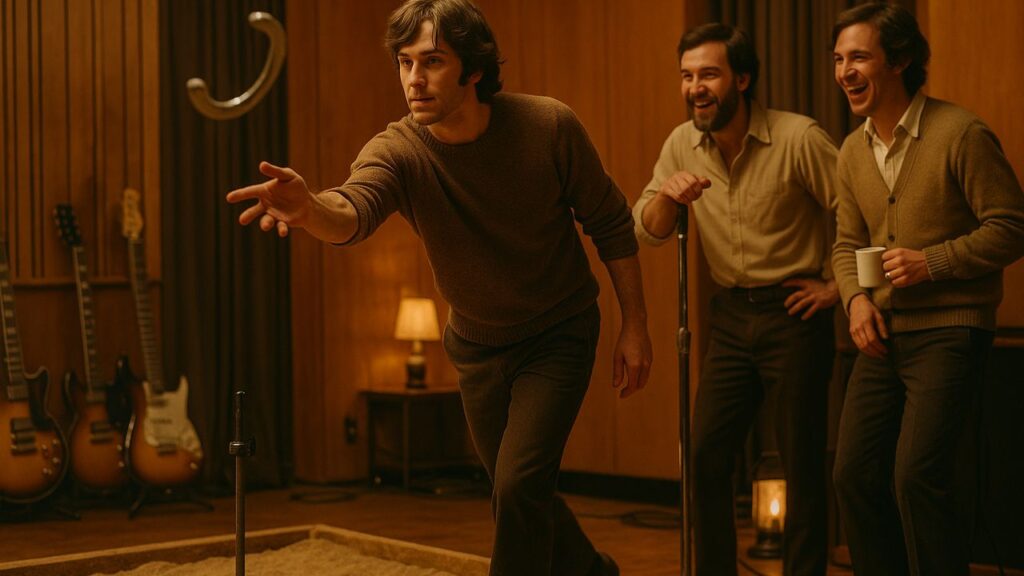
Horseshoes: The Perfect Break Between Takes
Horseshoes has always been a game of:
- timing
- rhythm
- repetition
- flow
A lot like songwriting.
Long studio sessions can get tense. Endless retakes. Creative disagreements. Microphones humming. Someone keeps tuning their guitar just slightly differently every time.
A game of horseshoes?
That resets the human engine.
It’s active but not exhausting.
Competitive but friendly.
Calming, but still full of laughter and banter.
If you were a producer back then, you’d almost want to install a pit on purpose just to keep egos from boiling over.
And really, Abbey Road had the floor space for it.
The Setup (Studio-Approved… Eventually)
Picture the scene:
Studio techs wheel aside the microphone stands.
Someone brings in a tarp and some canvas sacks filled with sand.
A pair of metal stakes gets stuck in place, held upright with drum hardware clamps.
Is it regulation distance?
Absolutely not.
Is anyone measuring?
…One guy is definitely measuring.
There is always that guy.
But here’s the thing:
Even in imperfect backyard-style setups, the fundamentals of horseshoe pitching still apply.
The Grip
Index finger along the side, not curled over the top.
The Stance
Non-throwing shoulder facing the stake, feet grounded firm.
The Release
Smooth wrist, gentle rotation — no helicopter blades.
Even in a famous studio, the game teaches the same patience and focus it teaches in any backyard in America.
And that’s the beauty of horseshoes — whether you’re a global music icon or a neighbor grilling burgers, the game levels everyone out.
The Personalities at the Pit
Every group has these archetypes.
Doesn’t matter if they’re rock stars, warehouse buddies, or uncles at a cookout.
1. The Technician
This player has analyzed:
- spin rate
- arc height
- ringer probability curves
- wind resistance (inside a studio, yes.)
He measures the stake distance twice.
He repositions his foot between every throw.
He has diagrams.
He is dead certain he can teach everyone else to throw better.
He cannot.
But bless him. He tries.
2. The Performer
This one doesn’t just throw.
He announces he’s about to throw.
He adds:
- shoulder shimmy
- back-foot pop
- unnecessary slow-motion wrist flick
No one asked for theatrics.
Everyone loves the theatrics.
He is the reason someone is laughing so hard that the throw goes wide.
3. The Peacekeeper
He keeps score, organizes turns, and clarifies rules when tempers flare.
He also:
- apologizes for everyone
- makes snacks appear magically
- ensures no grudge lasts longer than one throw
Without him, the game dissolves in 12 minutes.
He is the backbone of recreational play everywhere.
4. The Silent Ringer Machine
Does not talk trash.
Does not warm up.
Does not posture.
Steps forward.
Throws.
Clang — ringer.
Everyone is furious.
He does not care.
We all know this guy.
Why Horseshoes Fit Creative Personalities
Horseshoes isn’t just a lawn game — it’s a conversation game.
It allows:
- thinking space between throws
- reflection in the rhythm
- shared humor in the misses
- pride in the perfect connection of iron and steel
Musicians understand tempo.
They feel rhythm in breathing.
They know when something is “off” or “locked in.”
A good ringer has the same emotional signature as a perfectly in-tune chord.
When the shoe leaves your hand just right, you know before it lands.
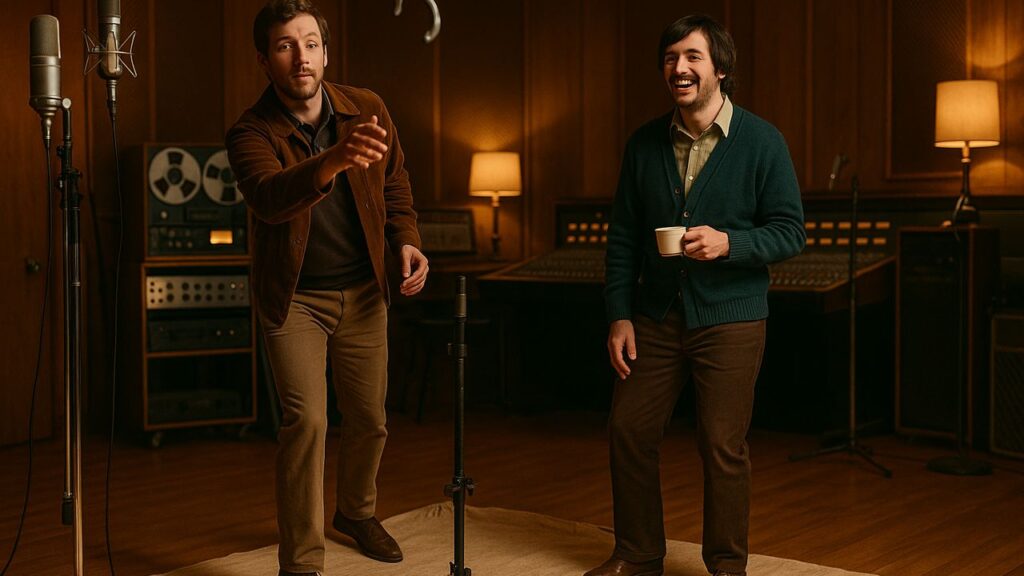
Would Horseshoes Have Influenced the Music?
Not rewriting songs — that’s not the point.
It’s the mindset shift.
Horseshoes teach:
- repeatability under pressure
- patience between attempts
- looseness leading to accuracy
- letting mistakes go before the next throw
That’s:
- rehearsal discipline
- recording patience
- on-stage resilience
If horseshoes were part of the daily rhythm of that studio, the music likely would’ve felt:
More relaxed.
More playful.
More human.
And isn’t that what made that era special?
The Real Lesson: Horseshoes Belong Everywhere
Horseshoes have survived because it:
- welcomes beginners
- rewards practice
- encourages friendly rivalry
- builds community
It doesn’t matter:
- where you play
- what you wear
- what music you listen to
- or whether your pit is a regulation masterpiece or two stakes pushed in the dirt
Horseshoes is about connection.
Just like music.
Just like storytelling.
Just like the memories that outlive us.
So Could It Have Happened?
Absolutely.
Because:
- Musicians needed breaks
- Friends needed laughter
- And somebody always brings up a backyard game at the perfect moment
And honestly?
It’s impossible not to smile picturing a couple of guys, instruments set aside, leaning against amplifiers, laughing over a leaner that should have been a ringer.
That’s universal.
That’s timeless.
That’s horseshoes.
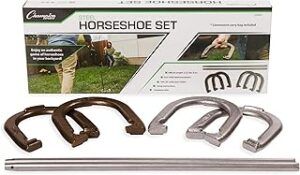
Horseshoe Game Set
Thoughts
If the world’s greatest creative minds had spent even twenty minutes a day tossing horseshoes between takes, here’s what would’ve happened:
- More laughter
- More shared traditions
- More stories that never made the headlines but mattered deeply
Because horseshoes isn’t just a game —
It’s a moment in time you share with people who matter.
And that’s the real music of life.