How to Host a Backyard Horseshoe Tournament (On a Budget)
Everything You Need to Set Up, Organize, and Run a Fun and Competitive Event Without Breaking the Bank
Want to run a fun and affordable horseshoe tournament at home? This guide shows you how to plan, organize, and host a backyard competition that’s exciting, budget-friendly, and totally memorable.
Introduction: Why a Backyard Horseshoe Tournament?
You don’t need a country club or stadium pit to throw a great tournament.
In fact, some of the most memorable matches happen in someone’s backyard—laughter, friendly trash talk, burgers on the grill, and stakes in the ground.
Whether you’re celebrating a birthday, family reunion, or just looking to spice up your weekend, hosting a backyard horseshoe tournament is cheaper and easier than you think.
In this guide, I’ll walk you through:
- How to prep your yard and setup your court
- Tournament formats that keep it fair and fun
- How to get everyone involved (even if they’re not pitching)
- Product suggestions that keep your budget low
- Plus printable templates and pro tips for smooth game flow
Let’s turn your backyard into a pitching paradise. 🎯

Step 1: Choose Your Format (Fair and Fun)
Before you put a stake in the ground, figure out the structure of your tournament. Here are the most popular backyard-friendly formats:
🎲 Round Robin
- Each player or team plays every other competitor
- Best for small groups (4–8 players)
- Keeps everyone engaged the whole time
🏆 Single Elimination
- Players are out after one loss
- Great for tight timeframes
- Works best with brackets of 4, 8, or 16 players
♻️ Double Elimination
- Everyone gets a second chance
- A bit more competitive
- Requires more time (but totally doable for serious games)
👫 Team Doubles
- Pair up for fun (great for family events)
- Combine beginner + experienced players
- Bonus: More people play with fewer pits
💡 Tip: Use a free online bracket generator or draw names from a hat!
Step 2: Backyard Court Setup (Quick + NHPA-Friendly)
You don’t need an official NHPA pit to get close to regulation. Here’s how to set up your court without spending a fortune:
🛠️ Materials Needed:
- 2 steel stakes (36” long, 1” thick)
- Measuring tape or rope
- 2 sets of horseshoes (4 total)
- Sand or dirt for the pitching pit
- Chalk or string for foul lines
📏 Dimensions (Adapted for Backyard Play):
- 40 feet between stakes (regulation distance)
- 3 feet wide pit (can go up to 6 ft)
- Stakes tilted slightly (12° toward opposite pit)
- Foul line: 27 ft from the stake (for beginners or juniors)
🪵 Optional Add-Ons:
- Wooden backboards to stop bounce-outs
- Rubber mats or carpet for safe footing
- Shade tents or umbrellas for longer events
👉 You can build a DIY pit for under $50 with some wood, sand, and tools you probably already own.
Step 3: Gather Your Gear (On a Budget)
You don’t need pro-level gear to host a great event—just reliable equipment that plays well.
🧲 Recommended Starter Horseshoe Set:
- 4 steel horseshoes + 2 stakes
- Official weight and size
- Carry case for easy transport
✅ Look for regulation-sized steel horseshoe sets with a reasonable price point and verified reviews. Many starter kits offer great value and will last multiple seasons.
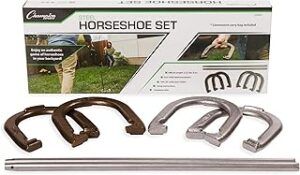
Horseshoe Game Set
🎟️ Extras to Consider:
- Scorecards or erasable scoreboard
- Measuring tool (tape or folding ruler)
- Mini trophies or medals
- Chalk or cones for marking lanes
Step 4: Invitations & Signups
Make your event feel official (but fun) by treating it like the real deal.
🗓️ Send Out Invites:
- Use free tools like Canva, Evite, or even text-based signups
- Include time, address, RSVP date, what to bring
- Ask players to arrive early to warm up
🎽 Dress Code Ideas:
- Matching t-shirts or color teams
- Bandanas, hats, or arm sleeves
- Fun nicknames for brackets (e.g., “Ringer Kings vs Pit Crushers”)
Step 5: Game Day Flow – Keep It Moving
You want a smooth and fun flow, not dead time or confusion.
📋 Setup a Game Board:
- Use a whiteboard, bracket printout, or clipboard
- Track wins/losses, matchups, and next rounds
- Appoint a scorekeeper or rotate duties
🔄 Keep Everyone Involved:
- Set up lawn chairs around the pit for spectators
- Play upbeat music (but not too loud)
- Offer side challenges (e.g., longest ringer streak, funniest stance)
🧃 Snacks & Hydration:
- Provide coolers with water, soda, or sports drinks
- Potluck-style snacks or BYO cooler
- Optional BBQ or grill setup (makes it a party!)

Step 6: Award Time (Everyone Wins)
At the end of the tournament, gather everyone around and hand out:
- 🏅 Mini trophies, medals, or homemade awards
- 🧢 Prizes like a cap, a drink koozie, or even a horseshoe magnet
- 📸 Group photo of all players (great for social media or next invite!)
🏆 Consider “fun” awards too:
- Best Throwing Form
- Most Spirited Player
- Loudest Cheer Section
- Most Creative Horseshoe Name
Budget Breakdown: How to Keep It Under $100
| Item | Approx. Cost |
|---|---|
| Starter Horseshoe Set | $35–$45 |
| DIY Pit Materials (wood/sand) | $20–$30 |
| Scoreboard/Printouts | $5 |
| Trophies/Medals (Optional) | $10–$15 |
| Snacks/Drinks (BYO or Potluck) | $10–$20 |
| Total | $80–$100 |
📌 Already own a set of horseshoes? You’re halfway there.
FAQ: Hosting a Backyard Horseshoe Tournament
Q: Do I need permission to host a tournament in my yard?
A: Not usually, unless you’re inviting a large crowd or using loudspeakers. Always be courteous to neighbors.
Q: Can I host a tournament with just one pit?
A: Yes—just plan for more rounds or use a rotation format. One pit works well for 4–8 players.
Q: What if I don’t have real horseshoe stakes?
A: Use rebar or steel rods from a hardware store (about 36 inches). Make sure they’re secure and angled correctly.
Q: How long should the tournament last?
A: Small group = 2–3 hours. Larger groups = 4+ hours. Keep matches short (e.g., 21-point games or time limits).
Q: Can kids participate?
A: Absolutely! Adjust the foul line distance and provide lighter horseshoes if needed.
Final Thoughts: Make It Fun, Not Fancy
You don’t need a big budget or pro-level gear to throw a tournament everyone will remember.
It’s about the experience, the laughs, the friendly competition—and yeah, maybe that one perfect ringer that gets replayed in everyone’s mind.
So start planning your backyard bash today. With a few stakes, a good attitude, and the right format, you’ll create an event worth pitching for.
🧲 Ready to Get Started?
👉 Grab a starter horseshoe set that’s durable, affordable, and great for backyard games.
Set your court, invite your crew, and let the ringers fly!
Hi there, and thanks for stopping by! My name is Larry, and I’m the voice behind PlayingHorseshoes.com. I love the game and have been playing since I was a kid. I started this blog because I am passionate about the sport, and with all the technology, I hope the sport doesn’t die. I plan to do my part to keep it going for me and my brother’s sake. Thanks for stopping by, feel free to subscribe and comment. Thank You!