
When Horseshoes Attack: Tales from the Pit
An Investigative Report by Larry McCullough
The Day Fun Turned to Fear
It was a bright Saturday afternoon in early July. The burgers were sizzling, the kids were sticky with popsicles, and the air smelled faintly of sunscreen and bravado.
By all accounts, the Johnson family’s annual backyard horseshoe tournament began like any other — laughter, light trash talk, and one too many folding chairs arranged too close to the pit.
Then it happened.
The throw.
The clang.
The scream.
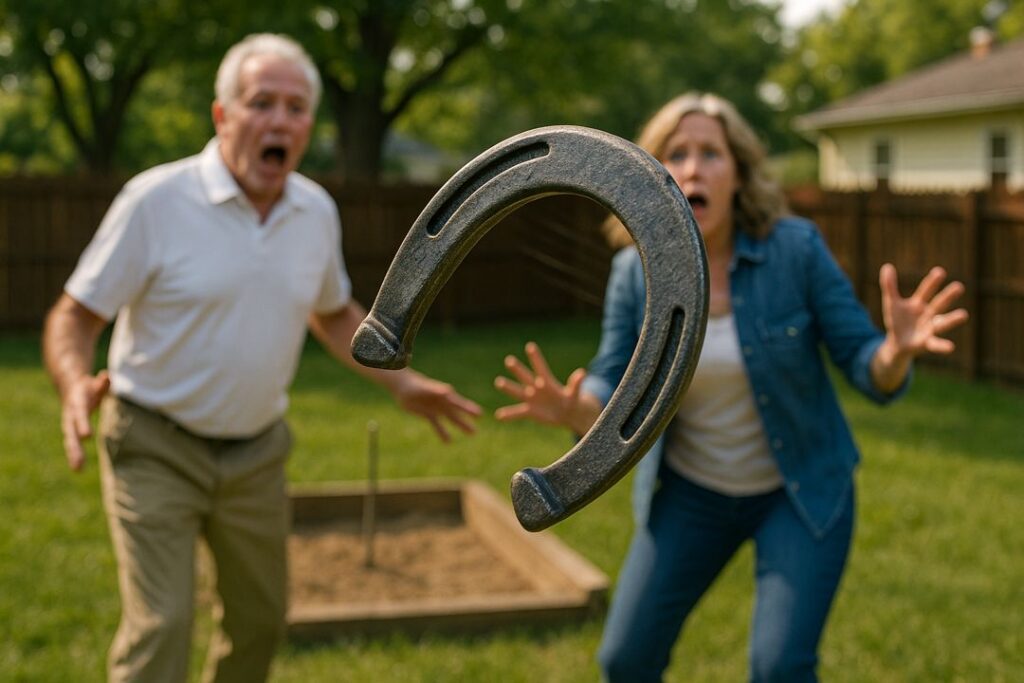
Witnesses still recall the moment when a routine pitch from Uncle Eddie veered left, defying both gravity and good judgment. The shoe ricocheted off the stake, skimmed a beer cooler, and came to rest against the family dog’s water bowl. Nobody was seriously injured, but something deeper was shaken that day — the very foundation of backyard trust.
As one neighbor later said, “You don’t expect violence at a cookout. Not from horseshoes. Maybe from badminton, but not horseshoes.”
Scene of the Incident
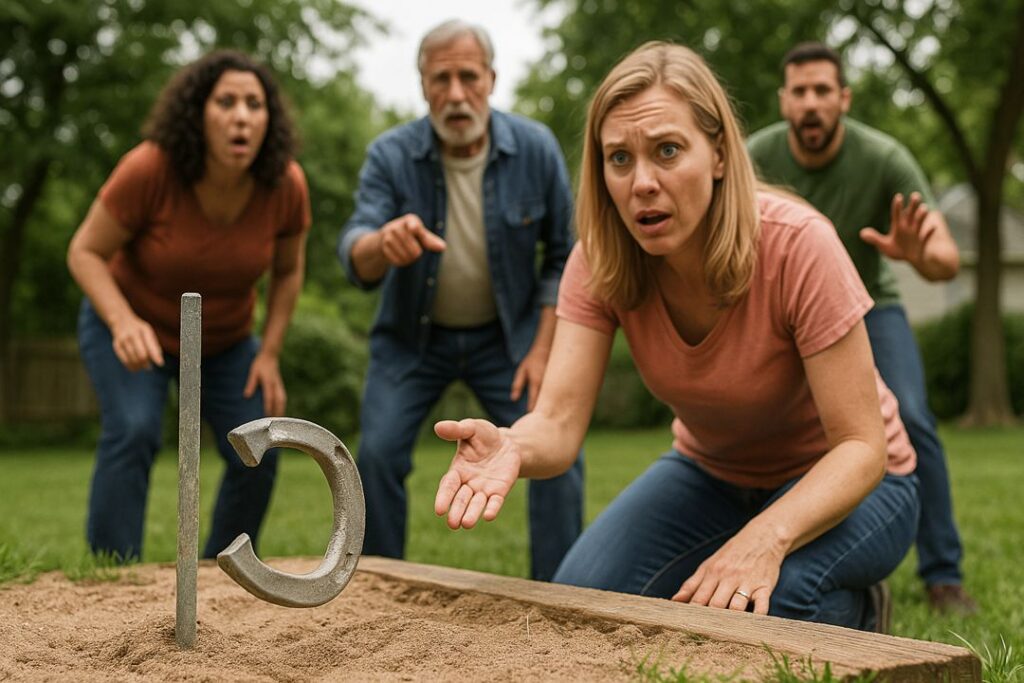
Investigators (by which we mean the three men who sobered up first) surveyed the pit. The sand showed clear signs of “impact trauma.” The stake leaned five degrees south — evidence, they claimed, of “a rogue torque event.”
In the aftermath, beer cans were marked as “exhibits,” and the family’s cornhole set was quietly retired “until further notice.”
According to amateur pit analyst Carl “Two-Ringer” Jenkins, the issue wasn’t the throw — it was the energy.
“You could feel it in the air,” Jenkins said, pacing near the stake. “That shoe didn’t want to land. It wanted to fight.”
The Boomerang Shoe: A Weapon Reborn
Every community has its myths, and in the small town of Pine Hollow, they whisper about the Boomerang Shoe.
It was a humid afternoon when local competitor Debbie “Deadeye” Holloway took the pit. Eyewitnesses describe a perfect underhand arc, the kind that makes grown men stop mid-bite of a hot dog.
But halfway to the stake, the shoe curved. Then curved back.
“I swear on my lawnmower, it came right for her,” said neighbor Paul Merritt. “She ducked. The shoe hit the shed, bounced off the rake, and landed right back in her hand. I’ve never seen anything like it — and I watched NASCAR in the rain once.”
Debbie still plays, but only with what she calls “pre-blessed equipment.”
Collateral Damage: Coolers, Chairs, and Egos
While physical injuries are rare, property damage in casual horseshoe circles remains an under-reported crisis. Folding chairs, coolers, and lawn ornaments often bear the brunt of errant throws.
Local hobbyist Rita Lou Simmons recalls her trauma vividly:
“I’d just opened a brand-new pack of hot dogs when one of them shoes flew through the mustard cloud like a missile. It dented my Yeti cooler. Do you know how much them things cost?!”
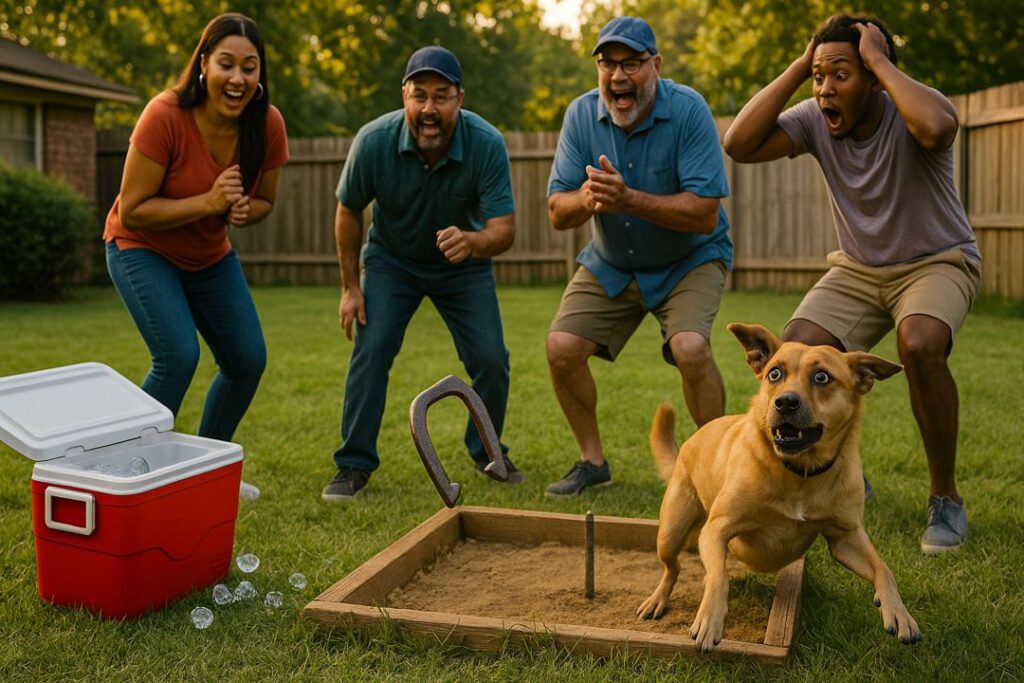
Even more fragile than the coolers are the egos. In a small-town horseshoe match, pride is currency. When a player misses a ringer by inches, the pit goes silent — until someone mutters, “Guess that one slipped.”
That silence can be more painful than any bruise.
Expert Analysis: When Metal Meets Mayhem
To understand the psychology behind these metallic mishaps, we consulted self-proclaimed safety expert Earl “Doc” Hanley, who’s neither a doctor nor particularly safe.
“It’s the adrenaline,” Hanley explained. “The average player underestimates the raw power of a full-body horseshoe pitch. You’re channeling centuries of blacksmith energy, barbecue competitiveness, and whatever’s in that cooler.”
He went on to propose that most horseshoe injuries are caused not by poor aim, but by what he calls ‘Stake Hypnosis’ — the trance-like tunnel vision that occurs when a player locks eyes on the target and forgets there are, in fact, other humans nearby.
Hanley’s recommended treatment? Sunglasses, deep breathing, and “a short break between innings to recalibrate your aura.”
The Reckoning: Lessons Learned at the Stake
After the infamous 2023 “Rogue Shoe Incident,” Pine Hollow residents established The Pit Safety Protocols, a set of informal guidelines to reduce backyard casualties:
- The Two-Step Rule: Spectators must stand at least two steps back from the pit — or one step if holding a beer, since balance is compromised.
- Helmet Optional (But Encouraged): Bicycle helmets, colanders, and even novelty Viking hats have been spotted since the rule took effect.
- Shoes Down Before Arguments: If a call is disputed, all shoes must be placed on the ground before tempers rise.
The reforms have worked. Mostly.
As one player noted, “Nobody’s lost a toe since Labor Day, so I’d call that progress.”
Gear Spotlight: The Unsung Heroes of Horseshoe Safety
It’s easy to laugh until you’ve seen a shoe bounce off a propane tank. These days, more players are turning to heavy-duty backyard game safety gear, like the SureStep Pit Mat Set — a shock-absorbing surface that keeps rebounds low and egos intact.
Others swear by the GrillGuard Sunglasses, which allegedly protect both eyes and dignity when a throw goes off-course.
Pro tip: keep a dedicated First-Aid Cooler nearby, stocked with ice packs and humility.
The Pit Files: Other Reported Incidents
- “The Double Ringer Disaster” — Two perfect throws collided mid-air, fusing together “like a steel pretzel.” Both players claimed the point. Neither was right.
- “The Case of the Flying Sand” — A teenager’s overzealous rake kick-off turned into a dust storm that blinded an entire picnic table. No ringers, but impressive confusion.
- “Stake in the Rain” — A torrential downpour mid-game turned the pit into a mudslide. One shoe disappeared completely. It resurfaced three months later during a landscaping project.
Each case adds to the growing legend — and to the community’s deep respect for the game’s unpredictable nature.
FAQ: Protecting Yourself from Future Attacks
Q: How far should spectators stand from the pit?
A: Ideally, 10 feet. Realistically, as far as your insurance policy allows.
Q: Can I play barefoot?
A: Only if you’re trying to meet the ER staff on a first-name basis.
Q: Should kids play?
A: Absolutely — as long as they’re on the scoreboard, not in the splash zone.
Q: Is there a “safe side” of the pit?
A: Yes — behind the guy who’s losing. He’s not throwing hard anymore.
Q: Do ringers count if they ricochet off the cooler first?
A: Only in households that practice “creative scoring.”
Final Thoughts: The Pit Remembers
Every summer, new players step up to the stake, confident and carefree. They laugh at the caution tape, wave off safety glasses, and toss their first shoe with reckless optimism.
And yet — the pit remembers.
It remembers every dented cooler, every bruised shin, every heroic dive to save the potato salad. It remembers the boomerang shoe and the look in Uncle Eddie’s eyes when he realized physics had turned against him.
So as you gather your family and friends for another round this season, do it with reverence. Check your footing. Mind your surroundings. And for heaven’s sake — never underestimate the ancient power of a horseshoe in motion.
Because in the pit…
No one is truly safe.
Call to Action
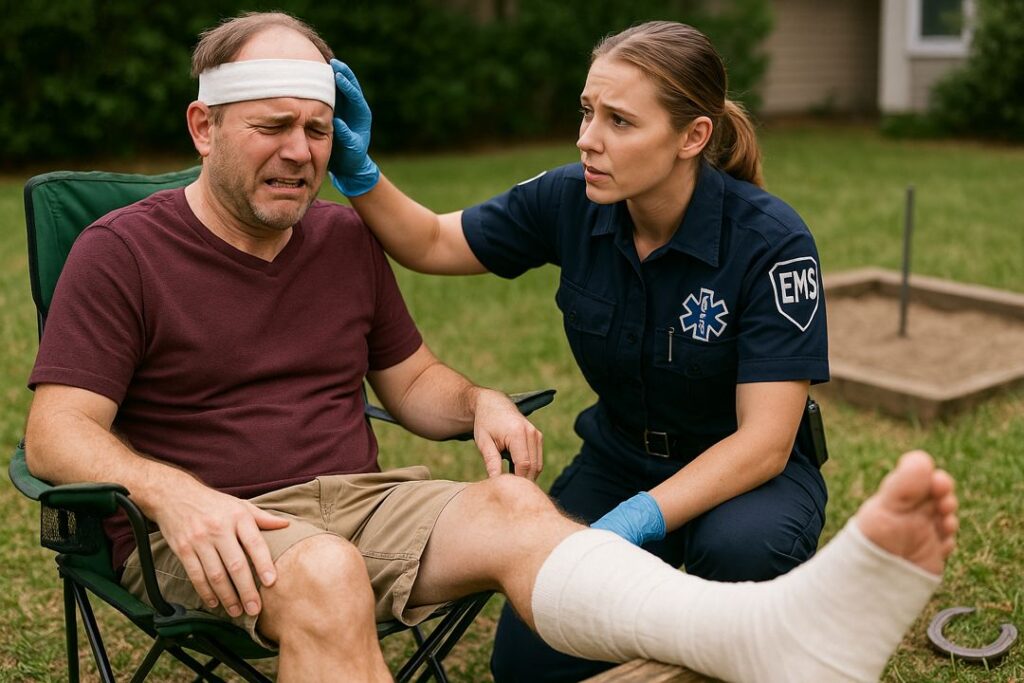
If you’ve survived your own “horseshoe incident,” share your story in the comments below — your testimony might just save a cooler, a toe, or a little backyard pride.
And before your next game, gear up smart: bring your SureStep Pit Mats, your shades, and your sense of humor.
Because you’re not just playing horseshoes anymore —
You’re surviving it.


