Beat the Nerves: Mental Game Tips for Horseshoe Players
When it comes to tossing horseshoes, the game might seem simple at first glance — just chuck and score, right? But anyone who’s spent time near the pit knows there’s a lot more happening upstairs. Horseshoes is a game of precision, patience, and yes — mental toughness.
Think about it: in sports like golf, tennis, or archery, the smallest lapse in focus can ruin a perfect round. Horseshoes belong in the same conversation. It’s not just about strength or a textbook swing. It’s about keeping your head in the game, staying calm when the pressure rises, and trusting your body to deliver the throw you’ve practiced a thousand times.
In this deep dive, we’ll explore what it takes to master the mental side of horseshoe pitching. Whether you’re a weekend player trying to keep cool in front of friends or a league competitor looking for an edge, this guide will give you the tools to stay focused, play smarter, and throw with confidence every single time.
Why the Mental Game is as Important as Your Release
Ask any seasoned pitcher: mental breakdowns lose more games than bad form.
- Muscle Memory Needs Calm: Stress interferes with timing. That’s why your release feels “off” when you’re nervous.
- Focus = Consistency: If you’re distracted by the scoreboard, crowd, or your last miss, you’re more likely to throw poorly.
- Confidence Builds Accuracy: When you believe in your throw, you commit to it — which often results in a better pitch.
In short, your mind is your most powerful tool on the court. And just like your arm, it needs training.
Step 1: Build Confidence Like a Pro
Confidence isn’t something you fake — it’s something you build.
- Trust Your Reps: The more you practice, the more faith you’ll have in your ability to deliver under pressure.
- Celebrate Small Wins: Every leaner, every close shoe, every good inning matters.
- Learn From Misses: Instead of getting mad at a bad pitch, see it as feedback. What can you adjust next time?
Think of confidence like a friendship — it grows the more time you invest in it. By logging consistent practice hours and stacking positive experiences, you make confidence your default setting on game day.
Step 2: Develop a Pre-Game Routine
A pre-game routine isn’t superstition — it’s mental conditioning. It tells your brain: we’re switching into performance mode now.
Elements of a Solid Routine
- Mental Reset: Five minutes of slow breathing or mindfulness before the first pitch clears your head.
- Visualization: Picture yourself nailing that first ringer. Feel the shoe leave your hand. Hear the “clang.”
- Stretch & Warm Up: Get your muscles and joints moving to prevent stiffness and smooth out your swing.
Your routine doesn’t have to be complicated — it just needs to be consistent. The goal is to arrive at the pit already focused and calm, not scrambling to get in the zone.
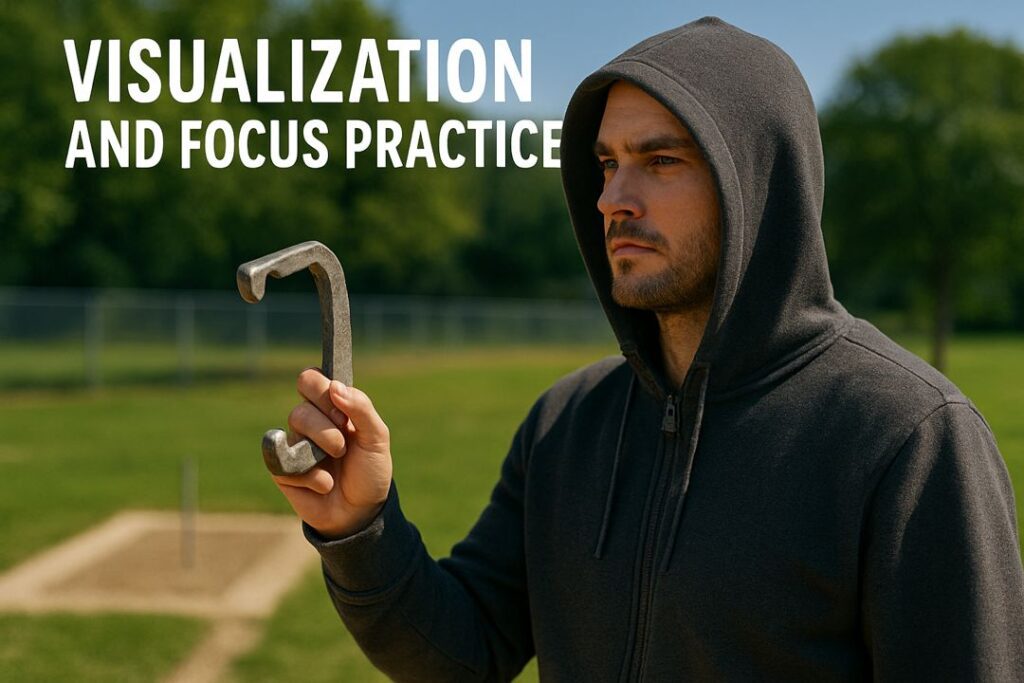
Step 3: Master the Art of Visualization
Visualization is more than daydreaming — it’s mental rehearsal. Sports psychologists have proven that picturing a skill activates the same neural pathways as actually performing it.
- Before the Game: Imagine yourself walking up, gripping the shoe, and making a smooth throw.
- During the Game: Take a moment before each pitch to “see” the shoe’s flight path.
- After a Miss: Picture yourself making the adjustment and hitting the next one.
When you’ve “been there” in your mind, the actual moment feels more natural and less stressful.
Step 4: Learn to Manage In-Match Pressure
Even the calmest players can feel the heat when the score is close. Here’s how to keep from unraveling:
Breathe Like a Champion
Inhale deeply for 4 counts, hold for 1, exhale for 6. This slows your heart rate and brings you back into focus.
Play One Pitch at a Time
Don’t think about the next inning or what happens if you miss. Zero in on this throw, this release.
Reset Quickly
Bad throws happen. Take a breath, shake it off, and mentally reset before the next shoe.
Step 5: Strengthen Concentration and Focus
Focus is like a muscle — the more you train it, the stronger it gets.
- Identify Distractions: Are you thrown off by noise? By people watching? Recognize triggers so you can learn to block them out.
- Break the Game Into Pieces: Instead of thinking “I need 21 points,” think “let’s just land one close shoe.”
- Practice Presence: Spend 2–3 minutes a day meditating or practicing mindfulness. Being present is a skill you can train.
Step 6: Build Mental Resilience
Resilience is your ability to bounce back — and it’s critical in horseshoes.
- Adopt a Growth Mindset: See every tough game as an opportunity to improve.
- Stay Positive: Swap “I blew it” with “Next throw will be better.”
- Analyze After the Game: Reflect on what worked and what didn’t, then move on.
This approach keeps you from spiraling after a bad inning and prepares you to perform better next time.
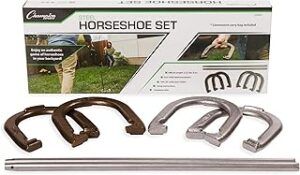
Horseshoe Game Set
Step 7: Practice Under Simulated Stress
If you only practice in calm, easy conditions, real competition will rattle you.
- Play With a Timer: Give yourself 10 seconds to throw once you pick up the shoe.
- Compete With Friends: Friendly wagers make you feel that “game pressure.”
- Add Distractions: Play with music or chatter in the background to simulate noisy environments.
By creating pressure in practice, you make real matches feel easier.
Step 8: Communicate Effectively in Doubles Play
If you’re playing doubles, your mental game also affects your partner.
- Stay Positive: A quick “nice shot” can lift their confidence.
- Be Clear: Communicate strategy simply — don’t overcomplicate the plan.
- Keep Morale High: Use humor or encouragement to shake off bad innings together.
Strong team communication can turn the tide of a match.
Step 9: Reflect and Set Goals Post-Game
Post-game reflection is where growth happens.
- Write It Down: Keep a small notebook and jot down what went well and what needs work.
- Set One Goal: For the next session, choose one mental skill to focus on — maybe keeping calm after a miss.
- Review Over Time: Look back monthly to see how far you’ve come.
Reflection turns every game into a learning opportunity and keeps you progressing steadily.

Recommended Gear for Mental Training
Skip the score tower this time — here are tools that actually train your mental game:
- Grip Trainers or Stress Balls: Squeeze during downtime to warm up your hands and release tension.
- Noise-Cancelling Earbuds: Practice focus by playing crowd sounds or distractions while pitching.
- Pocket Timer: Helps simulate time pressure for tournament-style training.
These simple tools keep you sharp mentally and physically.
Call to Action
Your next big ringer isn’t about luck — it’s about mindset. Starting today, build a short pre-game routine, practice breathing before every throw, and keep a journal of your focus and confidence levels.
Do this for a few weeks and watch how your nerves fade away and your scores climb. The next time a match is on the line, you’ll step up cool, calm, and ready to deliver.
FAQs on the Mental Game of Horseshoes
Q: Can nerves ever completely go away?
A: Not entirely — and that’s okay. The goal isn’t to eliminate nerves but to manage them so they don’t control your throw.
Q: What if I get angry after a bad throw?
A: Pause, breathe, and reset. Anger tightens muscles and ruins timing — staying loose is key.
Q: How long does it take to develop mental toughness?
A: You can feel a difference in weeks if you practice consistently, but it’s a lifelong skill that keeps improving.
Q: Should I compete more to toughen up mentally?
A: Yes — competition is the best teacher. Just remember to reflect after each match so you turn experience into progress.
Final Thoughts
Beating the nerves isn’t about becoming emotionless — it’s about taking control of your mental state. Horseshoes is just as much a mind game as it is a throwing game. When you master your thoughts, your body follows, and your performance skyrockets.
So don’t just train your arm — train your brain. With the right mental tools, you’ll walk into every game ready to perform, no matter who’s watching or what’s at stake.
Hi there, and thanks for stopping by! My name is Larry, and I’m the voice behind PlayingHorseshoes.com. I love the game and have been playing since I was a kid. I started this blog because I am passionate about the sport, and with all the technology, I hope the sport doesn’t die. I plan to do my part to keep it going for my brother and my sake. Thank you for stopping by. Feel free to subscribe and comment. Thank You!