Horseshoes Around the World: How Different Cultures Play the Game
Introduction: One Game, Many Traditions
Horseshoes is more than just a backyard pastime. At its core, it’s part of a global family of tossing games where players aim for accuracy, skill, and bragging rights. While the U.S. claims horseshoe pitching as its own, you’ll find cousins of the game in pubs in Wales, clay pits in Colombia, beaches in Canada, and village squares in France and Italy.
Every culture puts its own spin on the same idea: toss an object toward a target, celebrate the satisfying clang or thud when you land it, and let competition and camaraderie do the rest. This article explores how different countries play their version of “horseshoes”, the history behind them, and why tossing games continue to thrive worldwide.
Section 1: Horseshoes in the United States
In the U.S., horseshoe pitching is the best-known variation. The rules are standardized by the National Horseshoe Pitchers Association (NHPA):
- Two steel stakes, 40 feet apart.
- Four steel horseshoes, each about 2.5 pounds.
- Players alternate pitching toward the stake, aiming for ringers (wrapping the shoe around the stake).
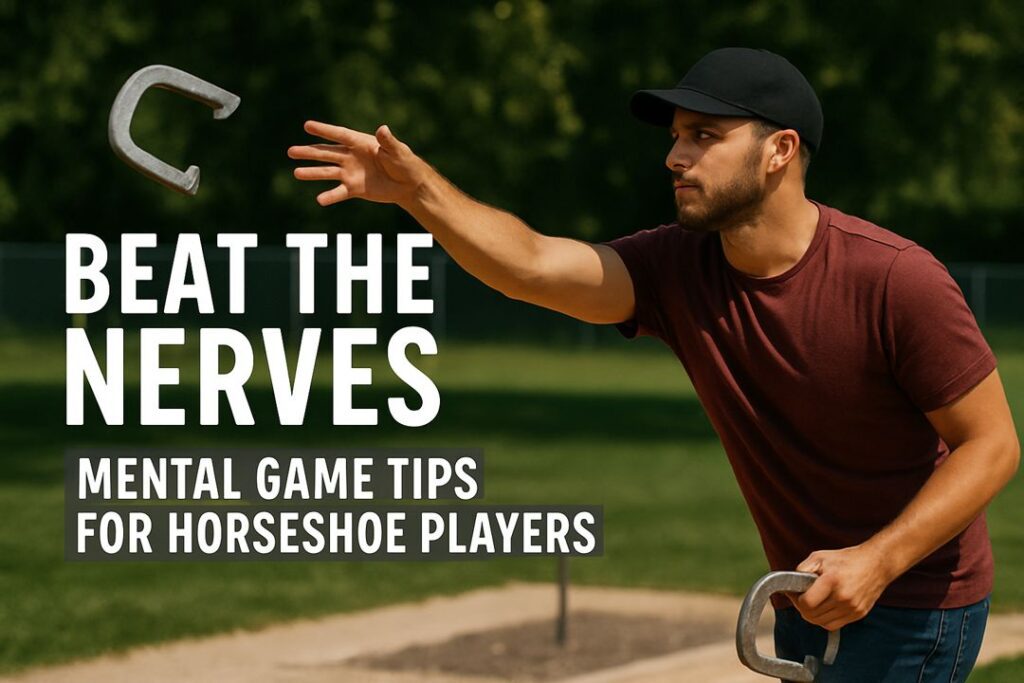
What started as a farm game in the 1800s grew into a competitive sport with world championships. Players like Ted Allen in the mid-20th century and Alan Francis today turned it into more than recreation — they made it a legitimate competition that demands technique, focus, and stamina.
Backyard versions keep the tradition alive at family gatherings and summer cookouts. Whether it’s kids learning to toss their first shoe or grandparents showing off their skill, horseshoes has always been about connection as much as competition.
Section 2: Quoits in the UK and Wales
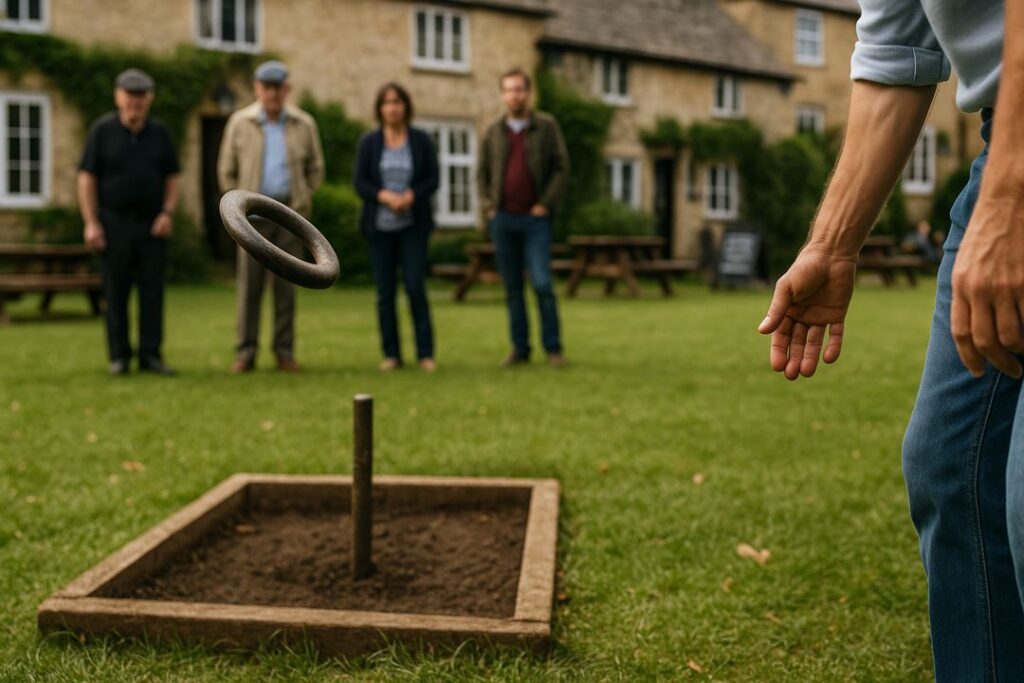
Travel across the Atlantic, and you’ll find quoits, one of the closest relatives to horseshoes.
English Quoits
In England, quoits is played with lighter iron or rope rings tossed at a stake (or “hob”) from about 18 feet away. The game is more compact than U.S. horseshoes, making it a popular pub pastime.
North Wales Quoits
In Wales, however, the tradition is even more demanding. Players throw heavy iron quoits, sometimes weighing over 10 pounds, at pins placed as far as 18 yards apart. These games are intense, requiring serious strength and stamina.
Quoits has a long history — many trace its roots back to ancient Greece and Rome, where soldiers threw rings as practice for spear-throwing. Over time, it evolved into a social game woven into the fabric of British leisure.
Section 3: Tejo in Colombia
If horseshoes is about precision, Colombia’s national sport tejo is about precision and fireworks.
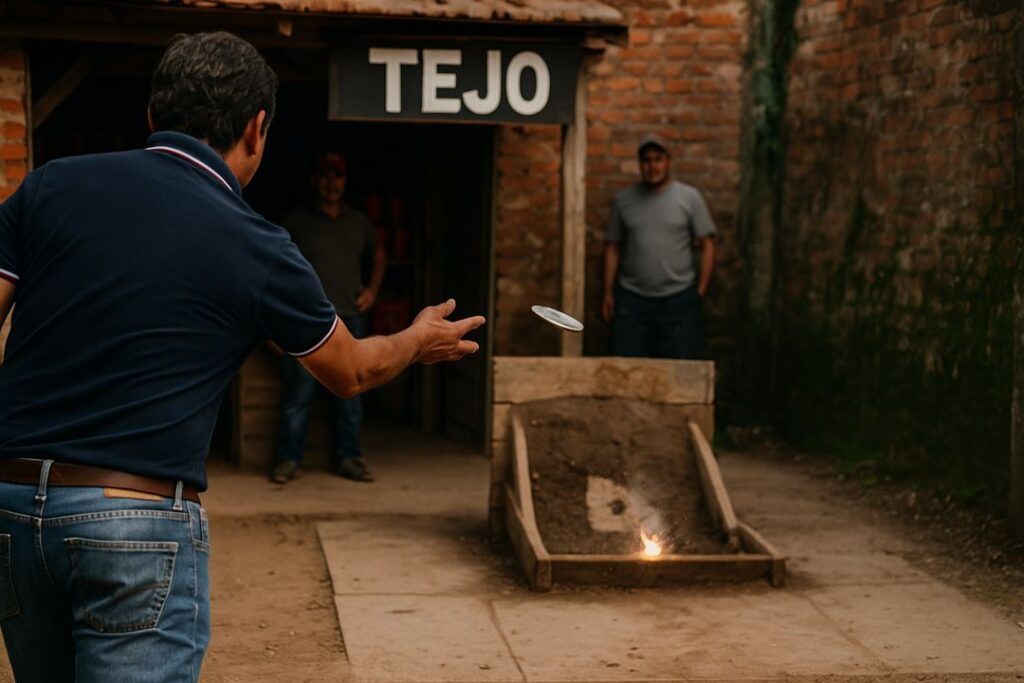
Tejo is played by tossing metal discs (tejos) at a clay board called a bocín, which has paper packets filled with gunpowder. When a tejo hits the target just right, the packet explodes with a loud pop and puff of smoke.
Scoring:
- A direct hit to the explosive target scores the most points.
- Landing close to the bocín still counts, keeping strategy important.
Tejo isn’t just a sport — it’s a social event. Matches often happen at dedicated tejo clubs, where food and drinks flow as freely as the competition. It’s a spectacular twist on the same principle: toss an object at a target and see who comes out on top.
Section 4: Muckers in Canada
Head north to Canada, and you’ll find muckers, a cottage and campground staple.
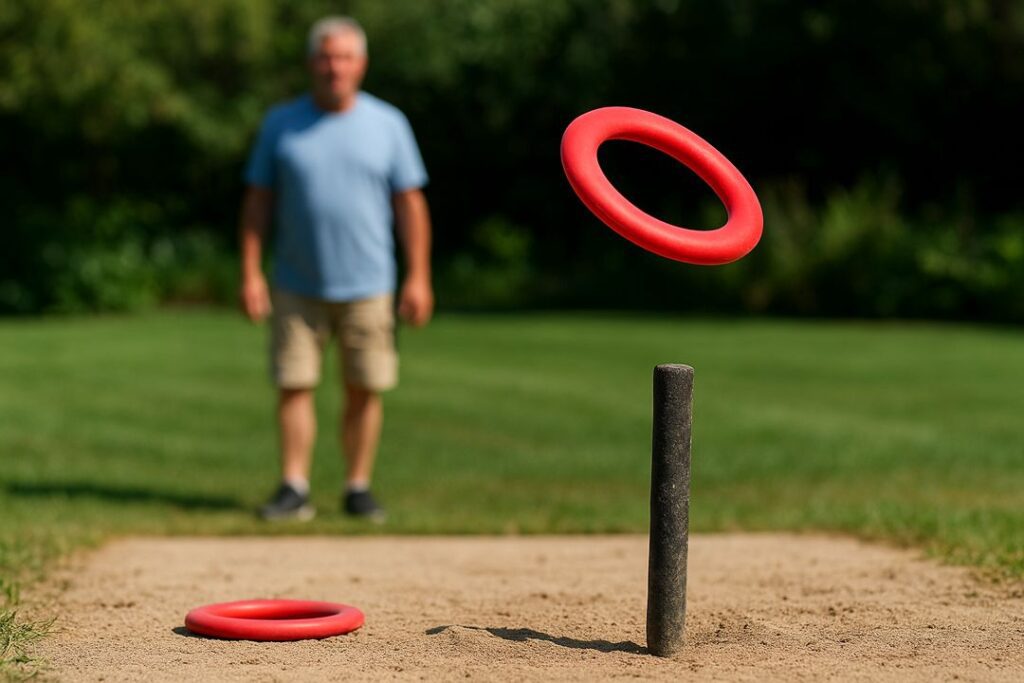
Instead of heavy steel, muckers are rubber rings tossed at stakes. They’re lightweight, portable, and safe for kids, making them perfect for family gatherings on the lake or at the campsite.
Scoring is similar to horseshoes: a ringer scores highest, but proximity counts too. While muckers may not have the history or prestige of horseshoes or quoits, they shine in accessibility — everyone from toddlers to seniors can join in.
Section 5: Bocce and Pétanque in Europe
While not direct relatives of horseshoes, bocce (Italy) and pétanque (France) belong to the same extended family of tossing games.
- Bocce: Played with heavy balls, the goal is to toss your bocce ball closest to a small target ball (the pallino). Strategy comes from knocking your opponent’s ball away.
- Pétanque: Similar to bocce but played on harder terrain like gravel, with players throwing smaller metal boules while standing inside a marked circle.
Both games share the same DNA as horseshoes: accuracy, strategy, and the social element of gathering friends outdoors. Their popularity across Europe proves that tossing games transcend culture and geography.
Section 6: Washers in the U.S. South & Midwest
Back in America, a popular cousin to horseshoes is washers. Instead of horseshoes or rings, players toss metal washers toward a box with a recessed cup.
- Three points if it lands in the cup.
- One point if it lands inside the box.
- The game is often played at picnics, tailgates, and festivals.
Washers is often described as “horseshoes without the stakes,” but the same principles apply — aim, consistency, and a bit of luck.
Section 7: Why Tossing Games Endure Across Cultures
What unites horseshoes, quoits, tejo, muckers, bocce, pétanque, and washers?
- Simplicity: Equipment is minimal. A stake, a target, or a ball is all you need.
- Skill + Luck: Mastery matters, but anyone can have a lucky throw.
- Social Fun: Tossing games are best played outdoors, with food, drinks, and friends.
- Adaptability: Each culture shapes the game to fit its resources — iron rings in Wales, rubber in Canada, gunpowder in Colombia.
At their core, these games remind us why humans play: to connect, compete, and celebrate.
Recommended Horseshoe Sets
If this global tour inspires you to pitch your own legendary game, here are two excellent options:
- St. Pierre American Professional Horseshoe Set – Pro-quality forged steel set, built to regulation standards. Perfect for those who want the authentic U.S. horseshoe experience.
- Rubber Quoit/Disc Set – A family-friendly, lightweight set that can be used indoors or outdoors. Great for kids or casual play, and it echoes the traditions of quoits and muckers.
Call to Action: Play Locally, Think Globally
The next time you step into your backyard to play horseshoes, remember you’re part of a global tradition. Whether it’s the clang of steel in America, the thud of a heavy quoit in Wales, the fireworks of tejo in Colombia, or the laughter around a washer box in Texas, tossing games connect people everywhere.
🎯 Grab a set, try a variation, and maybe even host a “global tossing games night” in your own backyard. After all, the joy of throwing and competing is universal.
FAQ
Q: What’s the difference between horseshoes and quoits?
A: Horseshoes use open-ended shoes and stakes 40 feet apart. Quoits use solid rings (often iron) and shorter or longer pitches depending on region.
Q: Is tejo really played with gunpowder?
A: Yes — small paper packets of gunpowder are placed around the target. When hit, they explode safely for dramatic effect.
Q: Which tossing game is easiest for kids?
A: Rubber quoits or muckers are best since they’re light and safe for indoor/outdoor play.
Q: Are tossing games competitive or just for fun?
A: Both! Horseshoes and quoits have professional tournaments, while muckers and washers are usually recreational.
Q: Can I play horseshoes indoors?
A: Only with rubber or foam sets. Steel sets require outdoor space for safety.
Final Thoughts: One World, One Toss
From American horseshoes to Welsh quoits, Colombian tejo to Canadian muckers, tossing games prove one thing: aiming for a target is a joy shared across humanity.
Some games explode, some clang, and some just thud softly into the dirt. But whether you’re chasing a world title or just passing time with friends, the experience is the same — competition, laughter, and the satisfaction of a perfect throw.
So step up to the line, pick your target, and make your throw. Somewhere in the world, someone else is doing the same — proving that while cultures differ, the spirit of play unites us all.
Hi there, and thanks for stopping by! My name is Larry, and I’m the voice behind PlayingHorseshoes.com. I love the game and have been playing since I was a kid. I started this blog because I am passionate about the sport, and with all the technology, I hope the sport doesn’t die. I plan to do my part to keep it going for my brother and my sake. Thank you for stopping by. Feel free to subscribe and comment. Thank You!