Choosing the Perfect Pitching Horseshoes: What Size and Weight Are Best for You
Discover how to choose the best pitching horseshoes for your skill level. Learn what size and weight work best, how to test fit, and which pro-recommended options to consider.
Not all horseshoes are created equal—especially when it comes to pitching. Whether you’re a beginner playing in your backyard or a seasoned competitor heading to a tournament, choosing the right size and weight of your pitching horseshoes can have a huge impact on your game.
This isn’t a one-size-fits-all situation. The right horseshoe feels like an extension of your hand—well-balanced, easy to control, and consistent through every throw. In this guide, we’ll break down everything you need to know about horseshoe sizing, weight ranges, grip comfort, and finding the best fit for your unique throwing style.
Let’s get you dialed in.
🧲 Why Size and Weight Matter in Pitching Horseshoes
The game of horseshoes may look simple from the outside, but every detail counts—especially the gear you’re using. Size and weight influence everything from your throwing technique to your consistency and fatigue level over multiple rounds.
What Happens When You Use the Wrong Size or Weight?
- You lose control mid-air
- Inconsistent landings
- Missed ringers from poor balance
- Faster muscle fatigue
- Strain on your wrist, elbow, or shoulder
🎯 If your horseshoes feel clunky, too light, or awkward during a throw—it’s time to reevaluate your equipment.
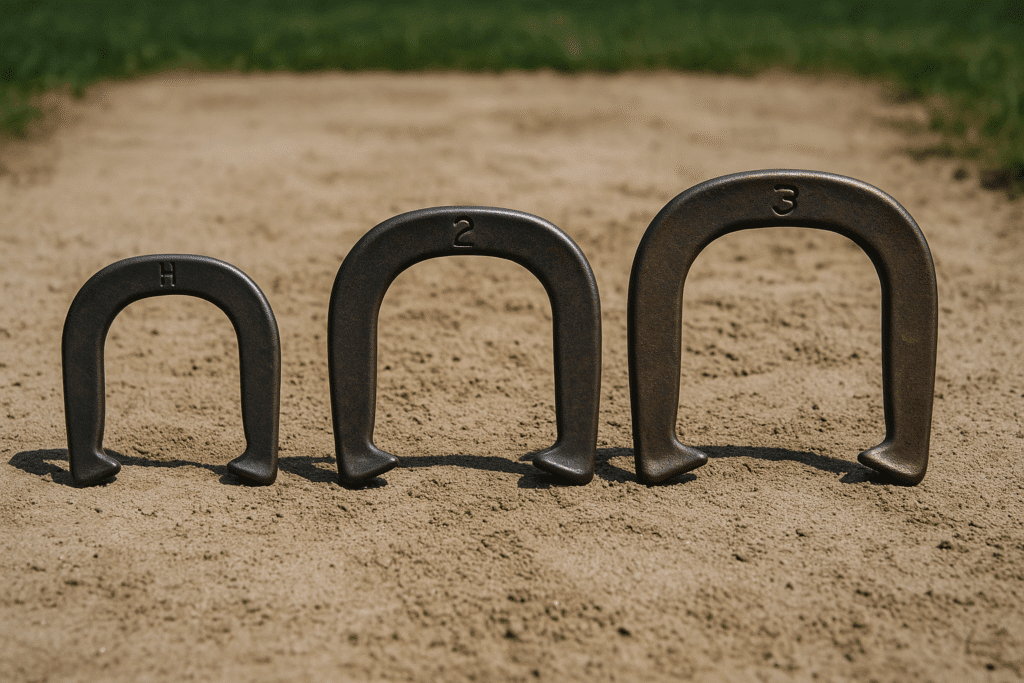
⚖️ Understanding Horseshoe Weight Standards
The National Horseshoe Pitchers Association (NHPA) sets regulations for competition-grade horseshoes. Here’s what they require:
- Weight Range: Between 2 lbs and 2 lbs 10 oz
- Width of Opening: 3.5 inches minimum
- Length: Typically 7.25–7.75 inches
Ideal Weight Ranges Based on Skill and Strength:
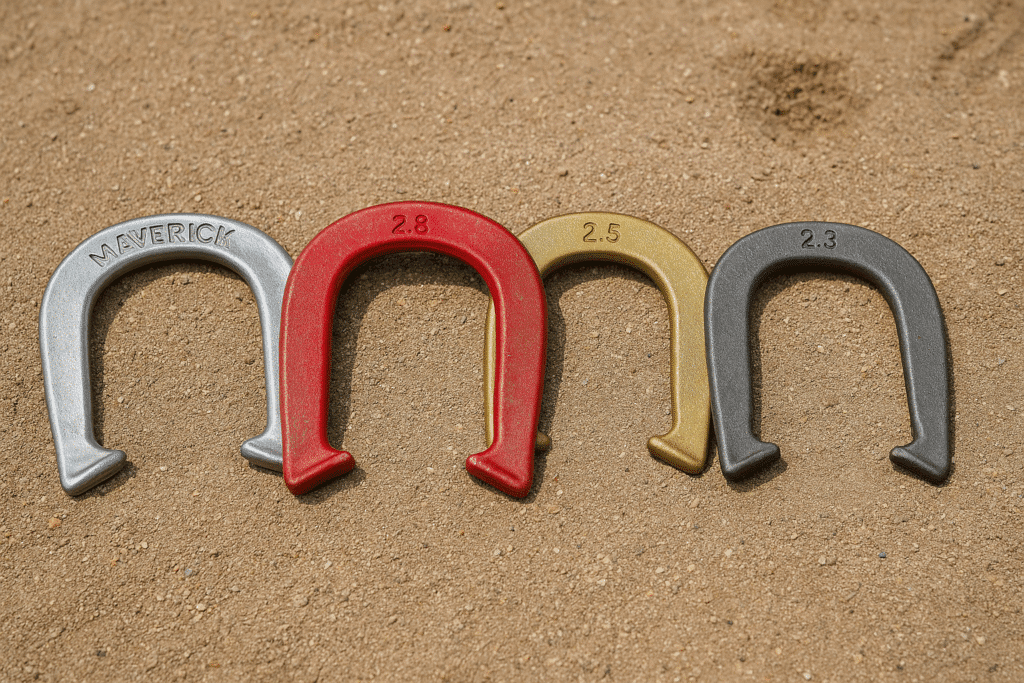
Player TypeIdeal WeightNotesYouth/Teen Beginners2.0–2.2 lbsLightweight and easier to controlAdult Recreational2.3–2.5 lbsBalanced for casual gamesAdult Competitive2.6–2.8 lbsBetter for accuracy and defensive playStrong Pros & Throwers2.9–2.10 lbs maxHigh momentum, requires refined technique
🧠 Pro Tip: Heavier doesn’t always mean better. It’s about matching the weight to your natural throwing motion and stamina.
📏 Finding the Right Size Horseshoe for Your Hand
While NHPA sizes are standardized, the shape and balance of a horseshoe vary by brand and model. That’s where fit and feel come into play.
What Affects the Fit?
- Grip shape (flat or contoured)
- Heel width (for flip vs. turn throwing styles)
- Center of gravity (balance distribution)
Try This Quick Fit Test:
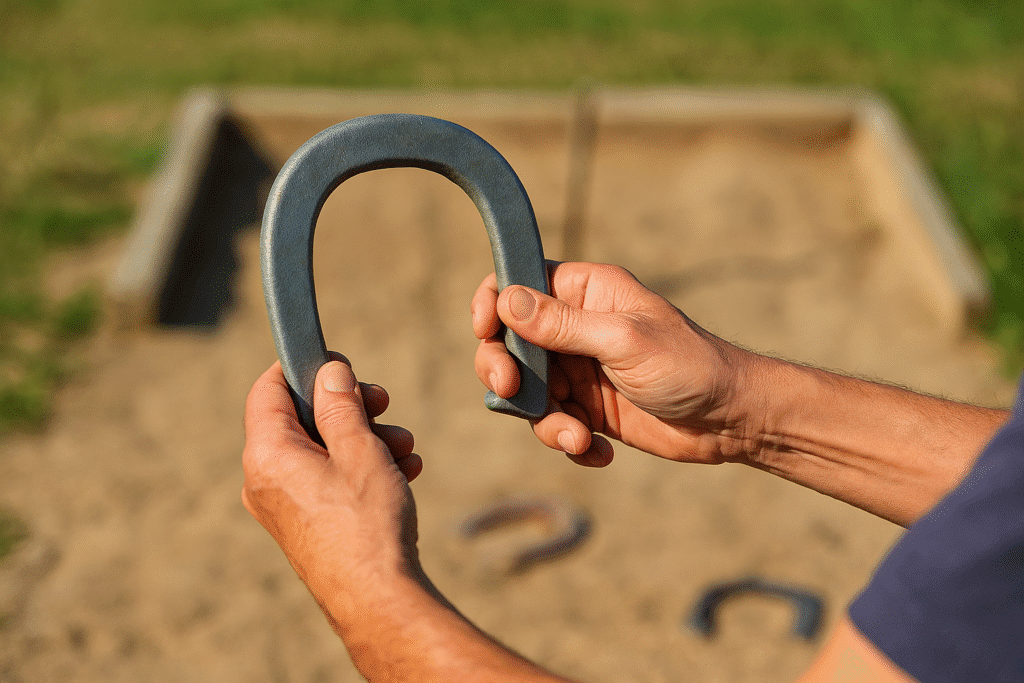
- Hold the horseshoe in your preferred grip.
- Swing it back and forth a few times.
- It should feel balanced and move fluidly—without forcing your wrist.
If it feels off-center, too narrow, or too wide in the palm, try a different model.
🌀 Flip vs. Turn Throwers: Sizing Differences
Your throwing technique can influence the ideal shape and weight for you.
For Flip-Style Throwers:
- Look for slightly lighter shoes (2.2–2.6 lbs)
- Seek models with even balance front-to-back
- Flat gripping areas often help with consistency
For Turn-Style Throwers:
- Slightly heavier shoes (2.6–2.10 lbs) add stability during rotation
- Choose shoes with a defined heel and outer ridges for spin control
- A deeper ringer break helps stick the landings
🎯 Customize your shoe to how you throw, not the other way around.
💪 Gender and Age Considerations
Pitching horseshoes is a sport for all ages, but hand size, strength, and endurance play a role in selecting the right gear.
Seniors:
- Use lighter horseshoes (2.0–2.4 lbs)
- Prioritize grip comfort and wrist-friendly balance
- Avoid overly wide heel areas
Women and Teens:
- Go with compact, lightweight models
- Ensure grip width matches finger spacing
- Try aluminum-core models for less fatigue
🏆 Top Recommended Pitching Horseshoes by Fit & Weight
After reviewing balance, weight distribution, and user comfort, here are top-performing horseshoes designed for different needs:
✅ Challenger Pitching Horseshoe Set
- Weight: ~2.6 lbs
- Best For: Balanced players, both flip and turn
- Highlights: NHPA-approved, great weight distribution, durable
✅ EZ Flip Horseshoe Set
- Weight: ~2.4 lbs
- Best For: Flip throwers and seniors
- Highlights: Lighter build, easy release, grippy contours
Horseshoe Game Set
✅ American Professional Horseshoes (St. Pierre Series)
- Weight: ~2.75 lbs
- Best For: Competitive turn-style throwers
- Highlights: Heavy and stable, excellent grip zone
🧤 Bonus: Pair with a throwing glove to reduce palm fatigue and maintain control in damp conditions.
🧪 How to Test Different Horseshoes Before You Commit
If possible, don’t buy blind. Test several styles at a local league or club. Even just five minutes of practice can tell you if a shoe fits.
Testing Tips:
- Throw at least 10 times with each shoe
- Watch for comfort, follow-through, and bounce
- Ask other players what they use and why
📋 Write down your impressions of weight, comfort, and ringers scored during test rounds.
🧠 Building Muscle Memory with the Right Shoe
Once you find your perfect size and weight, the magic really starts. Practicing with a consistent shoe helps you:
- Lock in grip mechanics
- Adjust throwing arc for better accuracy
- Improve wrist release timing
🔁 Repetition builds skill—and comfort builds confidence.
❓ Frequently Asked Questions
🔹 What happens if my horseshoes are too heavy?
They’ll wear you out faster and make you lose form as you fatigue. You might also struggle to maintain arc and accuracy.
🔹 Should my horseshoes be the exact same weight?
Yes. A mismatched pair creates inconsistency and muscle imbalance. Always pitch with a matching pair.
🔹 Do kids use the same size horseshoes?
No. Lighter and smaller models are better for children under 15. Look for specially marked “youth” or “junior” pitching sets.
🔹 Can I modify my horseshoe’s weight?
Not for competition. Modifying a horseshoe with tape, weights, or altering its shape can get you disqualified in NHPA-sanctioned matches.
📣 Final Thoughts: Let Your Throw Decide
Choosing the perfect pitching horseshoes isn’t about buying what your buddy uses or picking the most expensive pair. It’s about matching your gear to your game.
✅ Find the weight that feels fluid
✅ Test different grip shapes
✅ Align your shoe with your throw style
✅ Practice to build muscle memory
🎯 With the right shoe in your hand, the stake becomes a lot easier to hit.
👉 What’s your preferred horseshoe weight? Let us know in the comments and help others find their perfect match.
Hi there, and thanks for stopping by! My name is Larry, and I’m the voice behind PlayingHorseshoes.com I love the game and have been playing since I was a kid. I started this blog because I am passionate about the sport, and with all the technology, I hope the sport don’t die. I plan to do my part to keep it going for me and my brother’s sake. Thanks for stopping by, feel free to subscribe and comment. Thank You!