Mastering the Art of Horseshoe Pitching: A Beginner’s Guide
A Classic Game That Still Delivers
There’s a special kind of satisfaction in hearing that clang of a horseshoe wrapping perfectly around a stake. It’s the sound of timing, balance, and focus — all coming together in one throw.
Horseshoe pitching isn’t a new craze. It’s a sport that’s been refined over centuries, tracing its roots back to ancient Greece, where competitors tossed stone rings for distance. The Romans later adopted the pastime, using real horseshoes for fun between battles. Over time, the game evolved, and by the early 1900s, it had become a popular American pastime — part competition, part tradition.
Today, horseshoe pitching is still thriving because it’s easy to learn, affordable to start, and rewarding to master. Whether you want to sharpen your accuracy, compete in local tournaments, or just enjoy a focused physical hobby, this game delivers on all fronts.

Why Every Beginner Should Learn Proper Technique
If you’re serious about becoming a consistent pitcher, don’t fall into the trap of “just throwing and hoping.” Like golf or bowling, success comes from form, rhythm, and repetition — not brute strength.
Mastering the basics early helps you:
- Avoid bad habits that are hard to unlearn later.
- Improve accuracy faster.
- Build confidence every time you step onto the court.
It’s not about throwing harder — it’s about throwing smarter. Let’s break that down.
Getting Started: Gear That Makes Learning Easier
The good news? You don’t need expensive tournament-grade gear to start pitching horseshoes. In fact, lighter, beginner-friendly sets make learning much easier and reduce arm fatigue.
Here’s what you’ll need to begin:
1. Horseshoes
Start with light to medium-weight shoes that feel comfortable in your hand. You want balance — not bulk. Look for smooth edges and a solid grip.
✅ Recommended:
- Franklin Sports Starter Horseshoe Set — Lightweight, balanced, and perfect for beginners practicing technique.
- Baden Champions Horseshoe Set — Slightly heavier, built for backyard or club practice with a consistent feel.
Avoid professional or tournament models until you’ve developed control. A shoe that’s too heavy or stiff can ruin your form before it’s built.
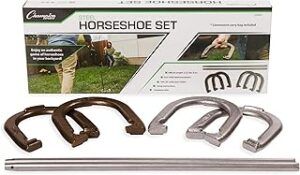
Horseshoe Game Set
2. Stakes and Court Setup
If you’re setting up at home, all you need is space and stable footing.
- Regulation courts are 40 feet between stakes, but beginners can shorten that to 25–30 feet to build confidence.
- Stakes should be 1 inch thick, angled 12 degrees toward each other, and extend 14–15 inches above the ground.
- Use sand, clay, or packed dirt as your pit surface. Sand is best for new players — it’s forgiving, easy to maintain, and safer for misses.
✅ Recommended:
- GoSports Backyard Horseshoe Set — Comes with portable stakes and a carrying case, great for setting up a beginner-friendly practice pit.
3. Safety and Maintenance
Horseshoes may not look dangerous, but safety counts.
- Always make sure no one’s standing near the pit or in your throwing path.
- Clear the area of tools, rocks, and other objects that could trip or deflect a shoe.
- Check that your stakes are firm and level before starting.
Keep your equipment clean. Wipe shoes after use, store them dry, and replace bent stakes when needed. A little care goes a long way toward consistent performance.
Learning the Fundamentals: How to Pitch Like a Pro
Once your setup is ready, it’s time to focus on the physical and mental mechanics that build a solid foundation.
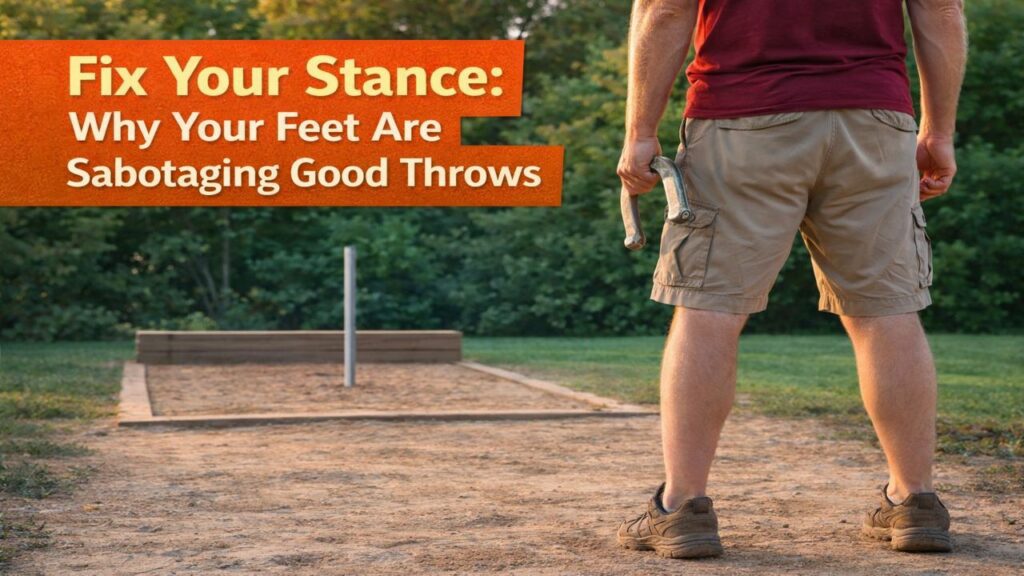
1. The Stance: Find Your Balance
A good stance gives you control and repeatability.
- Stand with your feet shoulder-width apart.
- Keep your dominant foot slightly forward and your weight evenly balanced.
- Relax your knees and shoulders — tension kills rhythm.
- Focus your eyes directly on the stake.
A consistent stance becomes your anchor. Every throw starts the same way, which helps eliminate variables in your swing.
2. The Grip: Your Connection to the Shoe
Your grip determines your control mid-air. Too loose, and the shoe slips. Too tight, and your wrist stiffens up. You want a grip that feels like a handshake — firm, not forceful.
Two common beginner grips:
- The Flip Grip: Hold the shoe by one shank, open end facing up. When thrown, the shoe flips end-over-end. It’s easier to learn and ideal for casual games.
- The 1¼ Turn Grip: Hold it so the shoe makes a smooth turn in the air. This grip requires more wrist control but offers better accuracy once mastered.
Experiment. The right grip is the one that feels most natural to your hand.
3. The Swing: Smooth, Not Stiff
Your arm swing is the rhythm that drives your throw. Think of it like a pendulum — fluid and controlled.
- Start the swing gently backward.
- As you move forward, let momentum carry your arm, not muscle.
- Keep your body relaxed and in sync with your movement.
If you find your throw jerky or inconsistent, slow down. Smooth throws travel straighter and stick more reliably.
4. The Release: Timing Is Everything
Release too early and the shoe lands short. Release too late and it goes high or wide. The key is finding your “sweet spot.”
When your hand reaches its lowest point in the swing — roughly parallel to your lead leg — that’s when you release. The motion should feel effortless.
Watch the shoe’s flight. A clean release produces a smooth spin or flip with no wobble.
5. The Aim and Arc: Visualize the Path
Before every throw, take a second to picture the flight path in your mind.
- Keep your eyes on the stake the entire time.
- Visualize the shoe’s arc — not too high, not too flat.
- Aim for a gentle landing, not a crash.
Accuracy improves when you train your eyes to lead the motion.
6. The Follow-Through: Seal the Deal
Never stop your motion abruptly. After release, let your arm continue naturally toward the stake. This ensures momentum carries through and keeps your form consistent.
A relaxed follow-through also prevents strain and keeps your rhythm smooth across multiple throws.

Building Skill: Drills and Practice Routines
Consistency comes from smart repetition. Here’s how to turn practice into progress:
1. Warm Up and Reset
Start each session with five to ten easy throws — just to feel your rhythm and grip. Don’t chase perfection right away. Focus on looseness and accuracy.
2. Accuracy Drills
Use markers around the pit — even old towels or cones — to visualize distance control. Try landing near different targets to train precision.
You can also measure progress by keeping track of closest-to-stake throws, not just ringers. Gradual improvement counts.
3. Muscle Memory Reps
Pick one focus area — stance, grip, or release — and drill it repeatedly for 10–15 minutes. Small, focused sessions build strong habits faster than mindless tossing.
4. Solo Practice vs Group Play
Solo practice helps you dial in fundamentals without pressure. Group play, on the other hand, sharpens your composure and adds a competitive edge.
Mix both into your weekly routine.
5. Track Your Growth
Keep a simple log:
- Number of ringers per 50 throws.
- Consistency of arc.
- Notes on grip, surface, or conditions.
Watching those stats climb builds motivation and helps identify what’s working.
Common Beginner Mistakes (and How to Fix Them)
Even the best players started by making the same mistakes. The trick is knowing how to correct them early.
| Mistake | Cause | Fix |
|---|
| Over-throwing | Trying to muscle the shoe | Focus on form, not force |
| Short landing | Early release | Delay slightly; smooth out the swing |
| Wobbling shoe | Poor grip or uneven release | Recheck hand placement and follow-through |
| Inconsistent aim | Shifting stance each throw | Mark your foot position; use consistent setup |
Each correction builds toward that satisfying, repeatable throw.
Joining the Horseshoe Community
Once you’ve learned the basics, get involved. Local horseshoe clubs or recreation leagues are welcoming spaces to practice, compete, and learn from experienced players.
- Clubs: Offer lessons, equipment advice, and tournaments for every skill level.
- Leagues: Great for meeting others and staying accountable with regular play.
- Events: County fairs and small tournaments are perfect for testing your progress in a friendly setting.
Don’t be intimidated — every pro you meet was once where you are now.
Mental Focus: The Hidden Weapon
Physical skill matters, but your mindset drives your performance.
Stay calm, breathe between throws, and visualize success. One bad toss doesn’t define a game. Reset mentally and focus on the next pitch.
Treat every throw as its own challenge — a new opportunity to perfect your form.
Why Beginners Stick With It
Beyond the thrill of competition, horseshoe pitching delivers something rare: a blend of physical skill, mental calm, and community connection.
You’ll gain:
- Confidence in mastering a traditional sport.
- Focus that spills over into everyday life.
- The satisfaction of steady, visible progress.
Most players find that once they start improving, they’re hooked. It’s addictive in the best possible way.

Final Thoughts: From Novice to Natural
Becoming a skilled horseshoe pitcher takes patience, repetition, and a love for the craft. But every clank of a shoe against the stake reminds you — this game is timeless for a reason.
Start small, practice smart, and focus on your fundamentals:
- A balanced stance
- A relaxed grip
- A smooth swing
- A clean release
- A calm mind
Stick with those, and before long, your throws will stop feeling random and start feeling right.
So step up to the pit, take a deep breath, and pitch your first shoe. Every ringer you land isn’t just a point — it’s proof you’re mastering the art.
Hi there, and thanks for stopping by! My name is Larry, and I’m the voice behind PlayingHorseshoes.com. I love the game and have been playing since I was a kid. I started this blog because I am passionate about the sport, and with all the technology, I hope the sport doesn’t die. I plan to do my part to keep it going for me and my brother’s sake. Thanks for stopping by, feel free to subscribe and comment. Thank You!