Mastering the Backhand vs. Forehand Throw in Horseshoes: Accuracy, Power, and Strategy Unleashed
The Two Throws That Define Your Game
Throwing horseshoes is more than just a backyard hobby—it’s a sport rooted in skill, strategy, and subtle physics. What looks like a simple toss actually involves muscle control, mental focus, and fine-tuned technique.
At the heart of this classic game are two essential throwing styles: the backhand and the forehand. Mastering these two methods isn’t just for show—it gives you a serious competitive edge. Think of it like having a versatile toolbox; different situations call for different approaches.
In this article, we’ll dive deep into:
- The mechanics of each throw
- How to improve accuracy and consistency
- When to use backhand vs. forehand
- The best gear to practice with
- And how mastering both can take your game to a whole new level
Whether you’re a casual player looking to sharpen your skills or aiming for your first tournament win, understanding both throws is key.
Why Learn Both the Backhand and Forehand?
Before we get into technique, let’s answer the big question:
Why bother learning both throws?
The answer is simple—adaptability.
🔹 Forehand throws are great for finesse, curves, or when you need control on tight angles.
🔹 Backhand throws offer more distance, power, and consistent arcs.
Imagine being able to adapt your throw to fit the wind, the terrain, or your opponent’s strategy. You go from just “playing horseshoes” to owning the court.
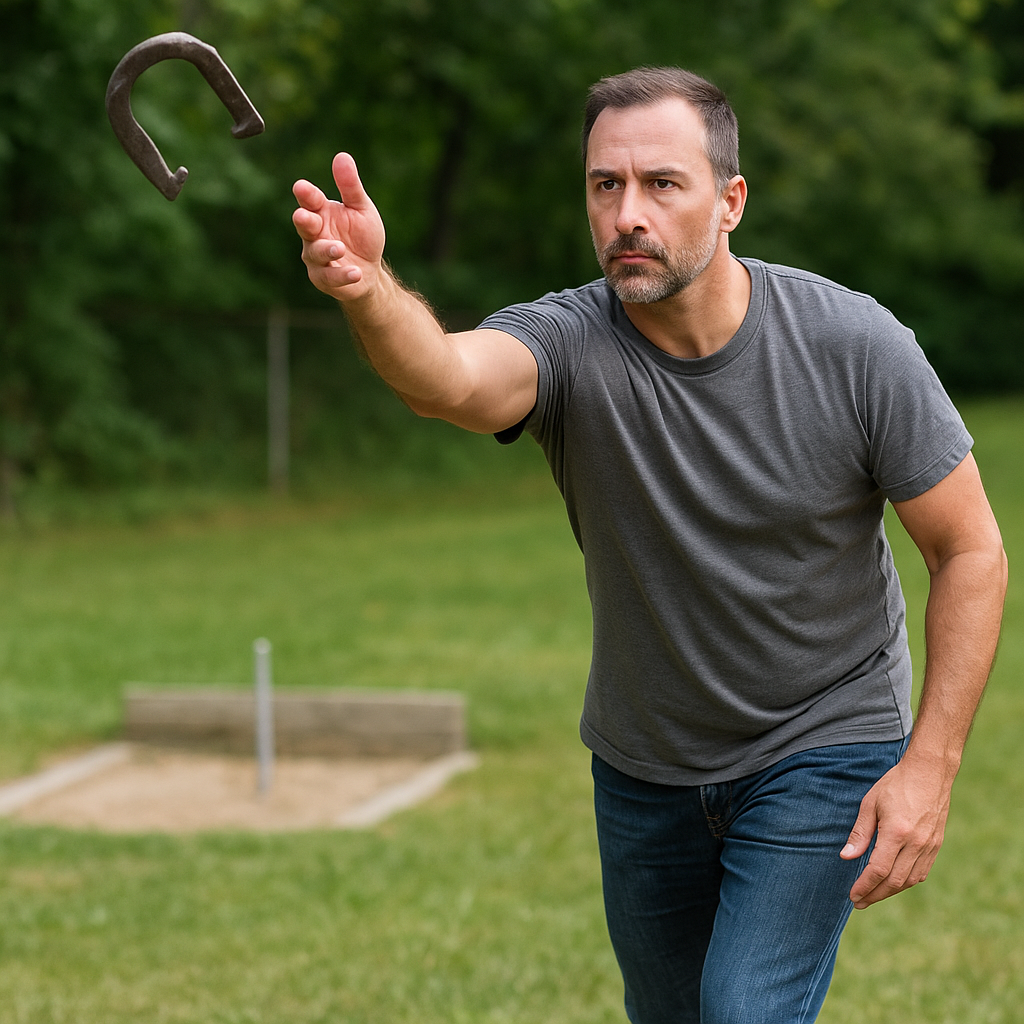
Understanding the Mechanics of Each Throw
Let’s break it down. Both throws rely on:
- Grip
- Stance
- Swing path
- Release timing
- Follow-through
⚙️ Backhand Mechanics
- Grip: Thumb on top, fingers wrapped underneath. Medium-firm hold.
- Stance: Feet shoulder-width apart, facing your target.
- Swing: Arm swings in a natural arc behind your body.
- Release: Let go when your arm comes forward at chest height.
- Follow-Through: Continue pointing toward the stake.
⚙️ Forehand Mechanics
- Grip: Relaxed, with the palm slightly up.
- Stance: Feet staggered sideways (dominant foot back).
- Swing: Underhand toss with a lateral swing motion.
- Release: Flick with a subtle wrist turn to apply spin.
- Follow-Through: Let your hand drift upward and forward.
🎯 The smoother your release, the straighter your flight.
How to Master the Backhand Throw
🧍♂️ Step-by-Step Backhand Technique
- Anchor Your Stance
Stand steady. Your weight should be balanced between both legs. - Perfect the Grip
Use your thumb to guide—not crush—the horseshoe. Think precision. - Practice the Arc
Your arm should swing like a pendulum. No jerky movements. - Release at the Apex
Let go at the peak of your forward swing, not too late or early. - Commit to the Follow-Through
Finish the motion! It helps with direction and control.
🧠 Common Mistakes to Avoid
- Holding the shoe too tight
- Flicking the wrist too much
- Not following through
- Dropping your shoulder mid-swing
✅ Backhand Drill: The “Ringer Repeat”
Set a goal: land 3 out of 10 ringers from the same stance. Repeat for five rounds. This builds muscle memory and consistency.
How to Perfect the Forehand Throw
🧍♀️ Step-by-Step Forehand Technique
- Line Up Your Shoulders
Slightly turn your body to the side of the stake. - Find the Sweet Spot in Your Grip
Loose but controlled—let the shoe move naturally. - Spin with Purpose
A good forehand has a subtle spin, not a wild flip. - Use Your Core
Let your hips and core guide the motion, not just your arm. - Adjust for Wind and Terrain
Mastering the forehand helps in tough spots like angled throws or uneven ground.
🧠 Common Forehand Challenges
- Overspinning the shoe
- Releasing too late
- Leaning too far forward
- Throwing with just your arm (instead of full body)
✅ Forehand Drill: “Target Zones”
Place markers around the stake (left, right, short, long). Practice hitting specific zones with your forehand for control.
Choosing the Right Throw: When to Use Each
Knowing both throws is great—but when should you use them?
Backhand Is Best When:
- You need consistency and distance
- The ground is soft or uneven
- You’re aiming straight on
- You’re making longer tosses
Forehand Shines When:
- You need to curve around an obstacle
- You’re closer to the stake
- You want a softer, precise landing
- You’re playing from an awkward angle
🧠 Smart players adapt based on wind, footing, and distance. That’s where having both throws comes in clutch.
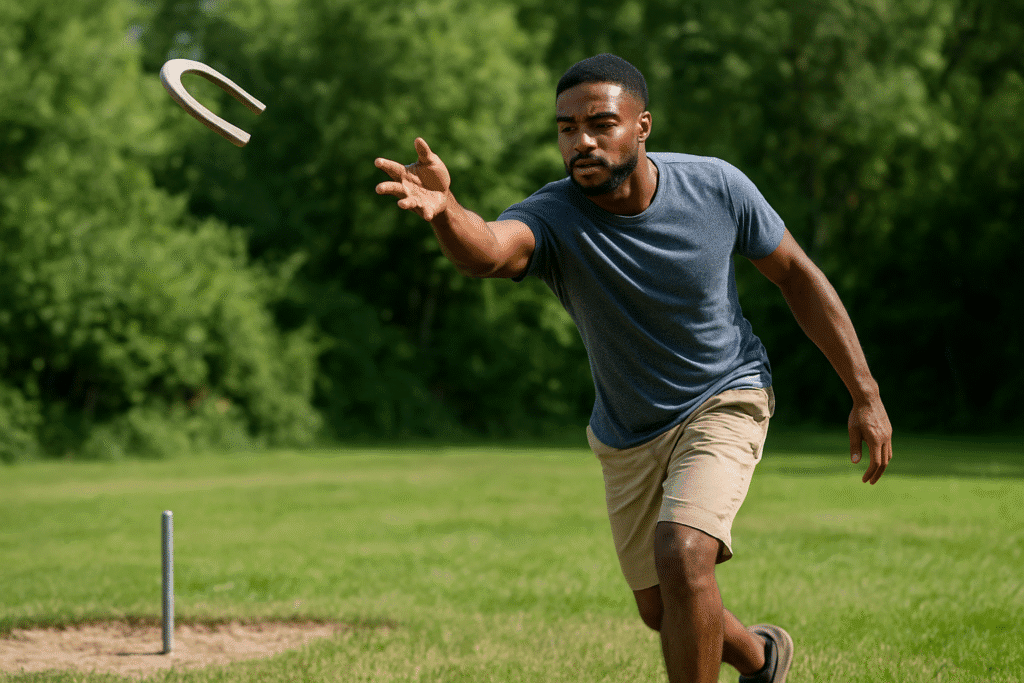
Real-Life Examples: Strategy in Action
- Windy Day? Use backhand to push through gusts with a tighter arc.
- Tight Corner? A light forehand with a soft spin helps avoid overshooting.
- Tournament Play? Use both styles to stay unpredictable and tactical.
“I lost five straight games until I switched to my forehand—it gave me better control around the stake and totally shifted my confidence.” – Mark J., amateur league player
Recommended Gear to Level Up Your Throw
You don’t need fancy gadgets, but quality horseshoes make a huge difference. Here are two must-haves:
🛠️ St. Pierre American Professional Series Horseshoes
- Tournament-grade steel
- Balanced weight for both forehand and backhand use
- Trusted by pros and leagues alike
🛠️ Franklin Sports Horseshoe Set
- Great for backyard players
- Includes stakes and carrying case
- Durable and beginner-friendly
Investing in the right horseshoe set improves your throws, grip, and game feel.
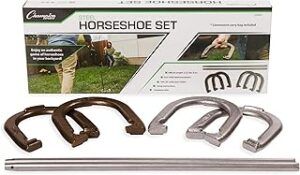
Horseshoe Game Set
Practice Like a Pro: Daily Routine
Want to improve both throws without burnout?
Here’s a sample weekly practice routine:
Day 1:
- 20 backhand throws
- 20 forehand throws
- Focus: grip consistency
Day 2:
- Drill: Ringer Repeat
- Drill: Target Zones
Day 3:
- 10 throws from awkward angles
- 10 throws on windy day (if possible)
Day 4:
- Record your throws
- Watch your form
- Adjust stance and posture
Day 5:
- Full game simulation
- Mix up throws between forehand/backhand
FAQ: Backhand vs. Forehand in Horseshoes
❓Do I need to learn both throws?
You don’t have to, but it seriously boosts your versatility and success in different situations.
❓Which throw is better for beginners?
The backhand is often easier to learn first because of its natural arc and easier grip.
❓Can I switch between throws during a game?
Absolutely! Many competitive players do. It gives you a strategic edge and keeps opponents guessing.
❓What if I can’t get the hang of forehand?
Don’t stress. Every player has a dominant style. Practice slowly, and you’ll build confidence over time.
❓What’s the biggest benefit of mastering both?
Adaptability and mental confidence. You become a more complete player and can win more varied matches.
Final Thoughts: The Throw That Wins Is the One You Master
Whether you favor the precision of the forehand or the consistency of the backhand, both throws have their place in your horseshoe arsenal.
The secret isn’t choosing one—it’s knowing both.
You’ll:
- Burn calories and improve coordination
- Boost your confidence with each win
- Stay sharp both mentally and physically
- Be ready for anything—from backyard games to serious tournaments
Ready to Level Up Your Game?
🎯 Grab a pro-quality horseshoe set like the St. Pierre American Series
🎯 Practice both backhand and forehand every week
🎯 Join a league or invite friends for regular matchups
And if you want to turn your love of games into something more…
👉 Join me at Wealthy Affiliate
Learn how to build a blog, share your journey, and even earn passive income by reviewing gear, sharing tips, or creating digital products.
Let’s take horseshoes from the backyard to the big leagues—one toss at a time.
Hi there, and thanks for stopping by! My name is Larry, and I’m the voice behind PlayingHorseshoes.com. I love the game and have been playing since I was a kid. I started this blog because I am passionate about the sport, and with all the technology, I hope the sport doesn’t die. I plan to do my part to keep it going for my brother and my sake. Thank you for stopping by. Feel free to subscribe and comment. Thank You!