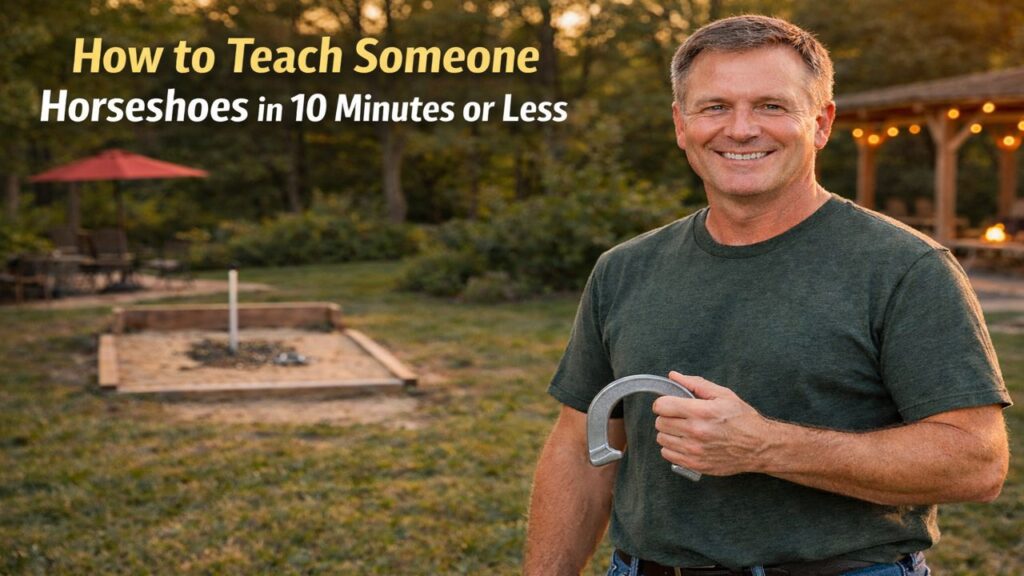
The Horseshoe Pit Makeover Guide: Transform Your Yard in a Weekend
A good horseshoe pit is more than two stakes stuck in the ground. It’s a centerpiece. A hangout spot. A reason to step outside, unwind, and spend real time with family and friends. And the best part? You don’t need a contractor, a huge budget, or a month of free time to upgrade your setup. You can transform your pit—and the entire vibe of your yard—in one weekend.
Whether your current pit is worn down, uneven, overgrown, or just plain boring, this guide will walk you through simple, practical upgrades that instantly elevate the space. By Sunday afternoon, you’ll have a pit that looks sharper, plays better, and feels like a backyard destination.
Let’s start planning your weekend makeover.
Assess Your Starting Point
Before you swing a rake or lift a board, take a few minutes to evaluate what you’re working with. Stand back and actually look at your pit like a first-time visitor.
Check for:
- Leaning or unstable stakes
- Uneven or low sand levels
- Poor drainage or soggy areas
- Rotting borders
- Rocks or roots working their way up
- Grass creeping into the pit
- No clear walkway
- No seating or shade
- No lighting for late games
Make a quick list. You’re not trying to fix everything—you’re creating a simple plan for a solid weekend upgrade.
Fix the Foundation First: Stakes, Stability, and Alignment
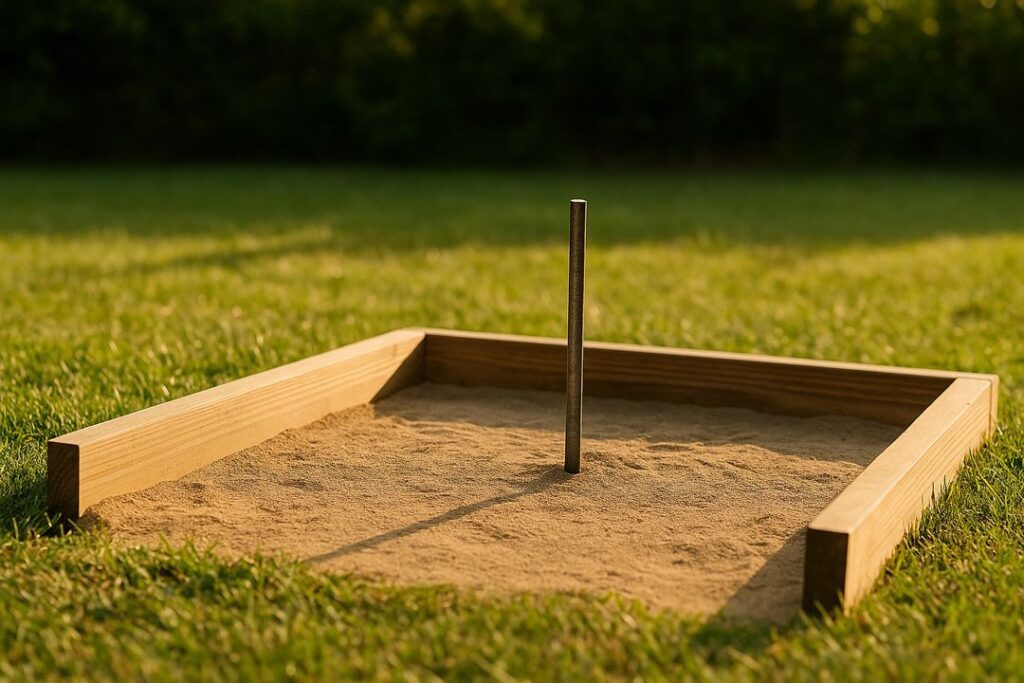
Your stakes are the heart of the game. If they’re crooked, shaky, or buried too low, nothing else matters.
Here’s what to fix:
Reset the Stakes
The NHPA standard is:
- 40 feet apart
- 14–15 inches above ground
- Leaning 3 inches toward each other
Even in a backyard setting, sticking close to these measurements improves play and consistency.
If your stakes wobble, pull them out and re-anchor them. Steel stakes set in concrete-filled PVC sleeves are the easiest long-term solution. You can remove them for yard work, and they stay perfectly aligned.
Re-square the Pits
Use a string line or laser level to make sure your pits are centered and parallel. Crooked pits make the entire space feel off, even if most people won’t be able to name why.
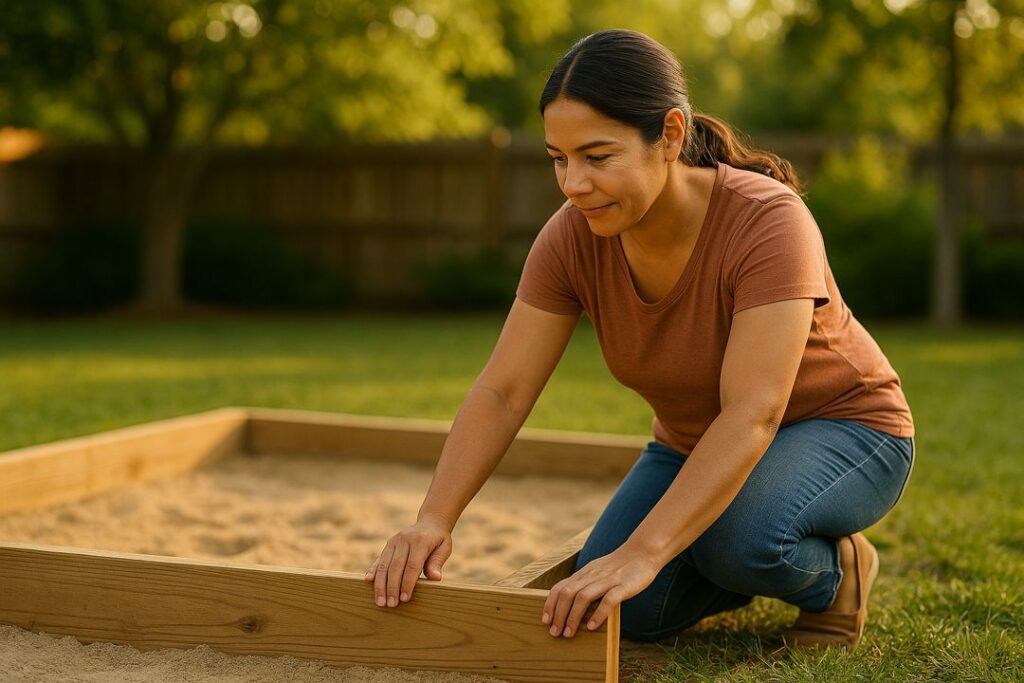
Rebuild or Refresh Your Pit Borders
Borders give your pit structure and personality. They also keep sand in, grass out, and shoes from rolling all over the yard.
Here are great weekend-ready border options:
1. Pressure-Treated Lumber
The classic look. Affordable, strong, easy to install.
2. Cedar or Redwood
Better appearance, weather-resistant, and blends beautifully with natural landscapes.
3. Railroad Ties
A rugged, heavy-duty style with a rustic feel. They’re nearly indestructible.
4. Landscape Timbers
Rounded edges and a softer visual profile, perfect for more decorative yards.
5. Brick or Stone Edging
A clean, polished look that also reduces sand spillage. Great for modern yards.
Choose a style that fits your home’s personality. Cut everything to size, level it carefully, and secure corners with stakes or screws.
Add Fresh Sand the Right Way
Nothing rejuvenates a horseshoe pit faster than new sand. Over time, pits get compacted, muddy, or mixed with gravel and debris.
Here’s how to refresh yours:
1. Remove Old Sand if Needed
If it’s full of rocks or too compacted, shovel it out and start fresh.
2. Choose the Best Sand
Play sand works, but the real magic comes from washed masonry sand. It compacts just enough to stay level while still being soft for landings.
3. Spread 4–5 Inches Evenly
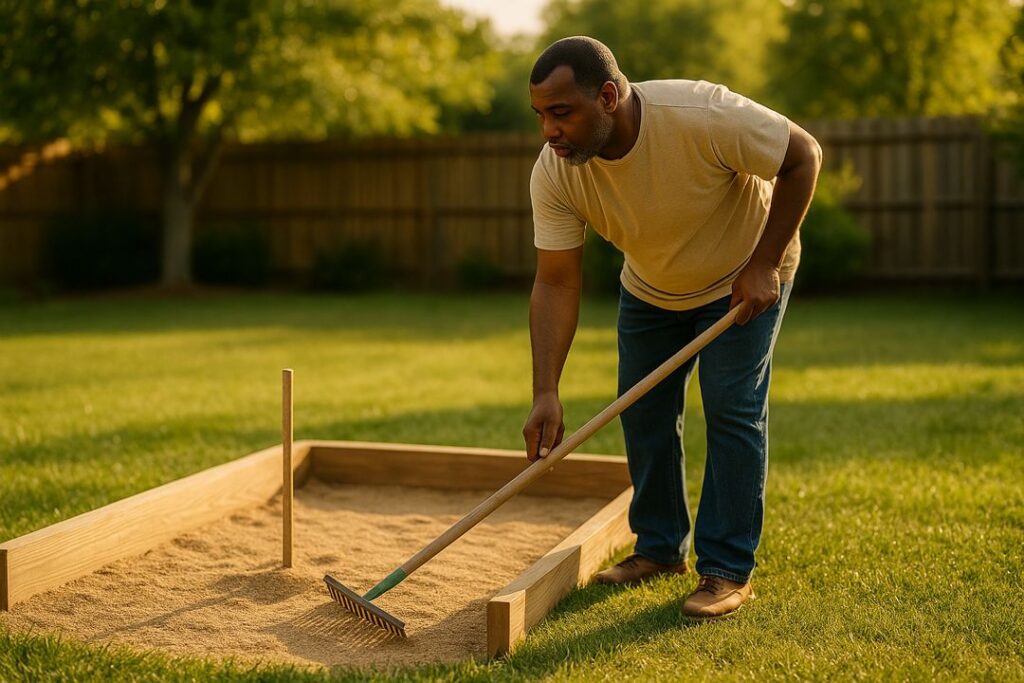
Level it with a landscaping rake, then pack it lightly with your feet or a tamper.
4. Water the Pit
Dampen the sand to help it settle and eliminate dust.
After one night, the sand will feel firm, smooth, and ready for better gameplay.
Clean Up and Level the Walkways
Most pits end up surrounded by worn patches, uneven ground, or muddy pathways. Fixing this instantly improves the look and feel of the entire setup.
Weekend-friendly upgrades:
- Spread pea gravel for clean walkways
- Lay stepping stones to each pit
- Add mulch around borders
- Level any trip-prone dips
- Trim grass edges sharply
These simple steps create a polished, intentional look instead of “just two pits in the grass.”
Upgrade the Backstop or Add One
Backstops keep errant horseshoes from disappearing into the neighbor’s yard or bouncing off into the bushes.
Easy backstop ideas:
Wooden Backstop
Build a simple slanted board behind each pit.
Rubber Stall Mat
Cheap, durable, and great for deadening bounce.
Landscape Timber Back Wall
A rustic, natural option that blends seamlessly.
Decorative Fence Panel
Instantly adds style and structure.
Paint or stain your backstop to match your yard and borders. Little touches go a long way.
Add Seating That Makes the Space Inviting
No one wants to stand around between every throw, especially during longer games or tournaments. Seating is one of the easiest ways to turn your pit into a hangout zone.
Consider:
- Wooden or composite benches
- Adirondack chairs
- A small deck platform
- Picnic table
- Log seating for a natural vibe
Place seating where spectators get a good view without interfering with gameplay.
Create Shade and Comfort
If your pit sits under open sky, afternoon games can get brutal. Adding shade makes the pit usable all day long.
Shade options you can install in a weekend:
- A cantilever umbrella
- A pergola
- A shade sail
- A pop-up canopy
- A small gazebo
You don’t need fancy construction—just something to keep players cool and comfortable.
Add a small outdoor table for drinks, scorecards, and gear. Comfort is part of the experience.
Install Lighting for Night Games
Evenings are prime horseshoe time—cool air, quieter yard, slower pace. Adding lighting transforms the pit instantly.
Perfect lighting options:
1. Warm LED Floodlights
Bright but soft on the eyes.
2. Solar Path Lights
Line the walkway or borders.
3. String Lights or Edison Bulbs
Add atmosphere and visibility.
4. Stake Lights
Illuminates the target without shadows.
Avoid harsh white lights—warm tones create a much better nighttime playing experience.
Add Personal Touches That Make It Yours
This is where your pit becomes a backyard signature. Simple accents add personality without extra work.
Try:
- A custom sign (Pit Name, “Larry’s Ringer Arena,” etc.)
- Small flag markers
- A scoreboard
- Turf edging
- Decorative gravel
- A horseshoe-themed welcome sign
- Mini garden borders
- Your favorite color scheme
A little creativity turns a basic pit into something memorable.
Storage and Organization Upgrades
Keep your space clean and your gear protected.
Helpful additions:
- A weatherproof storage box
- A wall-mounted horseshoe rack
- A rake holder
- Bins for sand tools
- Hooks for towels or brushes
A tidy pit looks like a pro pit.
Planting and Landscaping Around the Pit
Nice landscaping elevates the whole area and makes the pit feel like part of the yard—not an afterthought.
Great low-maintenance plants for the perimeter:
- Boxwoods
- Hostas
- Daylilies
- Lavender
- Hydrangeas
- Ornamental grasses
- Juniper shrubs
Mulch around your plants to keep the area clean and reduce mowing around the pit.
Add a Touch of Style With Borders and Accents
Hardscaping finishes make your pit feel like an outdoor feature, not just a game area.
Easy accent ideas:
- Stone pavers leading to each pit
- Crushed granite walkway
- Brushed metal numbers (Stake 1 / Stake 2)
- Decorative edging stones
- A low fence or railing on one side
- A split-rail accent behind the pit
These details transform the space fast.
Weekend Checklist
Here’s a quick version of what a full weekend makeover might include:
Saturday Morning
- Reset stakes
- Rebuild or refresh pit borders
- Remove old sand
Saturday Afternoon
- Add new sand
- Build or update backstops
- Clean and level walkways
- Add seating
Sunday Morning
- Install shade
- Add lighting
- Add landscaping touches
- Set up storage and organization
Sunday Afternoon
- Break in the new pit with a few friendly games
You’ll walk away with a backyard setup that looks purpose-built and ready for play.
Product Recommendation
If you want a reliable tool to keep your renovated pit level, smooth, and tournament-ready, a Garden Landscape Rake is a great choice. Its wide head and rigid steel tines make it perfect for leveling sand, shaping borders, and grooming the pit before each game. A simple, dependable tool that makes maintenance a breeze.
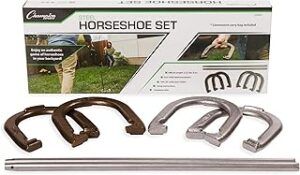
Horseshoe Game Set
FAQ
How deep should the sand be in a horseshoe pit?
Four to five inches is ideal for most backyard pits. It’s deep enough to absorb impact and reduce bounce, but shallow enough to stay level and consistent. Adding a light watering after leveling helps the sand settle evenly.
What’s the best material for pit borders?
Pressure-treated lumber is the most common because it’s affordable and durable. Cedar, brick, stone, and landscape timbers all work great and add more style. The key is choosing something sturdy that keeps sand contained.
Do the stakes need to be exactly 40 feet apart?
For regulation play, yes. For backyard games, you can adjust slightly for space — but staying close to 40 feet keeps the game feeling authentic. Consistency is more important than perfection.
How tall should horseshoe stakes be?
Aim for 14–15 inches above the surface of the sand with a slight forward lean. Stakes that sit too low make ringers harder, and stakes that sit too high can feel awkward for casual play.
How do I reduce sand spills and mess around the pit?
Good borders are the biggest factor. Add mulch, pea gravel, or stone around the pit edges to keep the area clean. A quick rake after each game keeps everything looking sharp.
What’s the easiest way to add shade without construction?
Cantilever umbrellas and shade sails are the fastest options. They set up quickly, cover a large area, and don’t require digging or building. They also move easily if you ever rearrange the yard.
Do I really need lighting for night games?
If you play regularly, yes. Warm LED floodlights or stake lights improve visibility and prevent shadows on the stakes. String lights add ambience but won’t provide enough illumination on their own.
Thoughts
A horseshoe pit makeover doesn’t need to be complicated. A few thoughtful upgrades—fresh sand, level borders, clean walkways, seating, lighting, and shade—go a long way toward transforming your yard into a polished, inviting playing space.
Once you put in a weekend of work, you’ll feel the difference every time you pick up a horseshoe. The game feels smoother. The space feels more comfortable. Your yard becomes a place where people want to gather, laugh, and compete.