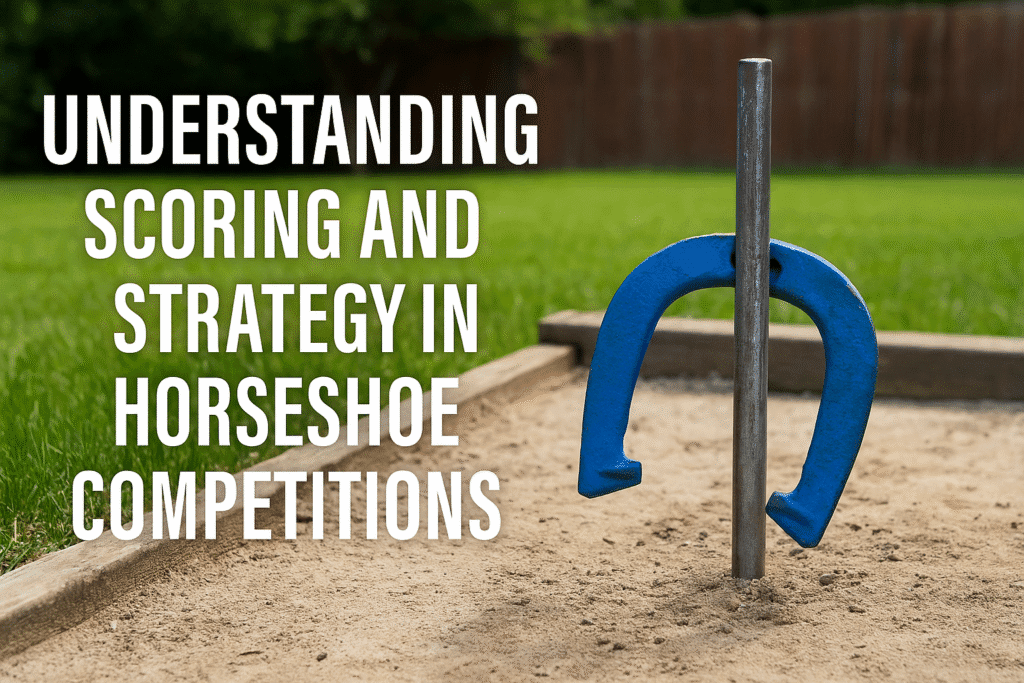
Why Horseshoes Click With Military Veterans: The Game That Feels Like Home
A Simple Game With a Deeper Connection
Horseshoes has always been a blue-collar, no-nonsense game — the kind of pastime that doesn’t need fancy equipment, complicated rules, or pristine facilities. Just a few stakes, a couple of shoes, a patch of dirt, and the right people. But among all the different groups who gravitate to the sport, one stands out with striking consistency:
Military veterans.
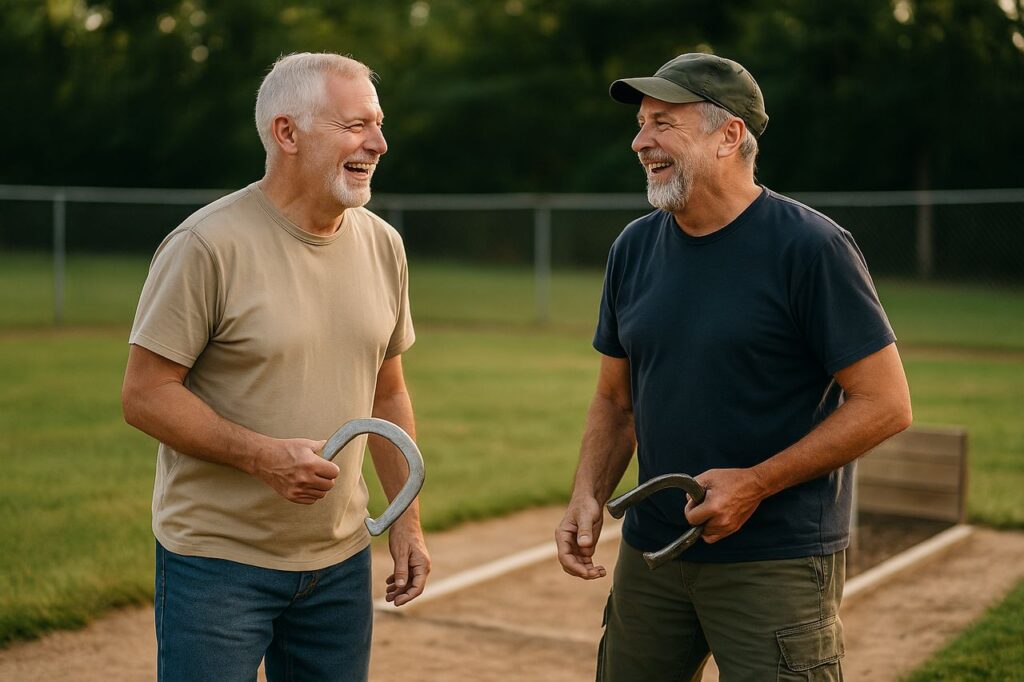
From the camps of WWII to modern VA centers, from backyard cookouts to VFW post tournaments, horseshoes has become one of those quiet, natural traditions that veterans seem to connect with instantly. It’s not just a game — it’s a blend of rhythm, competition, camaraderie, and unspoken understanding that resonates with folks who’ve lived the military life.
This article digs into why the connection is so strong and why, even in a world full of digital distractions, horseshoes still hit home for so many vets.
The Shared Roots: Why the Game Fits Military Culture
1. It’s Simple, But Mastery Takes Discipline
Military training is built on repetition, muscle memory, and tightening up small skills until they feel automatic. Horseshoes follow that same pattern:
- Same stance
- Same release
- Same arc
- Same landing zone
- Same discipline every pitch
Veterans appreciate a game that rewards consistency and focus. There’s no gimmick. No shortcuts. It’s the same basic movement, refined over time — exactly the kind of challenge that sparks pride in people who grew up in a system where repetition and discipline were the backbone of excellence.
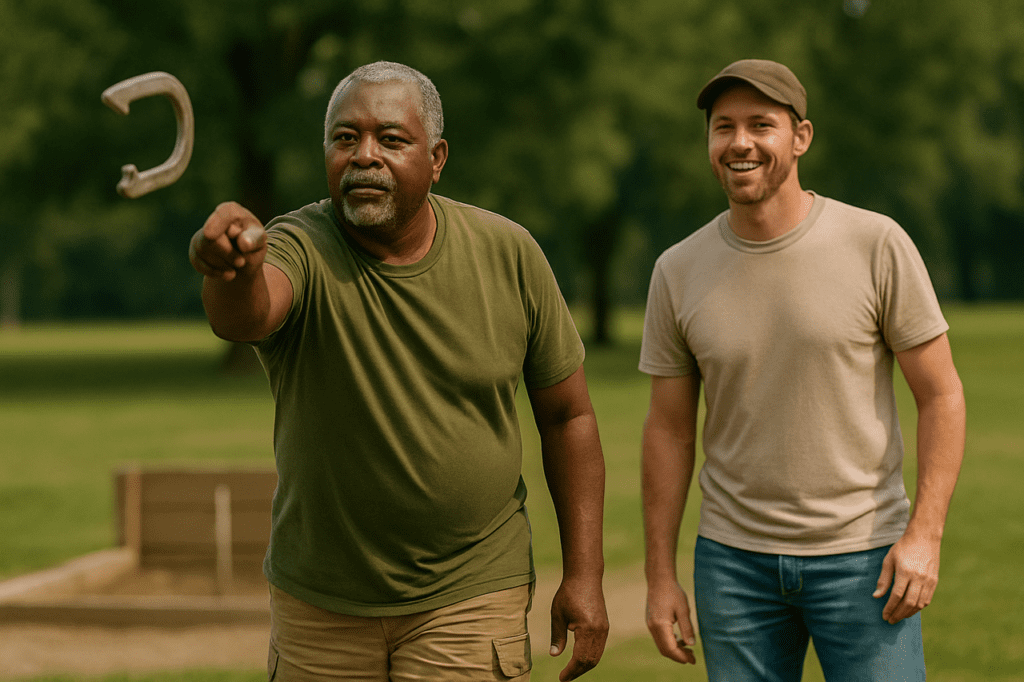
2. It’s Low-Stress Competition With High-Stakes Fun
Military members understand the thrill of competition, but they also value activities that don’t send their blood pressure through the roof. Horseshoes sit right in that sweet spot:
- You compete
- You try to outscore the person across from you
- You feel the adrenaline of a close call
- But you still relax, talk, joke, and breathe through it
Veterans appreciate that blend. It’s the kind of pastime where the intensity is self-managed. They can push when they want to, back off when needed, and still enjoy the moment without feeling like they’re “on duty.”
3. The Sound of a Ringer — A Simple Pleasure That Hits Deep
Ask around at any VFW, American Legion, or backyard get-together, and you’ll hear the same thing:
There’s nothing like the sound of a perfect ringer.
For veterans who spent years surrounded by structured noise — marching cadence, mechanical rhythms, range echoes, and routine sounds — horseshoes gives them a familiar type of feedback:
- Clean “cling”
- Predictable
- Reliable
- Satisfying
It’s a sensory reward that feels grounding in a way a lot of modern games don’t offer.
Why Veterans Naturally Build Community Around the Pit
4. The Pit Is a Space Where Rank Doesn’t Matter
One of the most liberating things for many veterans after service is stepping into environments where titles, roles, and hierarchy disappear.
On the pit, all that stays outside the sand.
You might see:
- A former Gunnery Sergeant pitching against a retired Airman
- A 70-year-old Vietnam vet competing with a 38-year-old Army MP
- Marines, Navy, and Army are all mixing without rivalry taking over
It’s the great equalizer. Everyone has the same distance to the stake. Everyone takes turns. Everyone earns their points the same way. That sense of shared footing feels both familiar and refreshing.
5. It’s the Best Conversation Game Ever Invented
Horseshoes moves at the perfect pace for real conversation:
- Enough time between turns to talk
- Enough concentration to avoid awkwardness
- Just slow enough to open up
- Just competitive enough to keep it light
Veterans, especially those adjusting back to civilian life, often appreciate environments where conversation can flow without pressure. The rhythm of horseshoes creates the perfect social setting — not a group therapy session, but the kind of easy connection where real talk just naturally happens.
6. Veterans Tend to Build Rituals — And Horseshoes Loves Rituals
Militaries run on rituals. Not necessarily a formal ceremony — but the “we do it this way every time” style of living that builds trust, structure, and consistency.
Horseshoes encourage the same patterns:
- Same warm-up
- Same stance
- Same grip
- Same pre-throw breath
- Same post-game handshake
Veterans gravitate toward games that feel structured without being rigid, predictable without being boring. Horseshoes hit that balance perfectly.
Horseshoes as a Form of Therapy (Even If No One Calls It That)
7. The Game Encourages Focus Without Stress
Many vets deal with stress-carryover from service — hyper-awareness, scanning environments, reacting quickly to unexpected stimuli.
Horseshoes offers a rare kind of mental space:
- You focus on a single target
- Your mind narrows to one movement
- Everything else fades out
- No pressure, no threat, no tension
The balance between attention and ease is therapeutic in its own subtle way.
8. Movement Without Strain: Perfect for Aging Warriors
A lot of veterans face physical issues:
- Bad knees
- Back injuries
- Joint pain
- Old service wear and tear
Horseshoes fit them perfectly because:
- It’s low-impact
- It uses rotational strength instead of explosive force
- It improves balance without pounding the joints
- It builds coordination without full-body strain
It’s one of the few competitive games where someone 70 can absolutely dominate someone 30 based purely on skill and consistency.
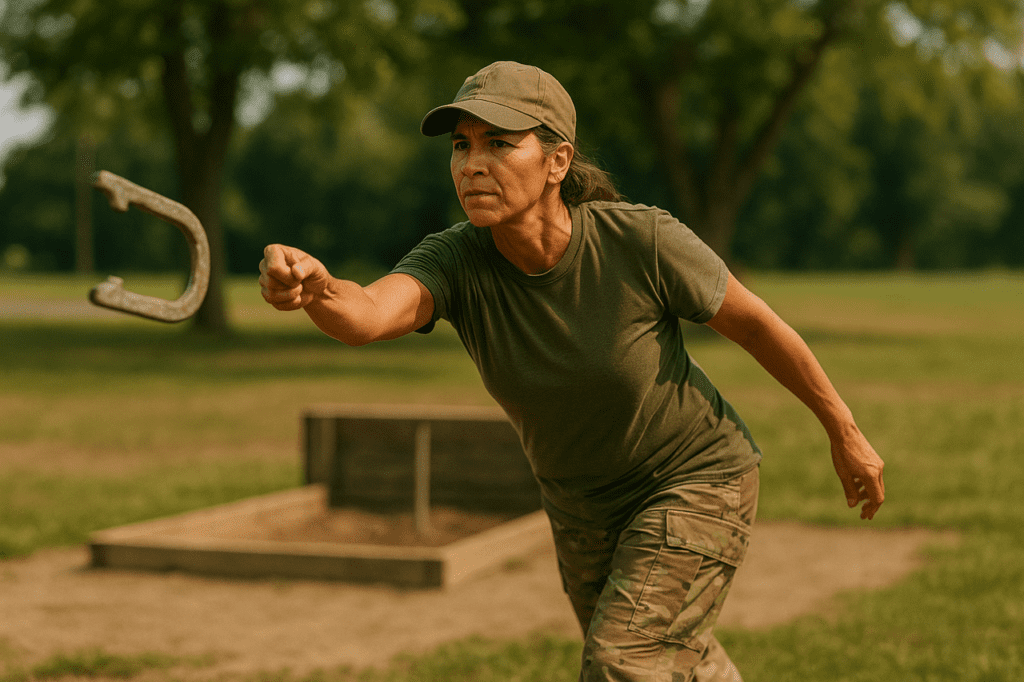
9. A Healthy Outlet for Precision and Control
Veterans are used to working in environments where precision matters — sometimes life-and-death precision. When service ends, that skill doesn’t just disappear.
Horseshoes give them a controlled, familiar outlet to use that part of their brain:
- Calculate angles
- Adjust for distance
- Control rotation
- Fine-tune release
It’s a way to satisfy that internal drive without stress.
The Social Side: Why Horseshoes Builds the Strongest Veteran Communities
10. It Works in Groups, Pairs, or Open-Play Settings
Veterans often enjoy community-based hobbies that don’t require:
- Massive equipment
- Complicated scheduling
- Tons of players
- Fancy facilities
Horseshoes work anywhere:
- Backyard cookout
- Campground
- Base housing
- VFW post
- Church picnic
- Veteran support events
This flexibility makes it easy for vets to stay connected without the pressure of official leagues.
11. It Creates a Bridge Between Eras of Service
One of the most unique elements of veteran culture is the gap between generations — Vietnam vets, Gulf War vets, Iraq/Afghanistan vets, Cold War vets, modern-era vets.
Horseshoes break those barriers instantly.
- Younger veterans learn stories from older ones
- Older vets stay socially connected to younger players
- Everyone has common ground
- The game becomes the middle space where stories flow easily
It’s one of the rare traditions where every generation feels welcome.
12. It’s a Game Built for Good-Natured Clowning and Tough-Love Humor
Veterans speak their own humor language:
- Direct
- Sharply witty
- Dark at times
- Filled with inside references
- Delivered with a straight face
Horseshoes encourages exactly that kind of banter. You don’t have to be polite. You don’t have to be quiet. You don’t have to watch your words like in structured environments.
The atmosphere makes it feel like home.
Horseshoe Game Set
How Horseshoes Helps Veterans Stay Active, Engaged, and Connected
13. Easy to Learn, Hard to Master — Perfect for Ongoing Growth
Veterans thrive on growth. Whether they retired at 30 years of service or served a short enlistment, they’re wired to improve themselves. Horseshoes give them:
- A constant challenge
- Something to practice
- A skill to refine
- A hobby with measurable improvement
It scratches the itch of personal development without feeling like “work.”
14. A Game That Encourages Leadership and Mentorship
Veterans naturally mentor. They teach. They guide. They coach.
Horseshoes create space for:
- Teaching proper grip
- Helping new players understand rotation
- Showing rookies the footwork
- Coaching strategy
- Running small backyard tournaments
Mentorship happens organically — no badges, no titles, no pressure.
15. It Helps Reduce Isolation
Many vets struggle with post-service isolation. Horseshoes do the exact opposite:
- Gets them outside
- Gets them talking
- Gets them laughing
- Gets them around people
- Gets them reconnected to the community
It’s one of the easiest hobbies for breaking the “stay home alone” cycle.
The Unspoken Truth: Horseshoes Feel Familiar to Veterans
After years of structure, discipline, mission focus, and teamwork, veterans often look for activities that provide:
- Predictability
- Skill-based challenge
- Social connection
- Stress relief
- Friendly competition
Horseshoes offers all of that — naturally, without trying.
It’s not a military game, but it fits the military mindset in a way few sports do. It feels like something they’ve always known, even if they didn’t grow up playing it.
Frequently Asked Questions
Why do so many VFW and American Legion posts have horseshoe pits?
The game blends relaxation with camaraderie, requires minimal maintenance, and naturally attracts members who enjoy being outdoors and bonding over friendly competition.
Are horseshoes good for veterans with physical limitations?
Yes. It’s low impact, gentle on joints, and adaptable for players with bad knees, back issues, or mobility restrictions. Many veterans find it more accessible than other outdoor games.
Do horseshoes help reduce stress symptoms?
While it’s not formal therapy, the repetitive, rhythmic nature of the game can help reduce anxiety, improve focus, and provide calming sensory feedback.
Do younger veterans enjoy horseshoes as much as older ones?
Absolutely. The game’s simplicity, competition, and social atmosphere make it appealing to veterans of all eras — and it often becomes a bridge between generations.
Bringing It All Together
For military veterans, horseshoes is more than a pastime. It’s a natural fit for the skills, discipline, humor, and social instincts they carry from service. It offers community without pressure, competition without chaos, structure without rigidity, and conversation without obligation.
It gives veterans something that feels rare these days:
A reason to come together, slow down, laugh, and enjoy the moment.
And sometimes, a game that simple is exactly what keeps people connected — to each other, to themselves, and to the best parts of their service.
Horseshoe Gifts and More!
This shop is my clubhouse for fellow players. You’ll find mugs, shirts, and pit gear to keep games fair, trash talk fun, and ringers flying — whether you’re building your first court or running a league.