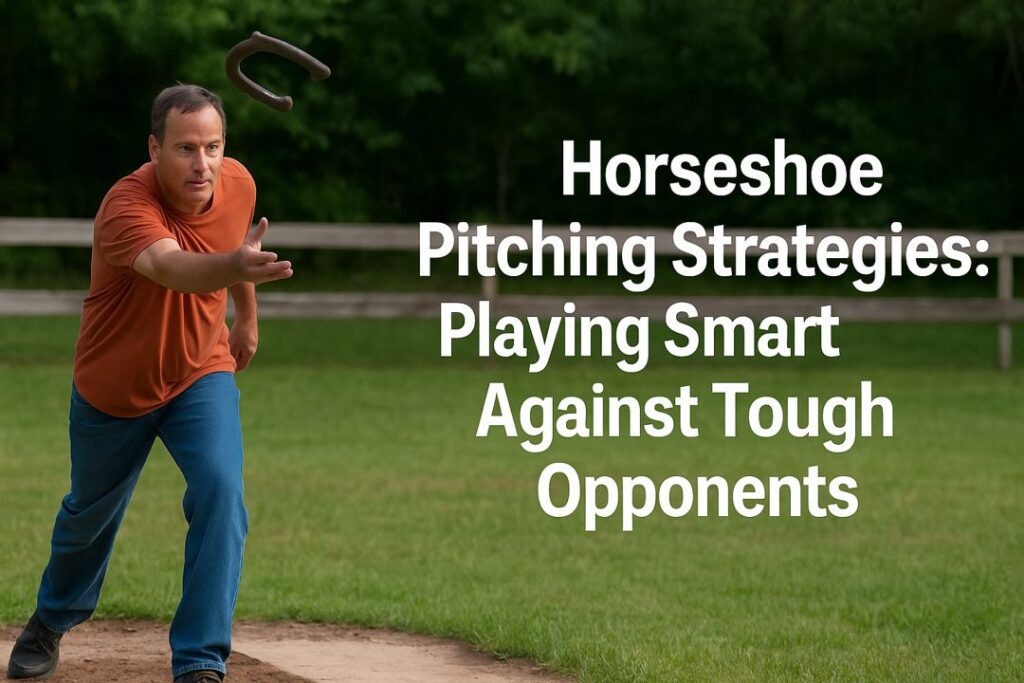
How Horseshoes Help With ADHD, Focus, and Mind Regulation
A Game That Calms the Mind Without Trying
Most people look at horseshoes and see a simple backyard game. Two stakes in the ground, a couple of metal shoes, and a patch of dirt. Nothing fancy, nothing loud, nothing complicated.
But beneath that simplicity sits a surprising truth:
Horseshoes is one of the most naturally ADHD-friendly games ever invented.
This isn’t about buzzwords or trends. It’s not about “gamified therapy,” mindfulness apps, or complicated strategies. Horseshoes taps into something much older and much more natural — the way our brains respond to rhythm, repetition, physical movement, and single-target focus.
For people with ADHD — children, adults, seniors, diagnosed or undiagnosed — the game aligns beautifully with how the ADHD brain prefers to operate:
- Short, controlled bursts of focus
- Clear, immediate sensory feedback
- A single goal to aim at
- Movement instead of stillness
- Low pressure, low stakes
- Predictable repetition
- Social connection without overwhelm
This article breaks down exactly why horseshoes help with focus, mind regulation, and emotional balancing — and why so many people with ADHD find themselves relaxing, thinking clearly, and feeling better the longer they play.
Let’s dig in.
The Science Behind ADHD and Why Horseshoes Fit the Brain
1. ADHD Brains Thrive on “Immediate Feedback Loops.”
One of the biggest challenges for people with ADHD is staying engaged with tasks that have:
- Delayed rewards
- Long waiting periods
- Multi-step processes
- Vague success criteria
Horseshoes eliminate all of that.
Every throw gives instant feedback:
- Too short
- Too long
- Too open
- Too much rotation
- Too flat
- Right on target
The ADHD brain craves this because it fires the reward system immediately.
A horseshoe lands — and the brain knows exactly what happened.
That instant connection between action and result boosts:
- Dopamine
- Engagement
- Focus
- Repetition
- Motivation
No lecture, no coach, no explanation needed.
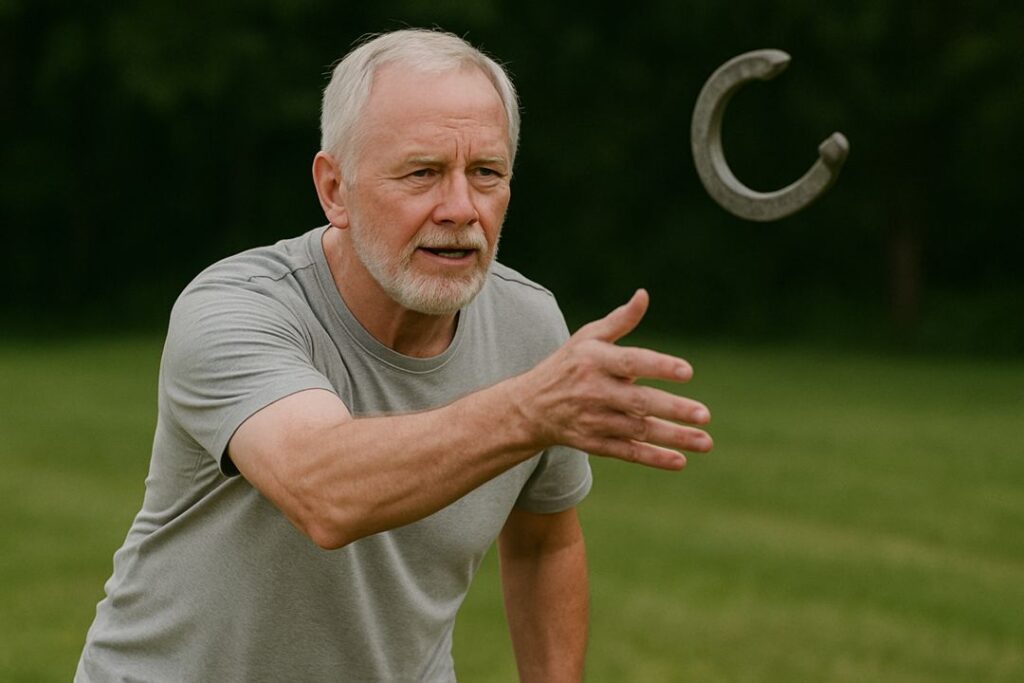
2. Movement Helps Unlock Attention (Especially for ADHD)
Traditional sit-down activities can be torture for someone with ADHD.
Horseshoes give the brain exactly what it wants:
- Movement
- Physical rhythm
- Sensory grounding
- A task that matches the body’s natural energy
The simple act of:
- Stepping into a throw
- Taking a breath
- Balancing weight
- Rotating the shoulder
- Releasing the shoe
creates a mind-body cycle that helps settle the system.
This physical ritual anchors focus — not by force, but by nature.
3. The Game Uses “Hyperfocus” in a Healthy Way
ADHD brains aren’t incapable of focus — they’re capable of intense, laser-level focus when something captures them.
Horseshoes activate hyperfocus in short, controlled bursts:
- 3–5 seconds to line up the shot
- A single moment of concentration
- Then a release
- Then relaxation
- Then repeat
It’s the perfect balance between effort and ease.
Unlike activities that require a 30-minute focus block, horseshoes allows hyperfocus to engage… then disengage… then re-engage, without exhaustion.
4. Repetition Helps Calm the Nervous System
Repetition is one of the most powerful natural tools for regulating an ADHD brain.
Think of:
- Drumming
- Fidgeting
- Pacing
- Doodling
- Tapping
All are ways the body tries to manage internal energy.
Horseshoes gives a productive, satisfying, rhythmic version of this:
- Stand
- Step
- Release
- Watch
- Reset
- Repeat
The repetition becomes soothing rather than draining.
How Horseshoes Help Improve Focus and Attention Span
5. A Single Target Helps Train Focus Naturally
Many sports involve chaos:
- Multiple players
- Multiple balls or pucks
- Constant motion
- Shifting objectives
For a person with ADHD, that can feel overwhelming.
Horseshoes offers:
- One target
- One goal
- One throw
- One result
The ADHD brain loves simplicity.
It’s not that the person lacks focus — they simply need clarity.
The horseshoe stake gives the brain something specific to anchor to.
6. Short Rounds Train Short-Term Focus Without Overload
Horseshoes is played in short bursts:
- About 10 seconds of concentrated effort
- Then 30–60 seconds of downtime
This interval style of focusing mirrors the natural attention rhythm of ADHD individuals.
It teaches:
- “Laser in.”
- “Let go.”
- “Reset”
Without forcing the player to hold concentration for long, painful stretches.
This makes horseshoes a sneaky good practice tool for improving:
- Task engagement
- Attention span
- Cognitive re-centering
- Emotional reset
7. Visual Tracking Strengthens Executive Function
Watching the shoe fly through the air — tracking arc, rotation, distance — activates the brain’s executive function centers:
- Planning
- Predicting
- Adjusting
- Timing
- Spatial reasoning
For people with ADHD, these skills often need extra reinforcement.
Horseshoes trains them in a fun, low-stress context.

How Horseshoes Help Regulate Emotions and Nervous-System Activity
8. The Game’s Rhythm Helps Slow Down Racing Thoughts
ADHD often brings:
- Fast thoughts
- Jumping ideas
- Difficulty slowing down
Walking to the pit, lining up, breathing, throwing — the pattern becomes a grounding mechanism.
It turns the brain from:
“Go-go-go-go-go…”
into
“step… breathe… throw… reset…”
That predictable rhythm creates mental clarity without forcing it.
9. Sensory Input Helps Calm the Mind
People with ADHD respond strongly to sensory inputs.
Horseshoes delivers:
- The feel of the shoe in your hand
- The sound of metal landing on sand
- The “clang” of a ringer
- The warmth of the sun
- The crunch of the pit surface
- The visual arc of the throw
These sensory anchors help bring the player into the moment — they function like natural mindfulness tools.
10. Small Wins Boost Dopamine and Self-Confidence
Dopamine is the biggest chemical challenge in ADHD.
Horseshoes give:
- Quick feedback
- Micro victories
- Easy momentum
- A sense of accomplishment
- Visible improvement
A near ringer or a perfect drop gives the brain a dopamine hit that reinforces focus and motivation.
Social Benefits for ADHD Players
11. Horseshoes Encourage Low-Pressure Social Interaction
ADHD individuals can struggle in high-pressure conversations or crowded environments.
Horseshoes create the perfect social setting:
- No forced eye contact
- Plenty of space
- Easy pauses
- Friendly talk
- Built-in breaks between throws
It’s socializing without overwhelm.
12. The Game Helps Build Patience and Turn-Taking
ADHD can make waiting difficult.
In horseshoes, waiting becomes part of the game:
- You watch
- You anticipate
- You root for your partner or opponent
- You get your turn
- The cycle repeats
This strengthens self-regulation in a genuine, enjoyable way.
13. It Helps Reduce Anxiety and Overthinking
ADHD and anxiety often overlap.
Horseshoes help because:
- The stakes are low
- The task is simple
- The environment is open
- The result is immediate
There’s no scoreboard pressure unless you want it.
No complex rules to remember.
No team shouting instructions.
It’s just you, the shoe, and the stake.
Why Horseshoes Work So Well for Kids, Teens, and Adults With ADHD
14. Kids Get Energy Out While Sharpening Focus
Horseshoes:
- Burns physical energy
- Doesn’t require sitting still
- Teaches aim and coordination
- Encourages patience
- Strengthens focus in natural bursts
It’s one of the best backyard activities for ADHD kids who struggle with sports that require long attention spans.
15. Teens Gain Confidence in a Non-Judgmental Game
Many ADHD teens get frustrated in structured sports.
Horseshoes offers:
- Slow pace
- No complicated rules
- Supportive atmosphere
- No shouting or pressure
- Visible improvement
It’s a great game for building confidence.

16. Adults Use It as a Mental Reset Tool
For adults juggling work, family, and stress, horseshoes becomes a reset switch:
- Clears the mind
- Regulates mood
- Creates micro-breaks
- Provides calm movement
- Offers social support
A 20-minute session in the yard can do more for the mind than an hour of forced mindfulness.
17. Seniors Benefit From Gentle Movement and Mental Engagement
For older adults with ADHD (diagnosed late in life or never diagnosed):
- The game offers low-impact exercise
- The repetition sharpens focus
- The social aspect reduces isolation
- The movement improves balance
- The rhythm calms the nervous system
It keeps the mind sharp and the body mobile.
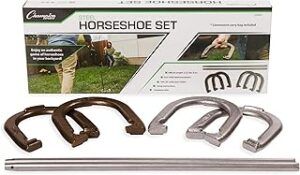
Horseshoe Game Set
Frequently Asked Questions
Do horseshoes actually help with ADHD?
Yes. The game aligns with ADHD brain needs: movement, rhythm, repetition, sensory feedback, and short bursts of focus.
Are horseshoes good for kids with ADHD?
Absolutely. It provides structure, movement, immediate feedback, and a simple goal — perfect for developing attention skills.
Do horseshoes help adults regulate stress and overwhelm?
Yes. The calm pace, clear focus, and predictable rhythm help settle racing thoughts and reduce tension.
Can horseshoes improve executive functioning?
Yes. Visual tracking, timing, spatial planning, and decision-making are all activated during play.
Wrapping It Up
Horseshoes aren’t marketed as an ADHD tool, but they might as well be. The game naturally supports the brain in ways that modern life often doesn’t: movement, rhythm, focus, sensory grounding, and connection. Whether someone is diagnosed or simply struggles with attention and restlessness, a few rounds in the pit can create clarity, calm, and confidence.
Medical Disclaimer
The information in this article is for general educational purposes only and is not intended as medical advice, diagnosis, or treatment. I am not a medical professional. If you have questions about ADHD, mental health, or any medical condition, please consult a qualified healthcare provider before making any decisions related to your health or treatment.