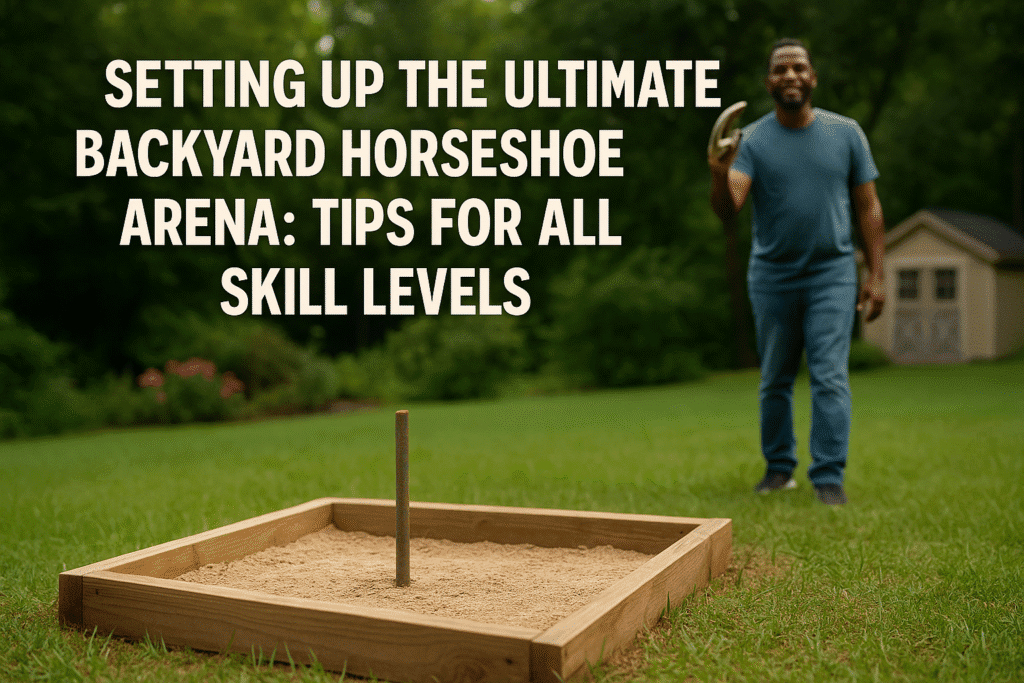
What Makes a Horseshoe Regulation? A Complete Gear Breakdown
Confused about regulation horseshoes? This guide explains official specs, weights, and materials—so you can choose the right gear for league play or serious backyard games.
Horseshoes isn’t just a backyard pastime—it’s a sport with a rich tradition, dedicated leagues, and even world championships. If you want to take your game from “just for fun” to “serious play,” the first thing you need to understand is what makes a horseshoe regulation.
Not all horseshoes are created equal. You’ve probably seen lightweight sets at discount stores and heavier, more expensive versions at sporting goods shops or online. The difference goes far beyond price. Regulation horseshoes are built to strict specifications so every player, at every level, can compete fairly.
But what does “regulation” actually mean? Why should you care? And how do you make sure you’re buying the right gear for competitive play? This guide covers everything you need to know about regulation horseshoes, including NHPA specs, gear selection tips, and how to set up a regulation court at home.
The Heart of the Game: Why Regulation Matters
When you play for fun, almost any horseshoe will do. But as soon as the competition gets serious—whether it’s a neighborhood tournament or your first league match—consistency, safety, and fairness become crucial.
Regulation horseshoes create a level playing field. When every player uses shoes of the same weight, size, and shape, you know the results come down to skill, not equipment. Practicing with regulation gear also means you’ll develop techniques that transfer to any serious game, anywhere.
🟢 NHPA Specifications: The Gold Standard
The National Horseshoe Pitchers Association (NHPA) sets the global benchmark for horseshoe specs. Whether you’re joining a local league or dreaming of competing at the World Horseshoe Pitching Championships, you’ll need to know these rules.
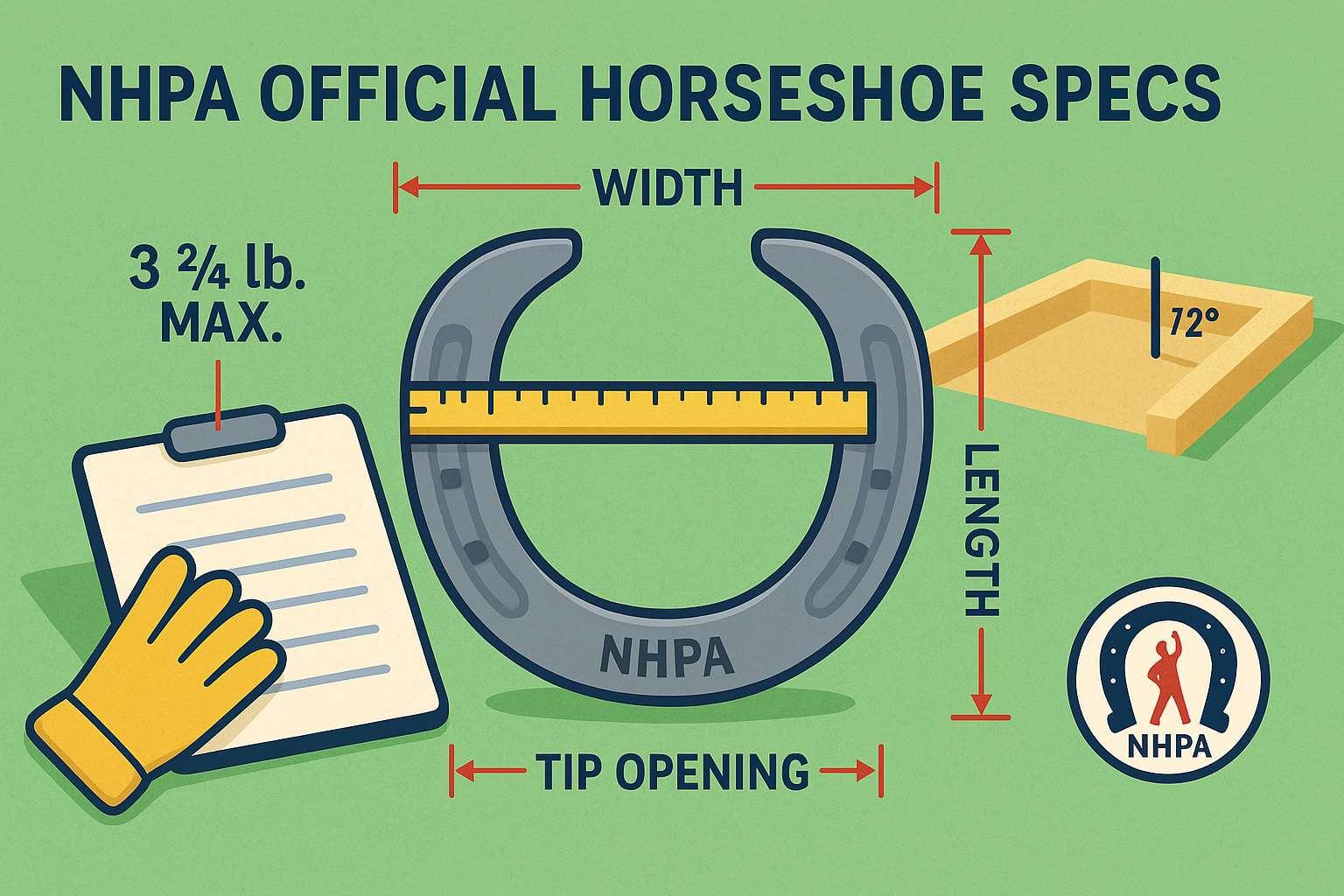
Official Regulation Horseshoe Specs
1. Weight
A regulation horseshoe must weigh no more than 2 pounds, 10 ounces (1.19 kg), and no less than 2 pounds (0.91 kg). The most common weight used by players is about 2.5 pounds (1.13 kg).
2. Length and Width
- Length: No more than 7 5/8 inches (19.37 cm), measured from the tips to the back of the shoe.
- Width: No more than 7 1/16 inches (17.94 cm) at the widest part, from outside edge to outside edge.
3. Opening at the Tips
The open end of the shoe—the distance between the tips—must not exceed 3 1/2 inches (8.89 cm).
4. Material
Regulation horseshoes are typically made from drop-forged or forged steel. This makes them extremely durable, well-balanced, and safe for repeated competitive use.
5. Shape and Design Features
- Well-defined hooks at the ends to help grab the stake.
- A smooth or slightly textured surface for grip.
- No rough edges, burrs, or sharp points that could cause injury.
- A thumb-hold or “caulking” area (optional) to help with certain pitching techniques.
6. Markings
Many regulation shoes are stamped with the NHPA emblem or the words “NHPA Approved.” This guarantees the shoe meets tournament standards.
🟡 Why You Should Choose Regulation Horseshoes
If you’re just starting out, you might be tempted to grab the cheapest set you see. But here’s why stepping up to regulation shoes makes a huge difference:
1. Fairness & Consistency
Every horseshoe in a regulation set is manufactured to exacting standards. That means no one has an advantage based on gear. Your skill, not your shoe, determines your score.
2. Real Skill Development
Practicing with regulation shoes helps you build muscle memory, strength, and accuracy that transfer to any court—league, tournament, or friendly match.
3. Durability & Value
Drop-forged steel doesn’t chip, crack, or break the way cast iron or cheap metal can. You’ll get years of use out of a quality set, making it a better long-term investment.
4. Ready for Competition
If you ever decide to play in a league, you’ll already be familiar with official rules, distances, and equipment. There’s nothing worse than learning you can’t use your favorite set at a tournament!
🔵 How to Identify Regulation Horseshoes
Shopping for gear can be confusing if you don’t know what to look for. Here’s how to spot a real, regulation horseshoe:
1. Check for NHPA Approval
Look for the NHPA emblem or “Approved for Tournament Play” stamped on the horseshoe or the packaging. If there’s no mention of weight, size, or NHPA status, move on!
2. Weight and Size
Always double-check the listed specs. Regulation sets will say they weigh between 2 and 2.5 lbs, and provide precise length and width measurements. Avoid vague descriptions.
3. Construction Quality
True regulation horseshoes are drop-forged steel—smooth, solid, and slightly textured for grip. They should not have sharp edges or rough seams.
4. Reviews and Recommendations
Look for brands and models recommended by experienced players and leagues. The St. Pierre American Professional Series is a popular NHPA-approved example, but there are several reputable manufacturers.
🟠 Regulation Pits and Stakes: Don’t Forget the Rest!
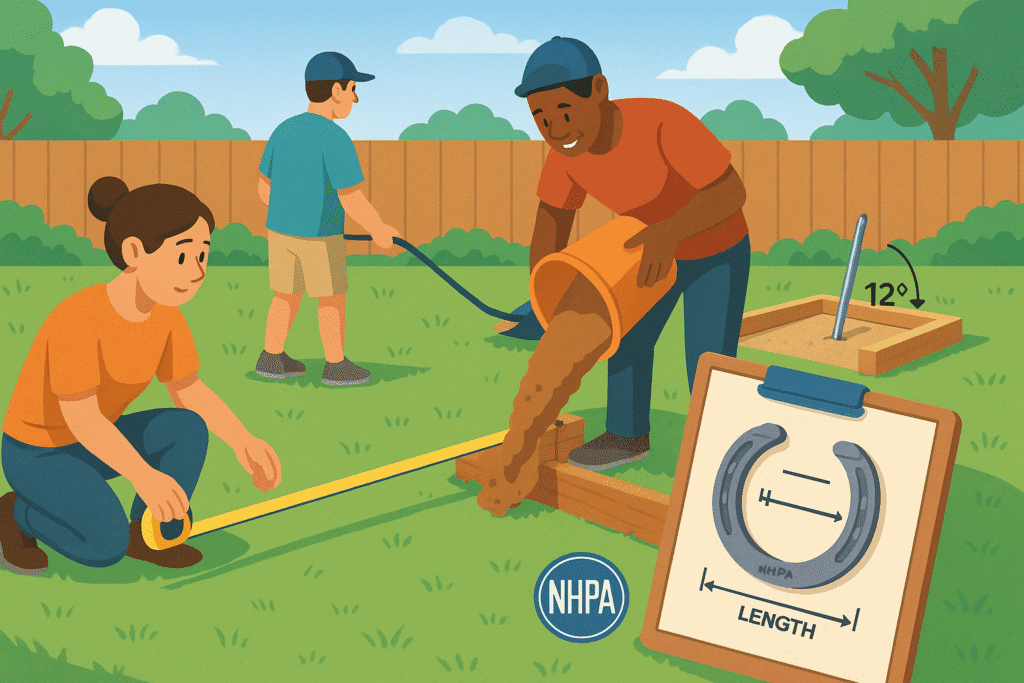
Horseshoe pitching isn’t just about the shoes—the stakes and pits also have official standards for league play.
1. Stakes
- Material: Steel, 1-inch in diameter, and 36 inches long.
- Height: Stakes must stand 15 inches above the pit surface after installation.
- Lean: Each stake leans forward at a 12-degree angle toward the opposite pit (use a stake leveler for accuracy).
- Distance: Stakes are set 40 feet apart, measured from inside edge to inside edge (standard for adults).
2. Pits
- Size: 43 inches long and 31 inches wide.
- Material: Moist clay is the gold standard (for professional courts), but sand or loose dirt can be used for home setups.
- Borders: Wood or plastic frames help keep material in place.
- Backboards: Protect surroundings and keep horseshoes from bouncing away.
3. Optional: Pit Liners and Weather Covers
Liners make maintenance easier and protect your investment. Weather covers keep pits and shoes dry and ready to play.
🧠 Regulation vs Non-Regulation: What’s the Real Difference?
Let’s be honest—not everyone needs NHPA-approved shoes all the time. Here’s when to choose regulation and when to consider other options:
Go Regulation If:
- You plan to join a league or compete in tournaments.
- You want a consistent, skill-building experience.
- You’re setting up a court for a club, school, or official event.
- You’re a serious player who values durability and fairness.
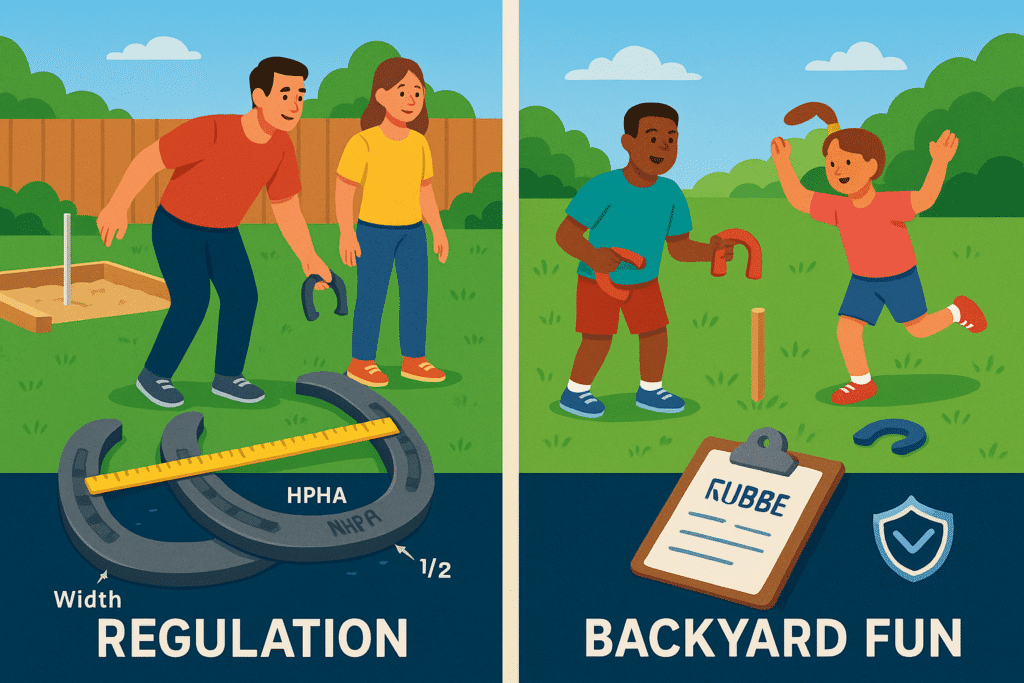
Go Non-Regulation If:
- You’re playing with small kids, seniors, or absolute beginners.
- You need something lightweight and safe for indoor or patio play (rubber horseshoes are great here).
- You want a portable set for camping, travel, or quick games anywhere.
- You’re short on space and need to adjust distances and pit sizes.
Tip: Many families keep both—a regulation set for grownups and a fun, rubber set for all-ages play.
🛠️ Care and Maintenance of Regulation Horseshoes
A quality set of horseshoes will last for years if you treat them right:
- After Each Game: Wipe down steel shoes and stakes to remove moisture, dirt, and sand.
- Storage: Keep shoes in a padded case, dry bin, or shed—never leave them exposed to rain for long periods.
- Rust Prevention: Apply a thin coat of oil or WD-40 to steel shoes before storing for the off-season.
- Regular Checks: Inspect for chips, cracks, or burrs—file smooth or replace as needed to keep throws safe and true.
🏆 Top Regulation Horseshoe Picks
1. St. Pierre American Professional Series:
NHPA-approved, forged steel, excellent grip and balance. Used by pros and leagues nationwide.
2. Gordon Professional Pitching Horseshoe Set:
Well-balanced, durable, and known for precise construction.
3. Thoroughbred Horseshoes:
Trusted by serious competitors for decades, NHPA compliant and available in several designs.
💡 Setting Up Your Own Regulation Court at Home
Want to practice like the pros? Here’s how to build your own regulation court:
- Choose a flat, open area with at least 40 feet of length.
- Install two stakes, each 36 inches long and 1 inch in diameter, leaning 12 degrees forward, 40 feet apart.
- Frame your pits (31 x 43 inches) with wood or landscaping timbers.
- Fill the pits with moist clay or soft sand for proper cushioning.
- Add backboards behind stakes for safety.
- Mark foul lines (measured from the stake) to practice official pitching techniques.
Tip: Even if you don’t have the full space, setting up as close to regulation as possible will make it easier to transition to league play.
🚫 Common Mistakes When Buying Horseshoe Gear
- Choosing “recreational” sets for serious play: Lightweight or oddly-shaped shoes ruin technique.
- Ignoring specs: Always check weight, size, and NHPA status.
- Skipping pit setup: Don’t underestimate the difference a real pit makes for play and safety.
- Neglecting maintenance: Even the best steel shoes need cleaning and care!
🏁 Final Thoughts: Play Like a Pro, Even at Home
Choosing regulation horseshoes is about more than following the rules—it’s about honoring the tradition of the game, playing safely, and improving your skills every time you throw. Whether you dream of joining a league or just want your backyard games to be a cut above, NHPA-approved shoes are the foundation of a great experience.
So, next time you shop, don’t just grab the first set you see. Check the specs, look for NHPA approval, and invest in a set that’s built for skill, fun, and years of friendly competition.
Ready to play the right way? Gear up, follow the specs, and take your horseshoe game to the next level.
Hi there, and thanks for stopping by! My name is Larry, and I’m the voice behind PlayingHorseshoes.com I love the game and have been playing since I was a kid. I started this blog because I am passionate about the sport, and with all the technology, I hope the sport don’t die. I plan to do my part to keep it going for me and my brother’s sake. Thanks for stopping by, feel free to subscribe and comment. Thank You!