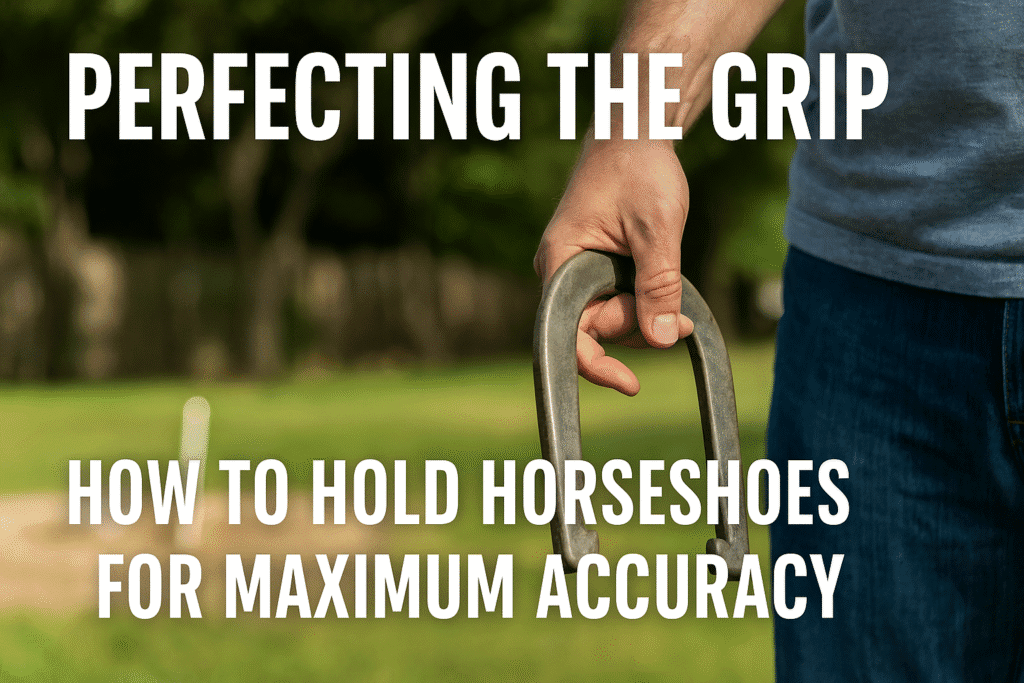
🎯Mastering The Horseshoe Pitching Technique: Common Mistakes And How To Fix Them
Getting started with horseshoe pitching is all about locking in the fundamentals early—your grip, your stance, and your aim. These three basics are your building blocks. While the game might look simple from the sidelines, any seasoned player will tell you there’s more technique and strategy involved than meets the eye.
In this guide, we’ll walk through how to properly pitch a horseshoe, the most common mistakes beginners make, and—most importantly—how to correct them. By the end, you’ll not only have a better understanding of proper horseshoe pitching techniques but also how to throw a ringer with confidence.
🧤 The Basics: Grip, Stance, and Aim
✅ Grip: The Foundation of a Great Throw
The way you grip the horseshoe sets the tone for your entire pitch. You want a firm but relaxed hold, kind of like shaking hands with a trusted friend. If your grip is too tight, you’ll lose that smooth release; too loose, and you lose control.
- Flip grip: Hold the horseshoe flat, aiming for a forward flip.
- ¾ Turn grip: Angle the horseshoe slightly to allow it to spin about 270° in the air.
- Full turn grip: Used by more advanced players, this requires finesse and more wrist control.
🎯 Tip: Try practicing with different grips during warm-ups to find your natural throwing style.
👣 Stance: Stay Grounded
Think of your stance as your anchor. Your feet should be shoulder-width apart, with knees slightly bent. This gives you the stability and control to generate a smooth, consistent motion.
- Lead foot slightly ahead
- Weight balanced evenly
- Shoulders aligned with your target
The goal is to move fluidly through your pitch without swaying or stumbling.
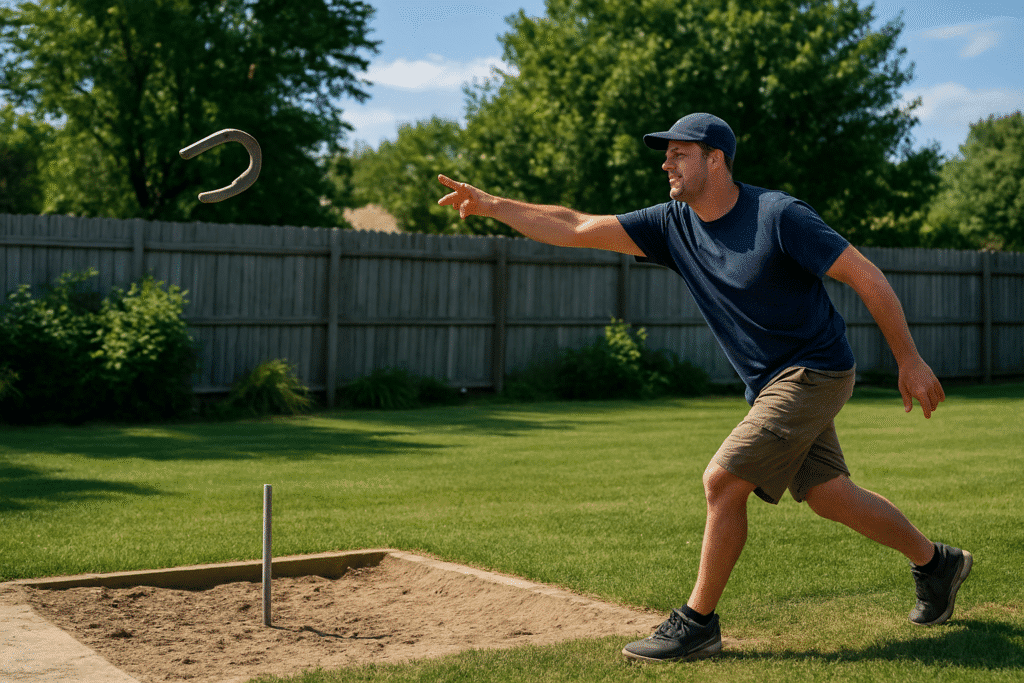
🎯 Aim: Visualize the Arc
Aiming is more about consistency than raw accuracy. Focus on a point just above the stake, allowing your mind to track the arc of the horseshoe. It’s not about brute strength—it’s about finesse.
- Visualize the curve your shoe needs to follow.
- Aim for a gentle landing around the stake, not a crash landing.
❌ Common Mistakes: Where Most Pitchers Go Wrong
Even the most promising players slip up early in their journey. Here’s where most beginners lose ground—and how you can avoid the same traps.
1. Gripping Too Tight or Too Loose
A tight grip might feel secure but can ruin your release. You’ll end up sending the horseshoe bouncing or spinning wildly. Conversely, a loose grip can make the horseshoe wobble mid-air.
Fix it: Hold the horseshoe like you would a raw egg—not too soft, not too hard.
2. Poor Stance or Footwork
Many players forget that their lower body is just as important as their arms. A narrow or uneven stance throws your balance off, leading to misaligned throws.
Fix it: Check your foot placement before every pitch. Muscle memory builds consistency.
3. Overthinking the Throw
When players get too “in their head,” they often lose rhythm. This results in mechanical, stiff movements.
Fix it: Focus on a mental cue like “smooth” or “fluid” to ease your motion. Let muscle memory take the wheel.
4. Not Adjusting for Environment
Wind, wet pits, or uneven terrain can all throw off your game. Beginners often overlook these variables.
Fix it: Practice in different outdoor conditions to learn how your pitch reacts. Stay flexible and observant.
5. Ignoring the Follow-Through
A sudden stop or drop at the end of your pitch kills momentum and accuracy.
Fix it: Imagine your hand being pulled gently forward by a string—smooth and extended after release.
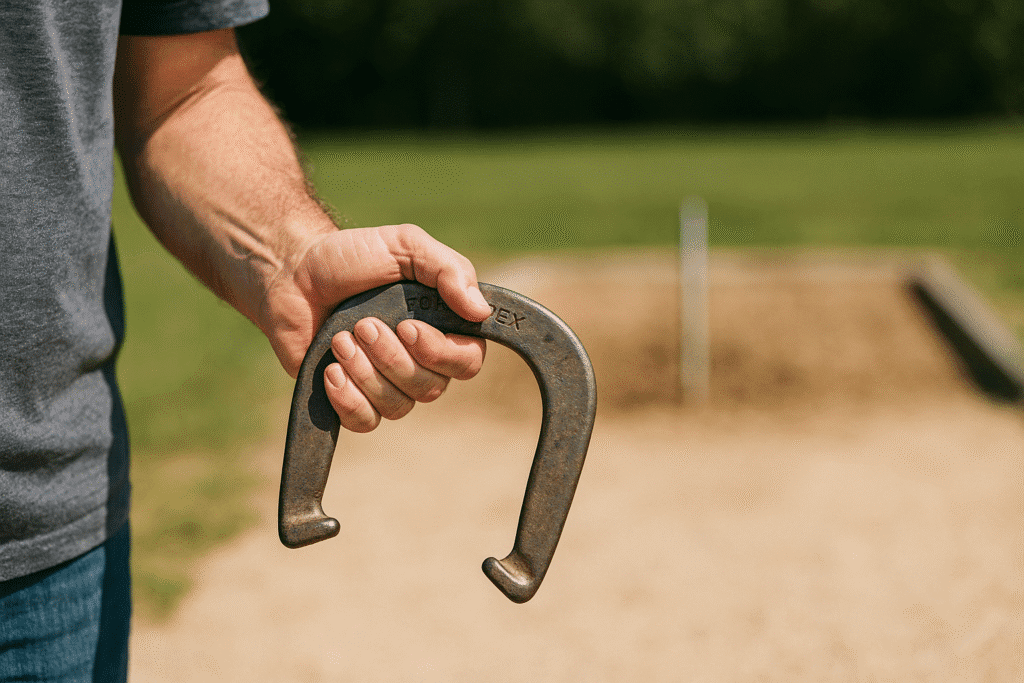
🛠️ Perfecting Your Pitch: Drills and Adjustments
Improving your throw means breaking down each part of the motion and making small, intentional adjustments.
✋ Grip Refinement Drill
Spend 10 minutes each practice trying different grips. Pay attention to how the shoe rotates and lands. Log your results and fine-tune accordingly.
🧍 Stance Alignment Drill
Set up alignment markers (like small cones) where your feet should go. After 10 pitches, review your stance—did you maintain balance throughout?
🌀 Release Point Drill
Practice releasing at different points in your arc. Start higher, then lower. Film yourself and analyze where the shoe flies truest.
🔄 Reverse ¾ Turn Practice
Want to level up? Experiment with the reverse ¾ turn. This style has a flatter trajectory and can be a powerful weapon in windy conditions.
📈 Feedback and Continuous Growth
🧠 Get an Outside Perspective
Talk with local players, club veterans, or even your neighbor who’s been tossing shoes for years. A different set of eyes can catch inconsistencies in your form.
📱 Use Tech for Better Insight
Try recording your throws or using a wearable like a wrist tracker. Reviewing your footage in slow motion will reveal flaws in your form that aren’t visible during live play.
🗓️ Set Realistic Goals
Don’t expect to be a ringer machine overnight. Aim to:
- Improve consistency (number of throws landing within 6 inches of stake)
- Increase ringer count weekly
- Experiment with new grips monthly
🛒 Recommended Gear to Level Up
If you’re serious about improving your horseshoe game, upgrading your equipment can give you an edge.
🔧 Horseshoes for Accuracy
- Gordon Professional Series Horseshoes – Excellent balance for ¾ turns and flip styles.
- Franklin Sports Advanced Set – Great for practice and tournament prep.
- Mustang Pro Pitch Set – Designed for both casual and competitive throwers, with ideal weight distribution.
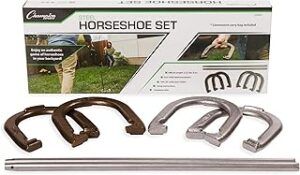
Horseshoe Game Set
📏 Pit Tools
- Regulation stake set (1” diameter, 15” above ground)
- Measuring tape (for 40-foot stake distance)
- Horseshoe score stand (keeps games honest and efficient)
➡️ Investing in good equipment boosts not only performance but your confidence every time you step onto the court.
🙋♂️ FAQ: Common Questions About Horseshoe Pitching
What is the best technique for horseshoes?
Most beginners start with a flip or a ¾ turn. The ¾ turn offers a nice balance of control and arc, especially with practice.
Is a leaner worth 2 points in horseshoes?
Yes. A leaner (a horseshoe leaning on the stake) is worth 2 points in traditional scoring, while a ringer is worth 3.
What is the distance from one stake to the other in horseshoes?
The regulation distance is 40 feet from stake to stake (measured at ground level). For juniors or casual backyard games, 30 feet is often used.
How many points are awarded for a shoe that is closest to the stake?
One point is awarded if your horseshoe is closer than your opponent’s and not touching the stake (not a ringer).
What is the maximum score that can be achieved in a game of horseshoes?
In official play, games are usually played to 40 points or until a player reaches a preset number of innings.
How to throw a ¾ turn horseshoe?
Hold the shoe by the shank, let it rotate about 270° in the air, and aim for a gentle landing around the stake. Practice helps develop spin control.
🏁 Final Thoughts: Trust the Process and Keep Pitching
Mastering horseshoe pitching doesn’t happen overnight—but every throw teaches you something. It’s not about perfection; it’s about persistence.
Work on your fundamentals, stay aware of the small things, and be open to feedback. Practice deliberately, and don’t forget to enjoy the journey. You’re not just learning a game—you’re sharpening your focus, patience, and confidence.
🎯 Ready to take your horseshoe game to the next level? Try out one of the recommended gear sets above and start seeing the difference for yourself.
Hi there, and thanks for stopping by! My name is Larry, and I’m the voice behind PlayingHorseshoes.com I love the game and have been playing since I was a kid. I started this blog because I am passionate about the sport, and with all the technology, I hope the sport don’t die. I plan to do my part to keep it going for me and my brother’s sake. Thanks for stopping by, feel free to subscribe and comment. Thank You!