Horseshoe Pitching Superstitions and Rituals: The Weird Habits Players Swear By
Introduction — Luck, Habits, and Horseshoes
If you’ve been around a horseshoe pit for any length of time, you’ve probably noticed something: no two players do it the same way.
Some have a lucky cap. Others insist on pitching their favorite shoe first every time. A few quietly mumble a phrase before stepping to the stake.
To outsiders, these things might look like quirks. But to horseshoe players, they’re sacred rituals.
Every toss, every breath, every subtle movement before the throw can become part of a deeply personal rhythm — a mix of comfort, focus, and a little touch of luck. That’s the beauty of horseshoes: it’s as much about feel as it is about form.
In this article, we’re going to look at the fascinating world of horseshoe pitching superstitions and rituals — the habits that players swear by, the lucky charms that get them through tough matches, and the unspoken rules that define how many of us play the game.
1. The “Lucky Shoe” Phenomenon
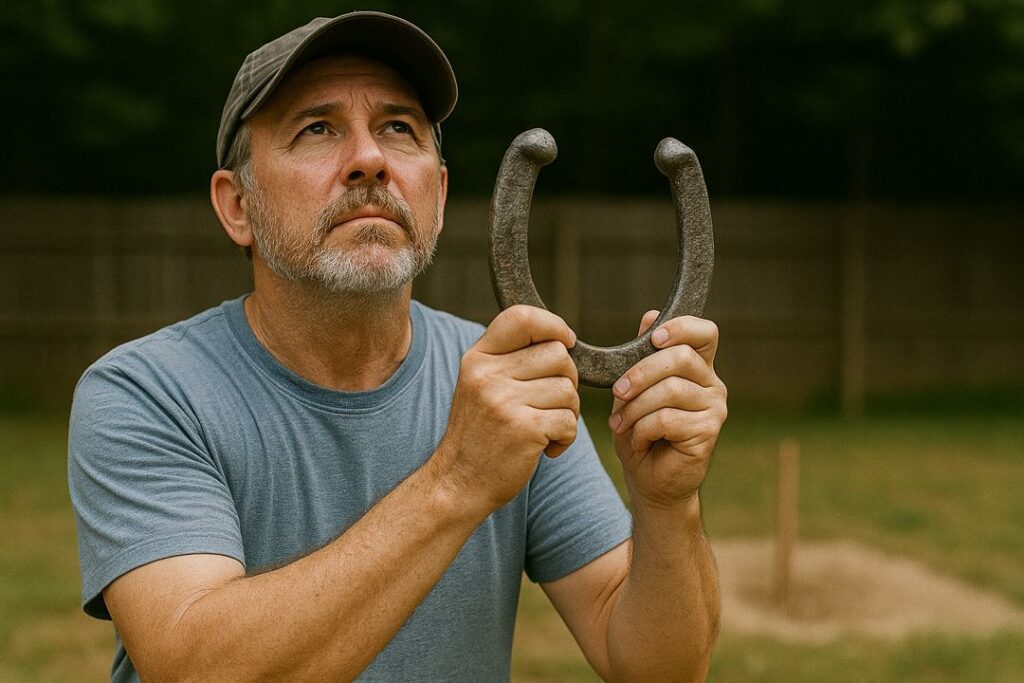
Ask any seasoned pitcher, and you’ll hear it: one shoe feels better than the other. Maybe it’s the one that caught that first perfect ringer, or maybe it just sits right in the hand. But once that shoe earns the title of “lucky,” it’s never just another piece of gear again.
Some players will only start a match with that shoe. Others always use it for the final pitch of a close game. They’ll mark it with tape, initials, or a tiny scratch so it doesn’t get mixed up.
And heaven help the person who picks it up without asking.
Of course, the truth is that no two shoes — even from the same set — ever feel identical. Weight distribution, wear patterns, and subtle dings all create micro differences. So while it might seem superstitious, there’s a practical side, too: that “lucky” shoe is probably just the one that’s best balanced for your natural grip.
2. Game-Day Rituals That Must Never Be Broken
Every sport has its pre-game routines, but horseshoe pitchers take it personally. For many, those small rituals before the first throw are the key to a calm and focused game.
Some players always unpack their gear in the same order: stakes first, then shoes, then towel. Others won’t play until they’ve raked the pit just right or tapped each stake twice before warming up.
And then there are the superstitions around food, music, and timing. Some won’t eat until after the first match. Others swear they pitch better if they have a certain snack — peanuts, jerky, or a quick sip of coffee. A few listen to the same playlist before every game to get in rhythm.
It might look funny to an outsider, but it’s no different from a golfer’s pre-shot routine or a pitcher’s windup. It’s all about creating consistency. Break the pattern, and it can throw the whole rhythm off.
That’s the hidden side of superstition — it’s really a mental anchor disguised as habit.
3. Lucky Charms, Hats, and Keepsakes
If you think lucky trinkets are just for gamblers, you’ve never met a serious horseshoe player. Walk through any tournament or league, and you’ll see plenty of hats, towels, wristbands, and even socks that players refuse to part with.
Some of these items have been through dozens of matches. They might look tattered, but they’re loaded with good memories. That old cap might have been worn during a personal best round. That towel might have been handed down from a father or friend who taught them the game.
It’s less about magic and more about connection. Each item ties the player to a past moment of success — a reminder that they’ve done it before, and they can do it again.
The classic “lucky horseshoe” symbol came from this same human instinct: we want to carry something that holds meaning. So it’s no surprise that players bring a piece of that tradition right to the pit.
4. The Quiet Zone Rule
This one’s practically sacred. When a pitcher steps up to throw, the world goes silent.
You’ll notice that some players won’t even speak during another’s pitch. They won’t shuffle, cough, or move. That moment between setup and release is all about concentration — and breaking that focus can feel like bad luck.
Many players have what they call a “quiet bubble” — a mental space where they block everything else out. They step up, align their feet, breathe once, and the world disappears. For them, noise or distraction isn’t just annoying — it’s jinxing the moment.
It’s more than superstition; it’s respect. The quiet zone is part of the game’s unspoken code, one of those traditions that make the culture of horseshoe pitching unique.
5. Never Step in the Pit Before a Pitch
This superstition might sound silly until you understand its roots.
Old-timers will tell you that stepping in the pit before throwing “steals your luck.” But the practical side is this: it changes the surface. You’re flattening or shifting the sand, and that alters the bounce when the shoe hits.
Superstitions often grow from real-world causes. A player who noticed their shoe bouncing weirdly after walking in the pit might have connected the two, and the legend stuck.
Today, it’s both tradition and good sense. Players will rake, set up, and prep the pit — but once it’s ready, no one touches it until it’s time to throw. That untouched surface becomes part of the mental ritual: a fresh start, a clean slate, and a fair toss.
6. Pre-Throw Touches and Taps
If you slow down footage of good pitchers, you’ll notice little pre-throw movements that repeat every time. One wipes the shoe twice on their thigh. Another taps it against their boot. Some flip it once, others twice.
These aren’t random fidgets — they’re signals to the brain that it’s time to perform. A simple ritual like that can reduce tension and sharpen concentration. It’s the same principle as a basketball player dribbling before a free throw or a bowler taking that same number of steps every roll.
In horseshoes, that tap or flip says, “I’m ready now.” It marks the transition from thinking to doing. And after enough practice, it becomes automatic — part superstition, part muscle memory.

7. The “First Ringer Buys the Beer” Tradition
In backyard play, one of the funniest superstitions is that whoever scores the first ringer has to buy the beer afterward.
It’s not an official rule, of course — but it’s one of those lighthearted traditions that keeps games friendly. It adds a little pressure and a lot of laughs. In many groups, it’s also a test of pride: the first ringer means you’re hot today, and paying for that victory round is part of the fun.
Superstitions like this have a social purpose, too. They keep the game about camaraderie, not just competition. And truth be told, more than a few friendships have started over that “first ringer” round.
8. The Unspoken Rule About Borrowing Horseshoes
Here’s one every player learns sooner or later: never borrow someone else’s shoes.
It might sound petty, but to most pitchers, their shoes are personal. They’ve molded to their hand. They have a rhythm, a feel, even a smell that’s familiar. Borrowing them is like wearing someone’s gloves or using their toothbrush — technically possible, but not advised.
Many believe that each set carries a kind of energy. It’s not mystical in the Hollywood sense — it’s more about trust. When a player spends hours adjusting to a particular grip, weight, and throw, those shoes become an extension of them.
So while you might get away with borrowing a set of practice shoes, don’t expect to touch anyone’s “game-day” pair. Some traditions are better left untouched.
9. The Reset Ritual After a Bad Throw
Everyone has off throws — that one that bounces off the stake or digs straight into the pit. What happens next often reveals how a player handles pressure.
Watch closely and you’ll see all sorts of reset rituals:
- Some take a deep breath and literally shake their hands out.
- Others walk a short circle behind the line.
- A few brush their shoes off as if wiping away the mistake.
This is more than superstition. It’s psychological cleansing — a physical act to reset the brain after failure. By creating a small motion between throws, you separate the bad toss from the next one, keeping frustration from bleeding into your rhythm.
That’s the core of every good player’s mindset: one bad pitch doesn’t define the next. And if it takes a little ritual to reinforce that, so be it.
10. Tournament-Day Talismans
Step onto the grounds of any state or national horseshoe tournament and you’ll notice something funny. Despite all the modern gear, many players still carry something old — a lucky hat, towel, glove, or even a pair of socks they refuse to replace.
They might not admit it, but those items are their talismans. Some have stories behind them — like the glove worn in a first championship, or the towel that’s been to every game since 1989. Others are just comfort items that make the day feel right.
There’s a psychological benefit here, too. When you compete, comfort and familiarity matter. Having that same old gear creates consistency in a new environment. It’s a subtle reminder of home, of practice, of success.
In other words, it’s not just luck — it’s grounding.
11. The Jinx Factor
Some players believe there are things you simply don’t say during a match.
You never predict a ringer before it happens. You don’t say, “You’ve got this one,” when someone’s lining up. And you definitely don’t comment on a streak mid-game.
These taboos come from years of watching good games turn bad after someone spoke too soon. Call it coincidence or call it bad juju — either way, most players won’t risk it.
Every group has its own version of this rule, but it all circles back to one truth: overconfidence is dangerous. Respect the game, and it tends to respect you back.
12. Rituals That Bridge Generations
What’s fascinating about these traditions is how they pass from one player to the next. A dad might teach his son to tap the shoe twice before throwing, or a grandparent might hand down the “never step in the pit” lesson.
These small rituals aren’t just habits — they’re heirlooms. They carry memories, family pride, and a sense of belonging.
That’s one of the reasons horseshoes has survived so many generations. It’s not just the competition that keeps people playing; it’s the continuity. Every time you repeat a ritual your father or mentor taught you, you’re part of something bigger than a backyard game. You’re carrying forward a little piece of tradition.
13. The Line Between Ritual and Routine
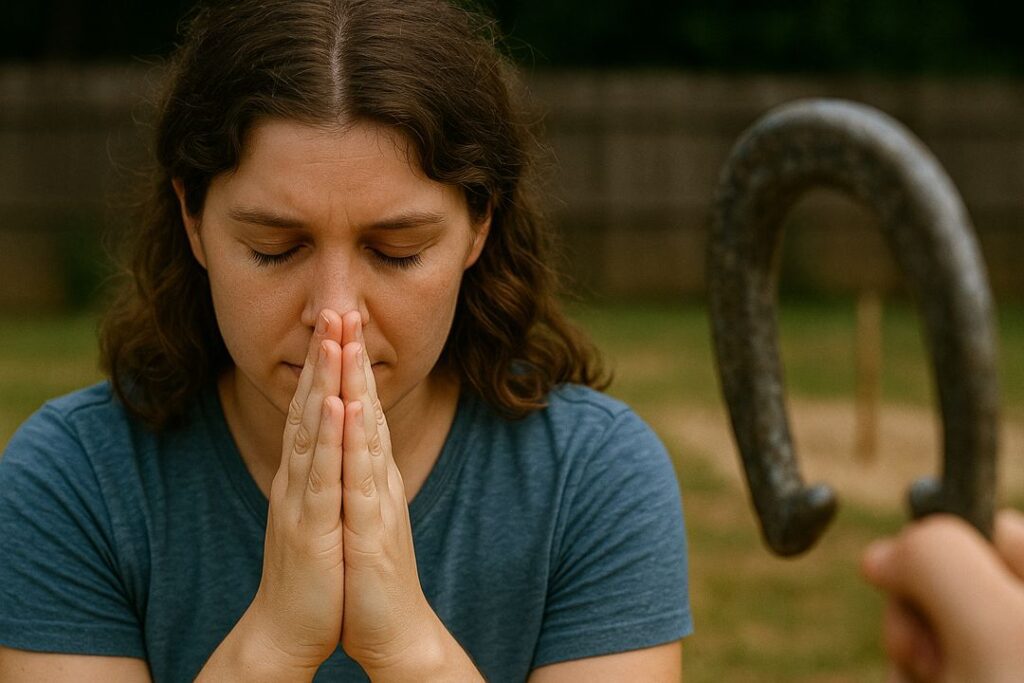
At what point does a ritual stop being superstition and start being strategy?
That’s the interesting gray area. For many players, the two overlap. A pre-throw tap might start as a “lucky habit” but eventually become a crucial part of muscle memory. Likewise, avoiding pit contact might start as tradition but end up being smart gameplay.
Superstitions stick because they work — not necessarily because of luck, but because they create confidence. They focus the mind, slow the breath, and make you feel ready.
That’s what sports psychologists call “anchoring” — linking a mental cue to a physical motion. Horseshoe pitchers have been doing it long before it had a name.
14. When Superstition Goes Too Far
Of course, not every habit helps. Some players can psych themselves out if they can’t complete their usual routine. If the hat’s missing, the towel’s in the truck, or someone steps on the pit, they lose their focus.
That’s when a harmless superstition turns into a crutch.
The trick is to use ritual as a confidence booster, not a dependence. The best players are flexible — they might have their preferences, but they can still pitch strongly when things change.
Superstition is fine when it adds rhythm and familiarity. It becomes a problem only when it steals your adaptability.
Recommended Product
Franklin Sports Professional Horseshoe Set – a solid, regulation-weight steel set that’s built for serious players and backyard leagues alike. It’s durable, perfectly balanced, and the kind of gear that might just become your lucky set over time.
Horseshoe Game Set
Frequently Asked Questions
Q: Are superstitions common among professional or tournament players?
Absolutely. Even top-ranked pitchers have routines they repeat before every throw. They might call them “focus techniques,” but let’s be honest — many are just upgraded superstitions.
Q: Do these rituals really improve performance?
Yes and no. They don’t magically influence physics, but they do control nerves and create consistency. When your body and mind sync up in a rhythm you trust, your throws improve naturally.
Q: What’s considered bad luck in horseshoe pitching?
Stepping in the pit early, mocking another player’s routine, or speaking about a ringer before it lands. Those are the big three unwritten no-nos.
Q: Should new players create their own rituals?
Sure — as long as it helps your focus, not distracts from it. Start small: a breath, a stance adjustment, a consistent throw sequence. Over time, that becomes your personal rhythm — your own bit of “good luck.”
Final Thoughts — Luck Favors the Focused
At the end of the day, horseshoe pitching superstitions aren’t really about magic. They’re about rhythm, confidence, and respect for the game.
Every player — from backyard beginners to seasoned champions — has something they do to get in the zone. It might be as simple as a deep breath or as complex as a ten-step ritual. But what matters isn’t the habit itself — it’s the mindset it creates.
Superstitions give players a sense of control in a game where precision meets unpredictability. They transform nervous energy into confidence. They make the game feel familiar, personal, and fun.
So if you’ve got a lucky hat or a “good” shoe, keep it. If tapping the shoe twice before you throw helps your focus, don’t overthink it. Those rituals are part of what makes horseshoe pitching special — a blend of skill, rhythm, and personality that never gets old.
In the end, whether the power comes from superstition or belief in one’s own abilities, the result is a confident approach to competition. Building your own narrative in the sport intertwines personalized rituals with skills, creating a unique sports story that might even inspire others.