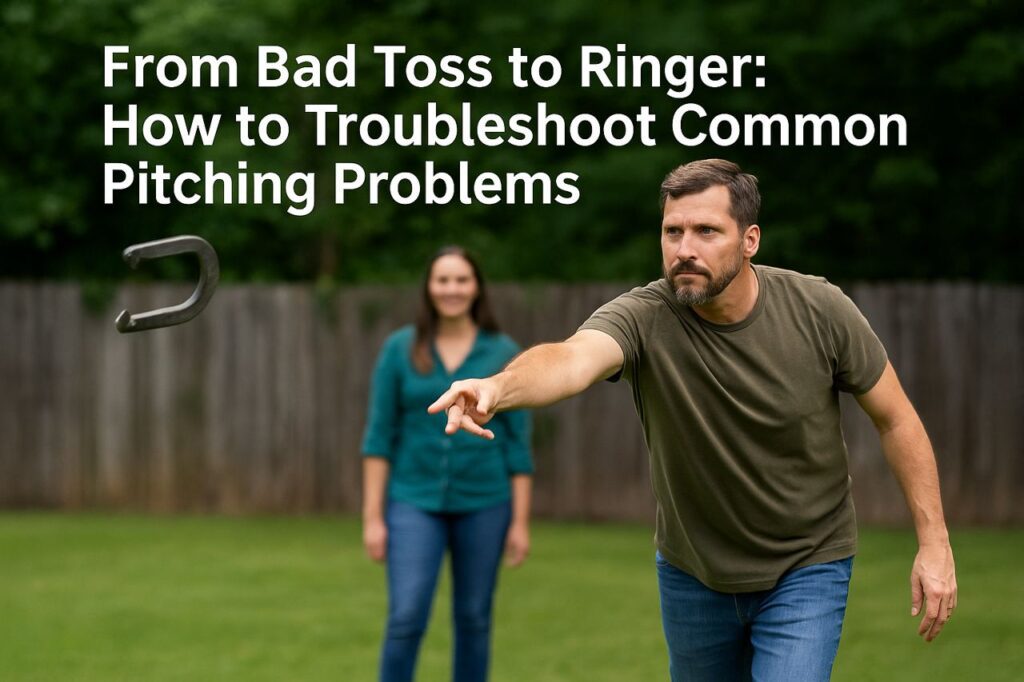
Ringers and Relaxation: The Zen Side of Horseshoe Pitching
There’s a moment right before every great throw — that quiet pause when the world seems to stop.
The horseshoe rests in your hand, the pit waits, and all the noise in your head fades into stillness.
Then, one smooth swing… the soft release… the sound of metal striking steel.
That’s not just skill. That’s presence. That’s focus. That’s the Zen side of horseshoe pitching.
This isn’t about scoring points or showing off ringers. It’s about finding calm through rhythm — and rediscovering how the game can teach you patience, balance, and a sense of peace of mind.
The Stillness Before the Swing
Every pitcher knows the feeling: that instant before you throw when your mind goes completely clear.
You’re not thinking about the score, the crowd, or what went wrong last inning. You’re just there.
That’s what Zen athletes call the still point.
It’s that space where the body moves freely, unburdened by thought — and that’s when your best pitches happen.
Think of it this way: every horseshoe you throw is a small meditation. The motion doesn’t change — your arm swings, the shoe spins, the stake stands — but you do. You learn to let go of the noise, the overthinking, the tension.
And once you start playing from that space, the game takes on a different meaning. It becomes a sanctuary — not just competition.

Why Horseshoe Pitching Has a Zen Side
If you’ve ever tossed a few practice shoes alone at dusk, you’ve probably felt it already.
There’s something rhythmic and grounding about the repetition.
The arc of the throw, the thud of the landing, the dust rising — it’s almost hypnotic.
And in that rhythm, you find peace.
That’s the essence of Zen practice: doing one thing with complete awareness.
Monks find it in sweeping floors. Artists find it in brushstrokes.
Pitchers? We find it in the sound of a ringer echoing across the yard.
You’re not escaping life by pitching — you’re centering yourself in it.
Finding Your Flow State
There’s a zone every good player knows — that place where you’re not forcing anything.
The throw feels easy, time slows down, and even misses don’t rattle you.
That’s called flow.
The key to finding it in horseshoes is repetition without judgment.
Stop treating every throw as a test. Instead, treat it as practice — a moving meditation.
You can’t muscle your way into focus. You find it by easing up.
When your stance feels balanced, your breathing steady, and your thoughts quiet — that’s when the shoe flies truest.
So before your next throw, pause.
Take a breath.
Feel your feet.
Let the motion carry itself.
That’s where the ringers start to come without effort.
The Breathing Throw
Breathing is the secret weapon most pitchers overlook.
When your breath is tight, your body follows — your throw stiffens, your accuracy drops.
When your breath flows, your body follows that same rhythm.
Try this before a game:
- Stand behind the pit.
- Take a slow inhale through your nose — feel the air fill your chest.
- As you exhale, relax your shoulders.
- Step into your throw.
Let the exhale carry the motion.
You’ll feel your swing loosen, your timing smooth out, and your nerves fade.
Breathing is rhythm. Horseshoes is rhythm. Combine them, and you’ll discover control through calm.
If you want to train this properly, try setting aside five minutes a day for “quiet pitching.”
No music, no talking — just you, your breath, and the sound of the shoe meeting the ground.
That’s where you start finding the deeper layers of the game.
Mindful Practice Sessions
A lot of players practice until they’re frustrated.
That’s the opposite of productive.
If you want to get better and stay centered, set your sessions up for awareness, not exhaustion.
Here’s a simple routine:
- Warm up slowly. Don’t chase points — focus on rhythm and consistency.
- Count smooth throws, not ringers. Ten smooth, balanced throws beat twenty tense ones.
- Pause every five throws. Take a breath, check your stance, reset.
- End on gratitude. No matter your score, take a second to appreciate the game itself.
When practice ends with calm instead of stress, your muscle memory stays clean — and your brain associates horseshoes with peace, not pressure.
Rituals That Center You
Every pitcher has a pre-throw ritual — even if they don’t realize it.
A small shake of the hand. A glance at the stake. A quiet breath.
Those rituals are powerful. They anchor your mind in the present moment.
In Zen, repetition isn’t boring — it’s sacred.
Every repeated motion becomes smoother, calmer, and more confident.
So, whatever your routine is — keep it consistent.
That’s your grounding cord between the mind and the motion.
Some players even use sound as a rhythm tool — a song in their head or the steady beat of their steps.
If that helps you stay centered, embrace it. Your routine is your meditation in motion.

Letting Go of Perfection
Here’s the irony: the more you try to be perfect, the worse your throws get.
Tension kills rhythm. And rhythm is accuracy.
I’ve seen players who could hit ten straight ringers in practice fall apart in a game because they couldn’t stop thinking. They tried to control every little detail — and that’s when everything went wrong.
Zen teaches us non-attachment — the art of doing something fully without clinging to the outcome.
You throw your best, and then you let it go.
The ringer isn’t the reward. The act of throwing — with focus and peace — is.
When you stop needing perfection, you start finding consistency.
When the Pit Becomes Your Sanctuary
There’s something sacred about the horseshoe pit at sunset.
The light softens, the sounds fade, and it’s just you, the shoes, and the earth.
That’s when the game feels like therapy.
You start to realize that the calm you build here carries into everything else — patience with your kids, steadiness under stress, peace when life gets noisy.
The pit becomes your reset button.
Your little patch of Zen in a busy world.
It’s not about escaping reality.
It’s about recharging so you can face it better.
Your Next Step: Zen and the Art of Horseshoe Pitching
If this kind of mindful play speaks to you — if you’ve felt that peace while holding a horseshoe — you’ll want to dive deeper into the mindset side of the game.
It’s for anyone who wants the game to mean more than points on a scoreboard.
Because once you discover the peace behind the pitch, every throw becomes a meditation — and every ringer feels like balance restored.
Gather Equipment
You don’t need much: a set of four horseshoes and two stakes.
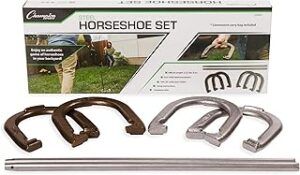
Horseshoe Game Set
Recommended Starter Sets:
- Franklin Sports Starter Horseshoe Set – lightweight, safe, and easy for kids to handle.
- Baden Champions Horseshoe Set – solid, beginner-friendly, and portable for park setups.
FAQs
Does relaxing really make me more accurate?
Yes. The less you fight the throw, the cleaner it becomes. Relaxed muscles react faster and more precisely.
Can I use breathing exercises during a game?
Absolutely. Inhale as you set your stance, exhale as you release. That rhythm calms your nerves and sharpens your aim.
How do I stop getting frustrated when I miss?
Reframe it. Every miss is just another lesson in consistency. Focus on the feel of the throw, not the score.
Can I practice Zen even if I’m competitive?
Of course. Zen isn’t about avoiding competition — it’s about mastering your mindset within it.
Final Thoughts – The Calm of the Ringer
The sound of a ringer isn’t just victory — it’s presence.
It’s proof that for one brief second, you were completely there — body, mind, and spirit aligned.
And the more you play from that place, the better your throws — and your days — start to feel.
So take your horseshoes, find your rhythm, and let the game slow you down.
Because the real win isn’t on the scoreboard.
It’s in the quiet between the clangs — where peace meets precision.
Prepare mentally and physically before each game. A little stretching can go a long way to prevent soreness, and a clear mind helps with focus. Take each game as a learning opportunity, every throw teaching you something new.
Remember, everyone’s got their own pace. Patience is key, and the more you enjoy the process, the more you’ll get out of it. Relish in each step of the journey from newbie to seasoned pitcher.